Basic Electronic Components: A Complete Guide
This article covers the functional comparison, practical selection, and core parameters of passive components such as resistors, capacitors, and inductors, as well as active components such as diodes, transistors, and integrated circuits.
Get Your PCB Quote!
Table of Contents
1. Introduction
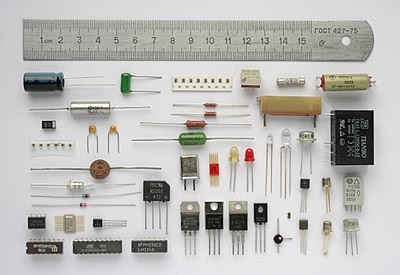
Curious about how electronic devices work? From the smartphone in your pocket to the complex systems powering modern industries, every electronic product is built upon a foundation of seemingly tiny and simple parts: basic electronic components. These essential building blocks are the silent architects behind the functionality and stability of every circuit board, meticulously controlling the flow of current, processing signals, and ultimately bringing our digital world to life.
Whether you’re a budding hobbyist, an engineering student, or simply someone looking to grasp the fundamentals of the devices you use daily, understanding these components is a crucial first step. This comprehensive guide will demystify the core elements of electronics, providing you with a clear understanding of their types, functions, and real-world applications. Let’s delve into the fascinating world of electronic components basics and unlock the secrets of modern technology.
2. What Are Basic Electronic Components?
At their core, basic electronic components are individual physical parts that manipulate electrical signals within a circuit. They are the fundamental building blocks that work in concert to control, store, or amplify electricity, enabling devices like televisions, computers, and even simple LED flashlights to perform their intended functions. Without these components, our advanced electronic world would simply not exist.
These components come in various forms and sizes, from the traditional ” thru-hole” components designed to be inserted through holes on a circuit board to the compact “Surface Mount Devices” (SMD) that sit directly on the surface. Regardless of their physical manifestation, their primary role remains the same: to manage electrical energy and information according to the circuit’s design. Understanding their specific roles, functions, and applications is paramount for anyone involved in designing, building, or troubleshooting electronic systems.
3. Active vs. Passive Components
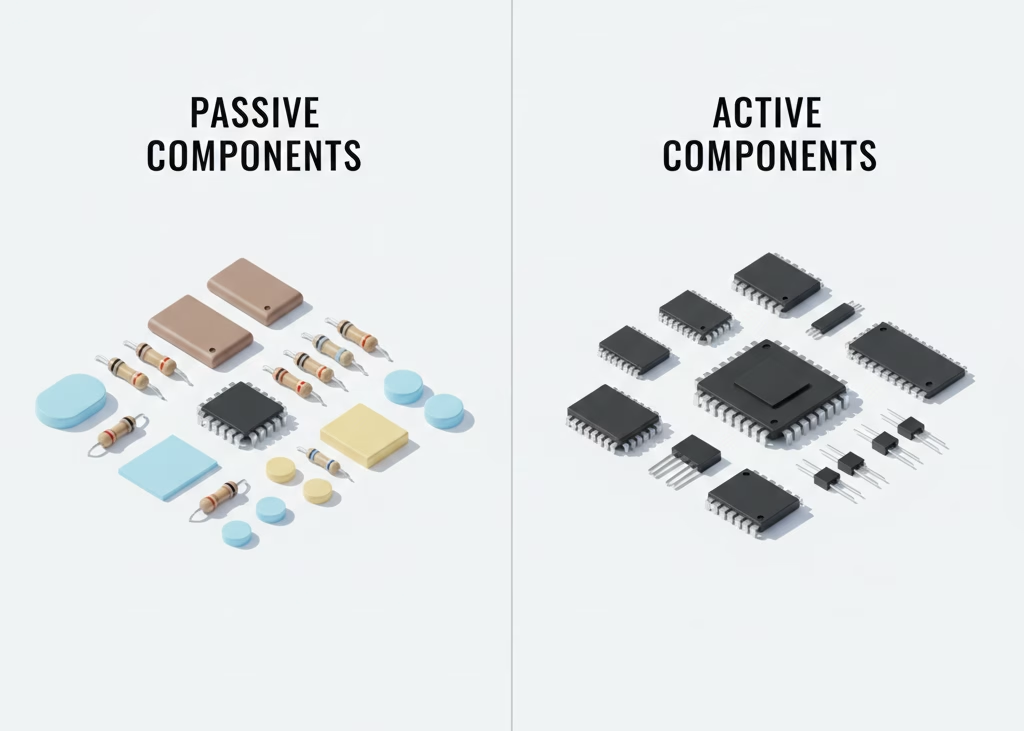
To effectively navigate the vast landscape of electronic components, it’s essential to understand their primary categorization: active and passive components. This distinction is crucial for anyone stepping into the world of electronics, as it defines how a component interacts with electrical energy within a circuit. Both categories are indispensable, working together to achieve complex functionalities.
| Component Type | Definition | Examples | Key Characteristic |
| Passive Components | Components that do not require an external power source to operate and cannot amplify or generate power. They dissipate, store, or resist electrical energy. | Resistors, Capacitors, Inductors | Cannot control current flow based on another electrical signal. |
| Active Components | Components that require an external power source to operate and can control, amplify, or generate electrical power or signals. | Diodes, Transistors, Integrated Circuits (ICs) | Can control current flow and provide gain or switching action. |
This fundamental understanding forms the bedrock for designing and analyzing electronic circuits. Each type plays a unique role, contributing to the overall performance and functionality of any electronic device.
4. Understanding Passive Electronic Components
Passive electronic components are foundational elements in any circuit, performing essential tasks without needing an external power source for their operation. They are responsible for resisting current, storing charge, or managing magnetic fields.
Resistors: Controlling Current Flow
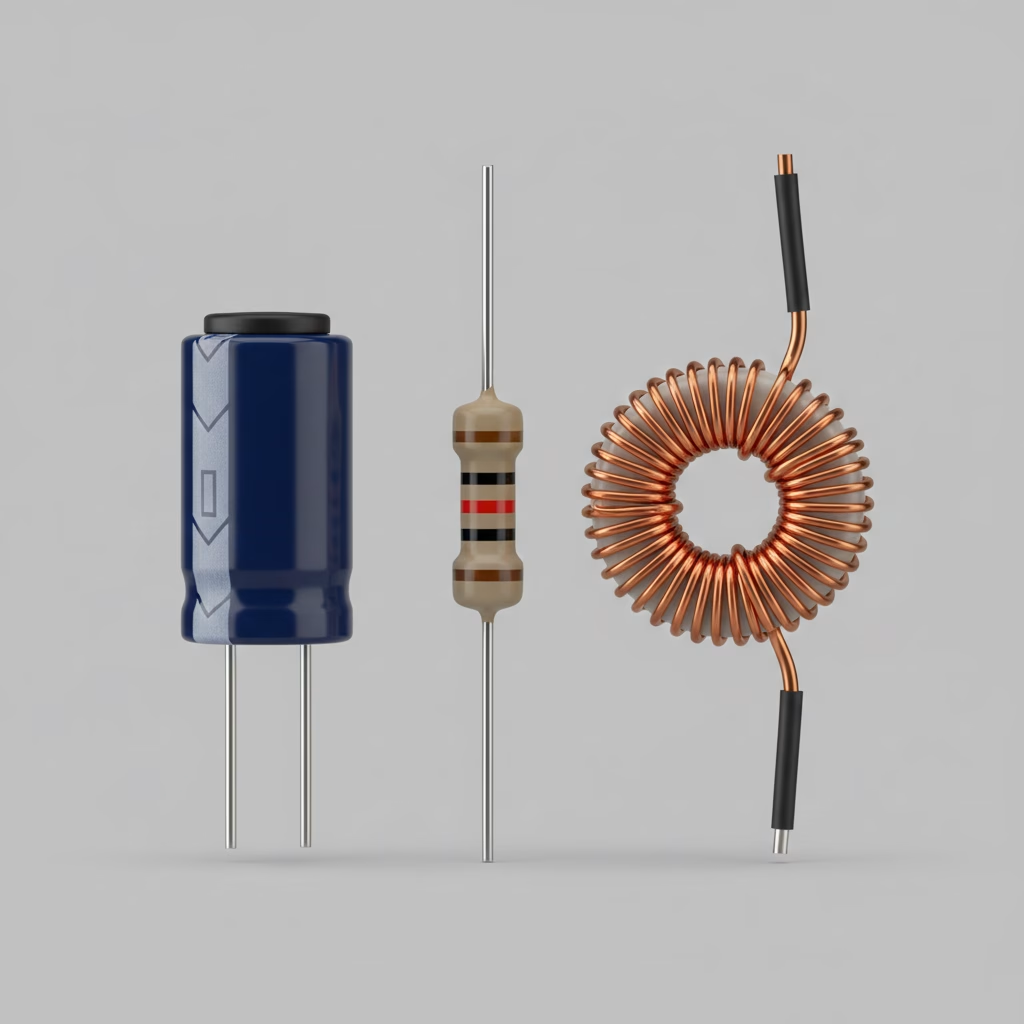
Resistors are perhaps the most common and straightforward of all electronic components. Their primary function is to resist the flow of electric current, thereby controlling the voltage drop and current within a circuit. This resistance is measured in Ohms (Ω). By strategically placing resistors, engineers can ensure that other components receive the correct amount of current and voltage, protecting them from damage and allowing them to operate optimally.
- Function:Limit current, divide voltage, terminate transmission lines.
- Types:Fixed resistors (carbon film, metal film), variable resistors (potentiometers, rheostats), thermistors (temperature-dependent), photo resistors (light-dependent).
- Applications:LED current limiting, volume control in audio devices, sensor circuits, pull-up/pull-down resistors in digital logic.
Capacitors: Storing Electrical Energy
Capacitors are two-terminal passive electronic components that store electrical energy in an electric field. Think of them as tiny, rechargeable batteries that can release their stored energy very quickly. This ability to store and release charge makes them indispensable for a wide range of functions, from smoothing out power supplies to filtering signals.
- Function:Store electrical charge, block DC current while allowing AC to pass, filter noise, smooth power supply output.
- Types:Ceramic, electrolytic, tantalum, film, variable capacitors.
- Applications:Power supply filtering, timing circuits, coupling and decoupling signals, energy storage in camera flashes, touch screens.
Inductors: Managing Magnetic Fields
Inductors are passive electronic components that store energy in a magnetic field when electric current flows through them. Typically made of a coil of wire, inductors resist changes in current flow, a property known as inductance, measured in Henries (H). They are particularly useful in AC circuits for filtering, tuning, and energy conversion.
- Function:Store energy in a magnetic field, oppose changes in current, filter AC signals.
- Types:Air-core, iron-core, ferrite-core, variable inductors.
- Applications:RF circuits, power supplies (chokes), filters, tuning circuits in radios, transformers.
5. Exploring Active Electronic Components
Active electronic components are the dynamic workhorses of electronics, capable of controlling, amplifying, or generating electrical power and signals. Unlike passive components, they require an external power source to function, allowing them to perform more complex tasks and essentially bring a circuit to life.
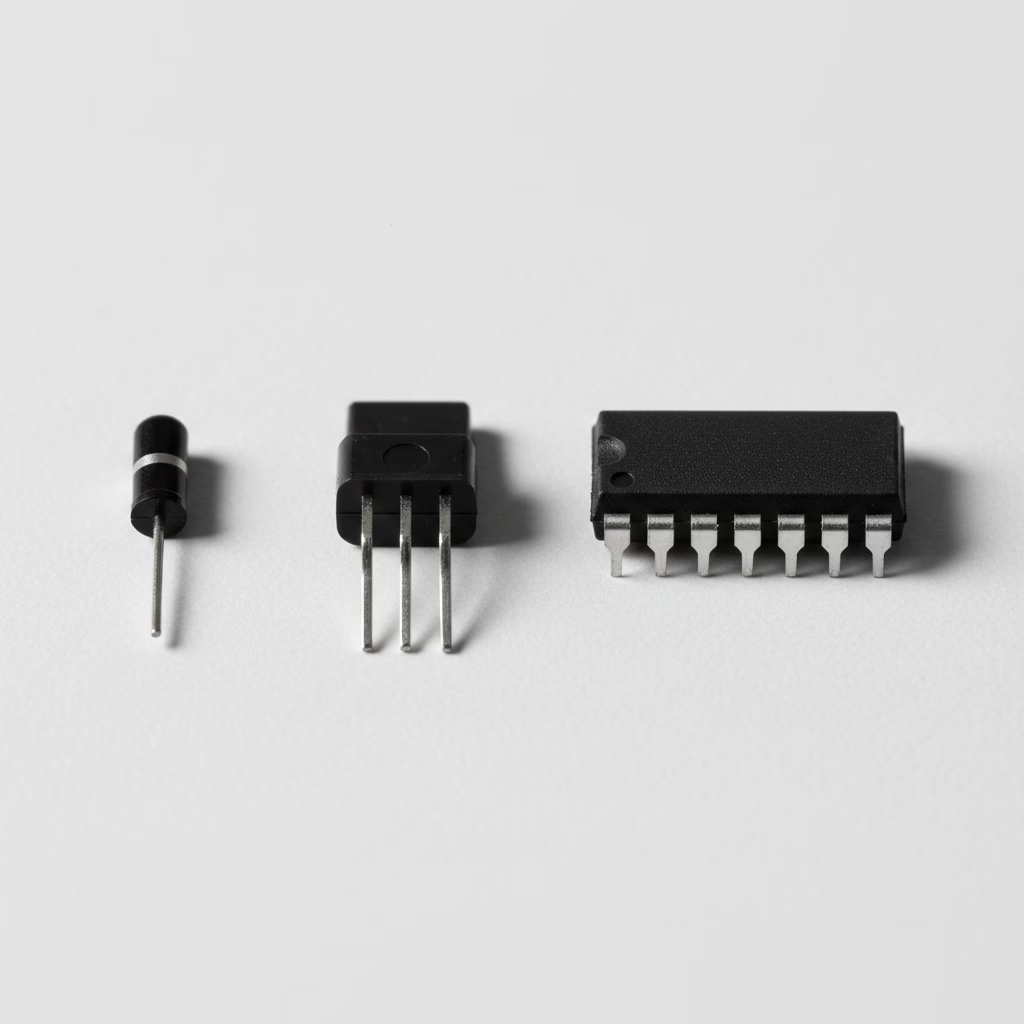
Diodes: One-Way Electrical Gates
A diode is a semiconductor device that essentially acts as a one-way valve for electric current. It allows current to flow easily in one direction (forward bias) but strongly resists current flow in the opposite direction (reverse bias). This unique property makes diodes crucial for converting AC to DC, protecting circuits, and light emission.
- Function:Rectify AC to DC, protect circuits from reverse polarity, regulate voltage, emit light.
- Types:Rectifier diodes, Zener diodes (for voltage regulation), Light Emitting Diodes (LEDs), Schottky diodes.
- Applications:Power supplies (rectifiers), voltage regulators, indicator lights, laser pointers, solar cells.
Transistors: Amplifiers and Switches
Transistors are arguably the most important invention in modern electronics, serving as the fundamental building blocks of virtually all electronic devices. They can act as electronic switches, turning current on or off, or as amplifiers, boosting the strength of an electrical signal. This dual capability makes them indispensable for everything from digital logic to audio amplification.
- Function:Amplify electronic signals, act as high-speed electronic switches.
- Types:Bipolar Junction Transistors (BJTs), Field-Effect Transistors (FETs – including MOSFETs).
- Applications:Microprocessors, memory chips, amplifiers (audio, RF), digital logic gates, power switching.
Integrated Circuits (ICs): The Brains of Modern Electronics
Integrated Circuits, or ICs, are miniaturized electronic circuits fabricated on a single semiconductor material, typically silicon. They contain thousands, millions, or even billions of transistors, resistors, and capacitors interconnected to perform highly complex functions. ICs are the brains behind smartphones, computers, and countless other intelligent devices, consolidating intricate circuitry into a tiny package.
- Function:Perform complex computational, control, or processing tasks.
- Types:Microprocessors (CPUs), Micro controllers (MCUs), Memory chips (RAM, ROM), Amplifiers (Op-Amps), Digital logic gates.
- Applications:Nearly all modern electronic devices, including computers, mobile phones, automotive systems, medical equipment, consumer electronics.
6. Beyond the Basics: Other Essential Components
While resistors, capacitors, inductors, diodes, transistors, and ICs form the core of most electronic systems, many other components play vital roles. These include:
- Switches:Components that mechanically connect or disconnect electrical paths.
- Sensors:Devices that detect and respond to physical input from the environment, converting it into an electrical signal (e.g., temperature, light, pressure sensors).
- Connectors:Mechanical devices used to join electrical conductors, creating a continuous electrical path.
- Batter ies:Devices that convert chemical energy into electrical energy to provide power.
Each of these components contributes to the overall functionality and interactivity of electronic devices, highlighting the intricate interplay required for complete and stable operations.
7. Basic Electronic Components FAQ
Active components require an external power source and can amplify or control electrical signals, while passive components do not require external power and simply dissipate, store, or resist energy.
SMD stands for Surface Mount Device. These components are designed to be mounted directly onto the surface of a Printed Circuit Board (PCB), as opposed to “thru-hole” components that have leads inserted through holes. SMDs allow for smaller, more densely packed circuit boards.
8. Summary
The world of electronics, from the simplest gadget to the most sophisticated supercomputer, is built upon a foundation of basic electronic components. We’ve explored the two main categories – passive components like resistors, capacitors, and inductors that manage energy flow, and active components such as diodes, transistors , and integrated circuits that control and amplify signals. Understanding these fundamental building blocks is not just academic theory; it’s a real-world necessity for anyone looking to design, build, source, or troubleshoot electronic projects. With this guide, you now have the foundational knowledge to grasp the “electronic components list” and embark on your journey into the fascinating realm of electronics with confidence.
Key Takeaways
- Every electronic device, from smartphones to circuit boards, relies on basic electronic components for its function.
- Electronic components are broadly categorized into passive (resistors, capacitors, inductors) and active (diodes, transistors, ICs) types.
- Passive components manage electrical energy by resisting, storing, or filtering without needing an external power source.
- Active components control, amplify, or generate electrical signals, requiring an external power supply to operate.
- Integrated Circuits (ICs) are miniature powerhouses that combine millions of components to perform complex tasks, enabling modern technology.
- A solid understanding of these components is crucial for anyone engaging with electronics, from hobbyists to professional engineers.
Table of Contents
Get Your PCB Quote!