
FR4 PCB MANUFACTURING
FR4 PCB Manufacturing for Reliable, Cost-Effective Electronics
From prototypes to production, we manufacture dependable FR4 circuit boards with controlled quality, flexible specifications and responsive engineering support.
What is FR4 PCB?
FR4 is a composite made up of woven glass fiber fabric bound together with an epoxy resin adhesive. It ranks among the most widely used substrate materials (i.e., base materials) for printed circuit boards (PCBs). Here, “FR” denotes “flame retardant,” while the “4” represents the material’s classification code for flame-resistant properties.
- Low Tg (130–140°C)
- Standard Tg (150–160°C)
- High Tg (>170°C)
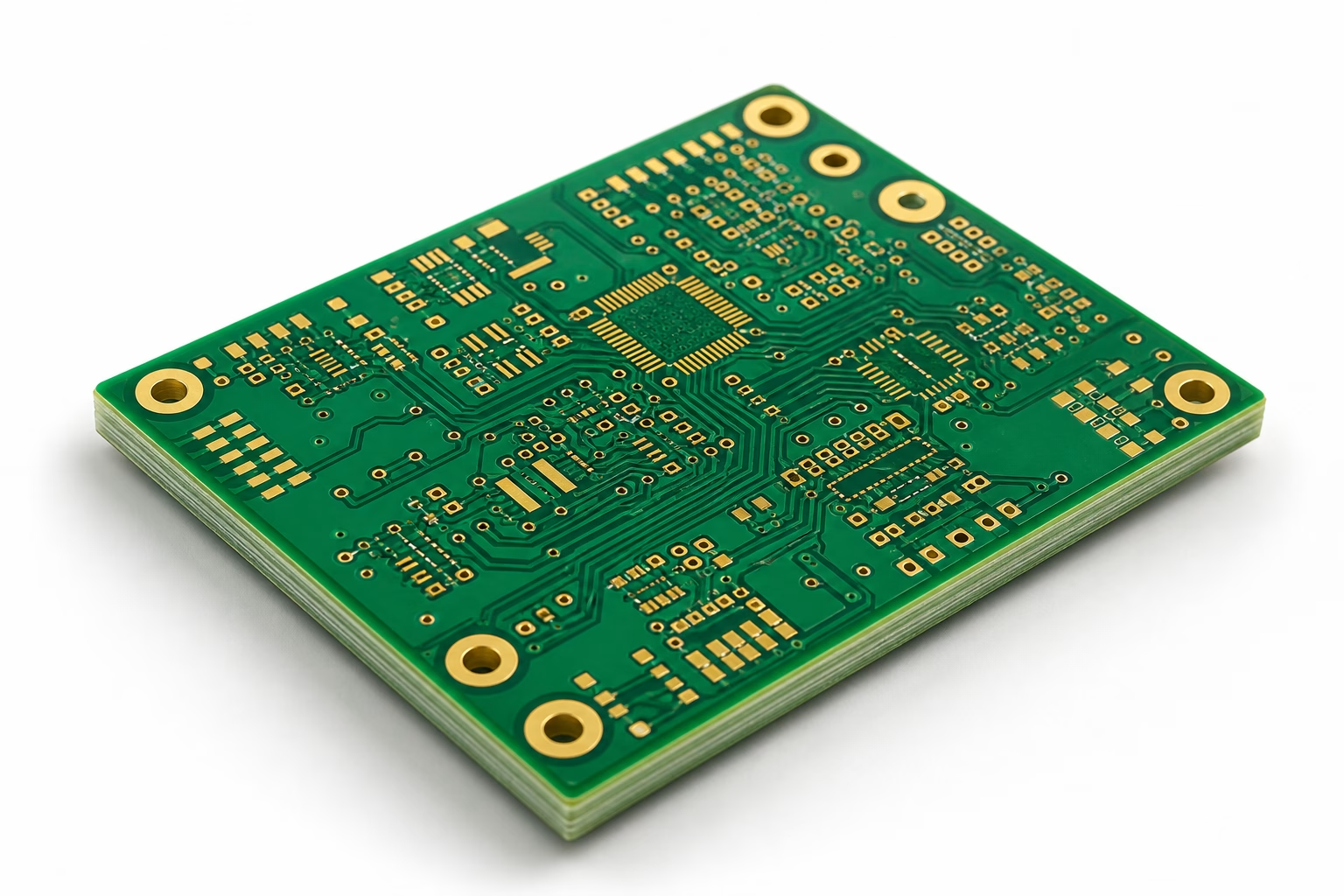
FR4 PCB Advantages
1. Flame Retardant – Designed to resist fire, ensuring safe operation even under high-temperature conditions.
2. Cost-Effective – Relatively low-cost compared to specialty materials, making it ideal for mass production.
3. Mechanical Stability – Provides good mechanical strength and stability for various PCB designs.
4. Wide Availability – Easily accessible in the market, ensuring convenient procurement.
5. Broad Compatibility – Works with multiple PCB surface finishes like HASL, ENIG, and OSP.
6. Versatile Use – Suitable for multilayer PCBs, double-sided boards, and prototypes.
FR4 PCB Limitations
1. High Frequency Limitations – Not optimal for high-frequency circuits or RF applications above 10 GHz.
2. Limited Thermal Conductivity – Lower thermal conductivity compared to metal-core PCBs, affecting heat dissipation.
3. Chemical Sensitivity – Susceptible to degradation under harsh chemicals or solvents.
4. Thermal Cycling Drift – Prone to warpage or delamination under extreme thermal cycles.
5. Performance Ceiling – Not suitable for ultra-high-speed or advanced thermal designs.
6. Moisture Absorption – Absorbs moisture over time, impacting dielectric properties and long-term reliability.
Built Around Your Production Requirements
Our FR4 PCB manufacturing process is engineered for reliability, consistency and scalability, giving you the confidence to move from design to volume with fewer risks.
Standard FR4 Capabilities
| Feature | Value |
| Layer count | 1-32 layers* |
| Board thickness | 0.4-4.5 mm* |
| Min. trace / spacing | From 0.10 mm / 4 mil |
| Surface finish | HASL, ENIG, OSP |
| Solder mask | Green, black, blue, red, white |
| Testing | AOI, electrical test, impedance control |
From Gerber to Finished Boards
-
DFM review
We review your files for manufacturability and confirm all production details.
-
Material verification
FR4 laminates and copper foil are validated to meet your electrical and mechanical requirements.
-
Fabrication
Advanced equipment and process control ensure high precision and repeatability.
-
Inspection & shipment
Rigorous inspection and secure packaging ensure boards arrive on time and defect-free.
FR4 PCB Manufacturing Capabilities
Our FR4 PCB manufacturing process is engineered for reliability, consistency and scalability, giving you the confidence to move from design to volume with fewer risks.
General PCB Capabilities
| Feature | Value |
| Layer count | 1-54 layers |
| Board thickness | 0.4-6.0 mm |
| Max board size | Confirm by layer count and stack-up |
| Min trace / spacing | 3/3 mil |
| Min finished hole | Engineering review |
| Board outline | Routing / V-scoring |
Material & Surface Options
| Feature | Value |
| FR4 Tg | Standard Tg / High Tg |
| Copper weight | 1-20 oz |
| Surface finish | HASL / ENIG / OSP |
| Solder mask | Green / Black / Blue / Red / White |
| Silkscreen | White / Black |
| Board type | 1-side / 2-side / Multilayer |
Testing & Compliance
| Feature | Value |
| Inspection | AOI / X-ray |
| Electrical | E-test / ICT |
| Reliability | Functional / solderability |
| Signal | Controlled impedance |
| Standards | IPC / ISO / UL / RoHS / REACH |
| Documentation | Inspection report on request |
Applications for FR4 PCBs
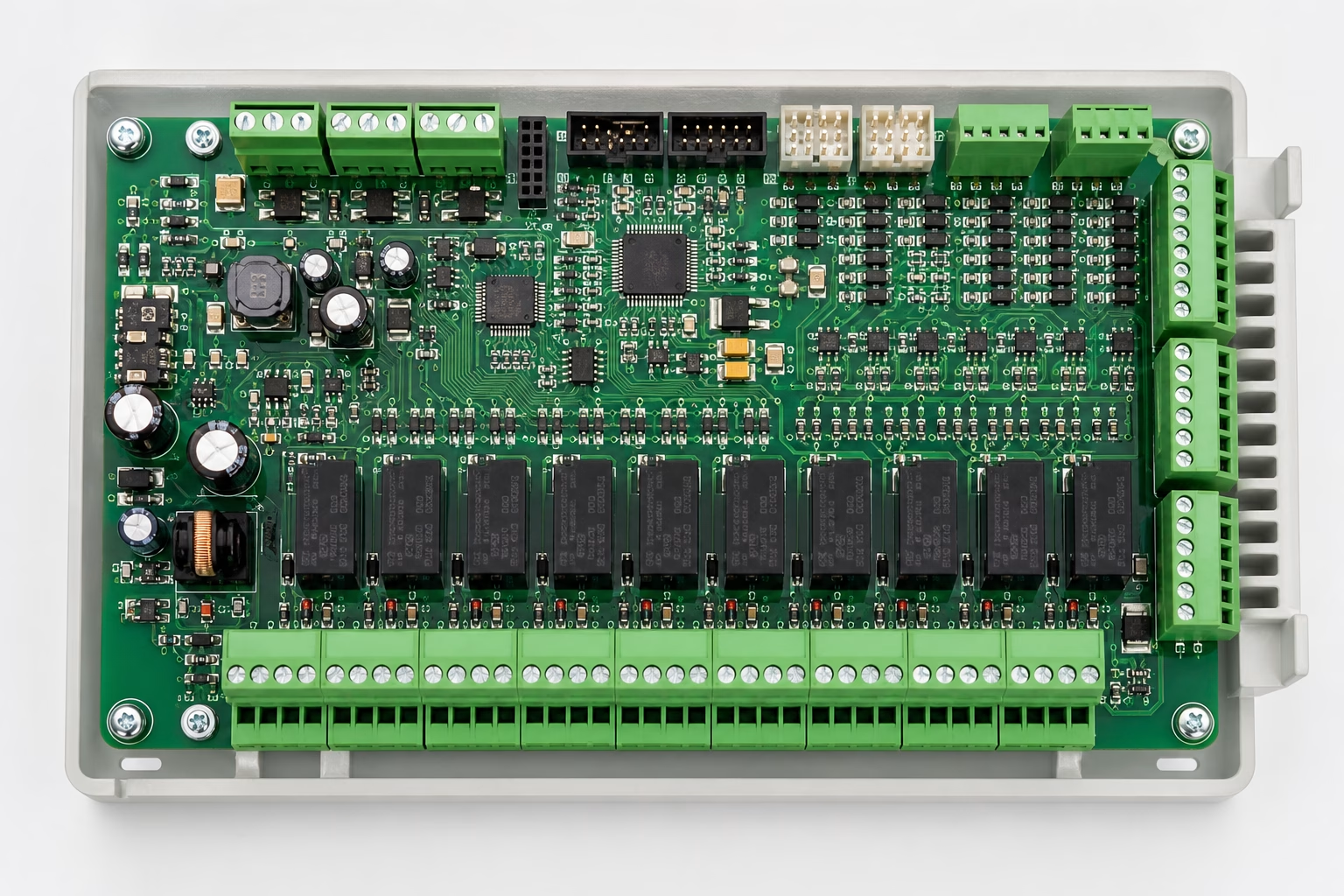
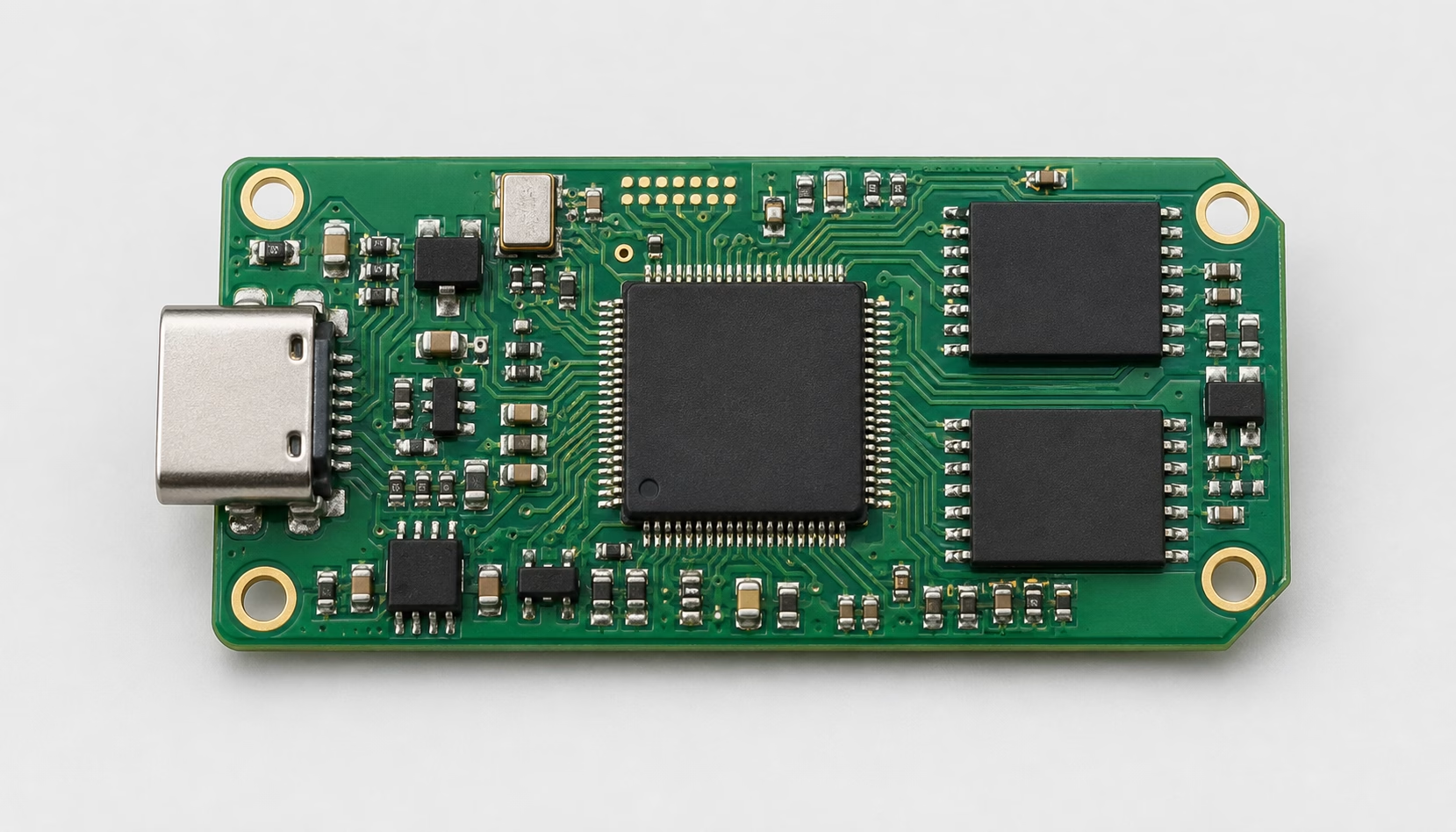
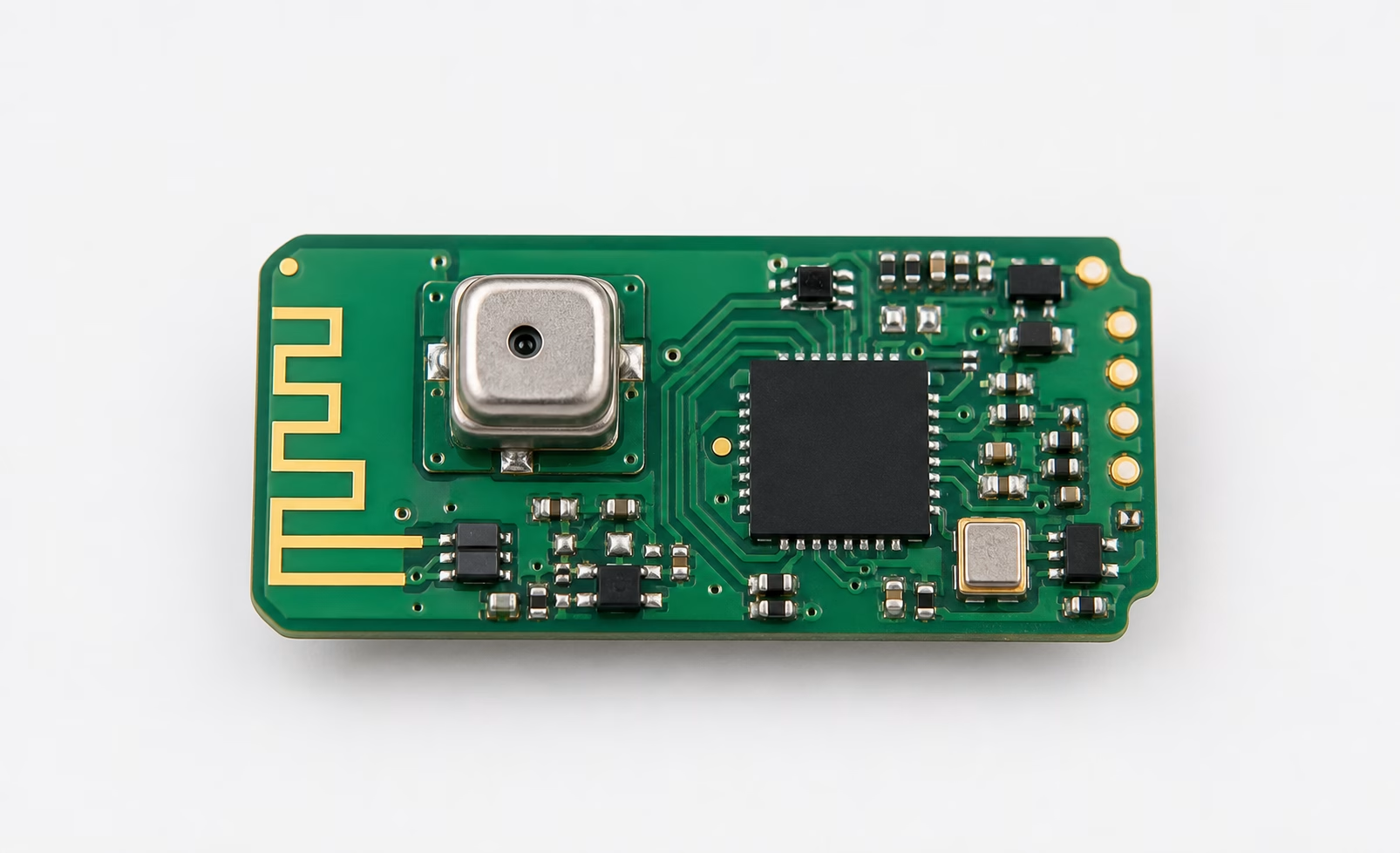
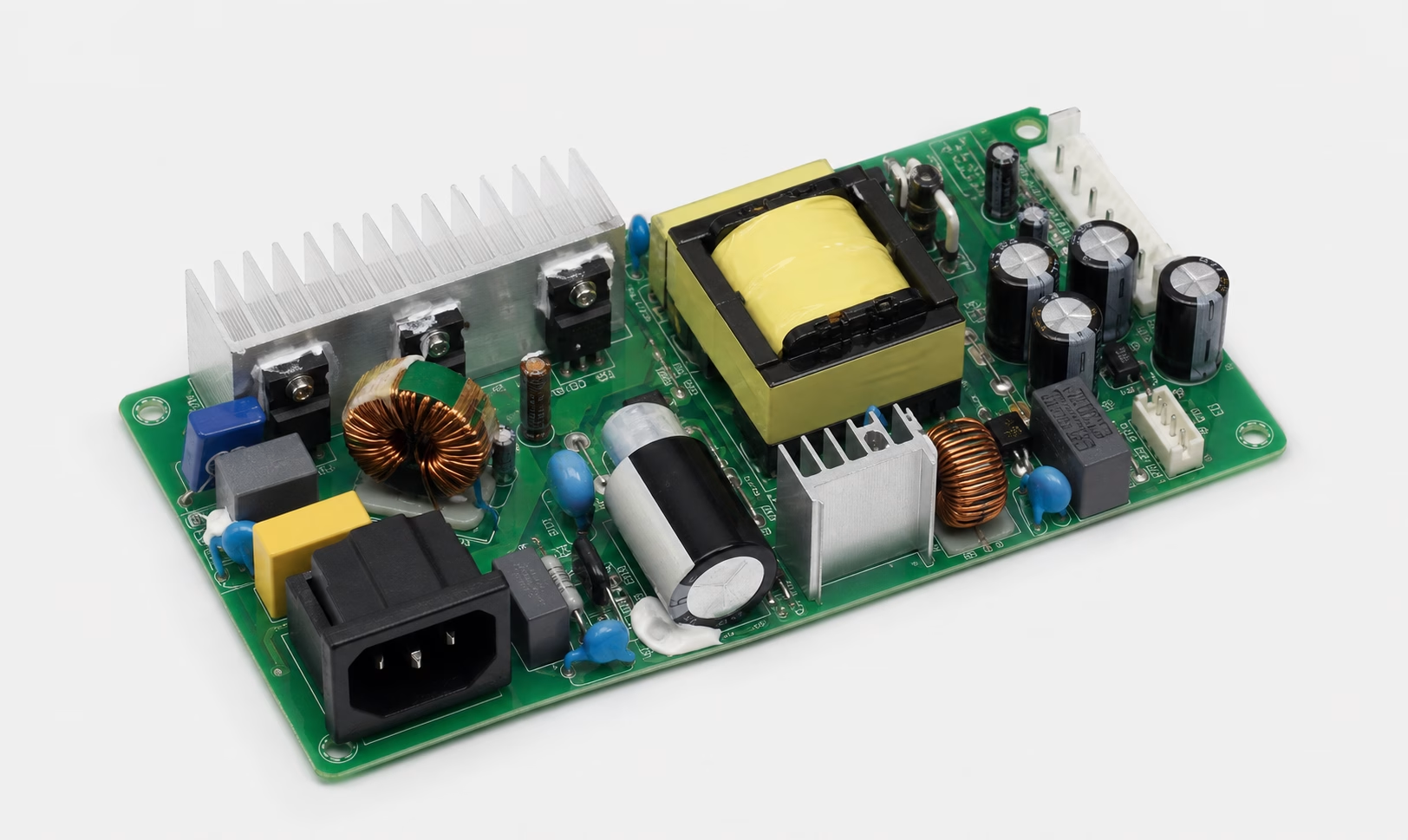
FR4 is the industry workhorse for a reason – dependable performance, design flexibility and cost efficiency. We deliver precision-built FR4 PCBs, on time and to spec.
Get Your FR4 PCB Quote
Looking for a reliable PCB manufacturing and assembly partner?
Simply share your Gerber files or project details, and our engineering team will provide you with a fast, competitive quote tailored to your needs.
Upload Files
Upload Gerber, BOM and requirements.
DFM Review
Our engineers review and provide feedback.
Quote
Receive a clear quote and lead time.
Fabricate
Precision manufacturing with strict process control.
Inspect
AOI, X-ray, functional test and final inspection.
Ship
Secure packaging and on-time delivery.
FR4 PCB FAQs
What is the maximum operating temperature and environmental limit for FR4 PCBs?
Standard FR4 PCB materials typically support a maximum operating temperature between 130°C and 150°C (Tg range), with high-Tg FR4 boards reaching up to 170–180°C. While FR4 offers good humidity resistance, prolonged exposure to extreme environments may affect dimensional stability. For applications in automotive, aerospace, or outdoor electronics, selecting high-Tg or specialized FR4 grades is recommended to ensure durability under thermal cycling and moisture conditions.
Is FR4 suitable for high-speed and high-frequency PCB applications?
FR4 performs reliably for low- to mid-frequency circuits but shows limitations above 8–10 GHz, where signal loss and dielectric constant variation impact performance. For high-frequency PCBs, designers often consider alternative materials such as Rogers laminates, PTFE, or ceramic substrates, which provide better signal integrity and low dielectric loss compared to standard FR4. However, FR4 can still be used in high-speed digital PCBs if proper impedance control and stack-up design are applied.
How should I select the right FR4 PCB thickness and grade for my application?
The choice of FR4 PCB thickness depends on mechanical strength, electrical performance, and assembly needs. Common options range from 0.2 mm to 3.2 mm, with 1.6 mm FR4 boards being the industry standard. For flexibility, lightweight devices, or compact electronics, thinner boards may be preferred, while power electronics and multilayer PCBs often require thicker FR4 laminates. Selecting between standard FR4, high-Tg FR4, or halogen-free FR4 should be based on heat resistance, safety compliance, and environmental requirements.
Do you support prototypes and low-volume orders?
Yes. Request a review with your quantity, target schedule and production files so the team can confirm the best route.
Can you provide PCB assembly and testing?
Yes. OrinewPCB supports PCB fabrication, component sourcing, SMT/THT assembly, programming and functional testing.
