
Our Rigid PCB Board Capabilities
Our rigid PCB manufacturing capabilities are built to support scalable production across single-sided boards, power-dense multilayers, and precision HDI stack-ups. From trace resolution to copper plating and surface finish control, we deliver production-level consistency across every rigid PCB order.
What Types of Rigid PCBs do we offer?
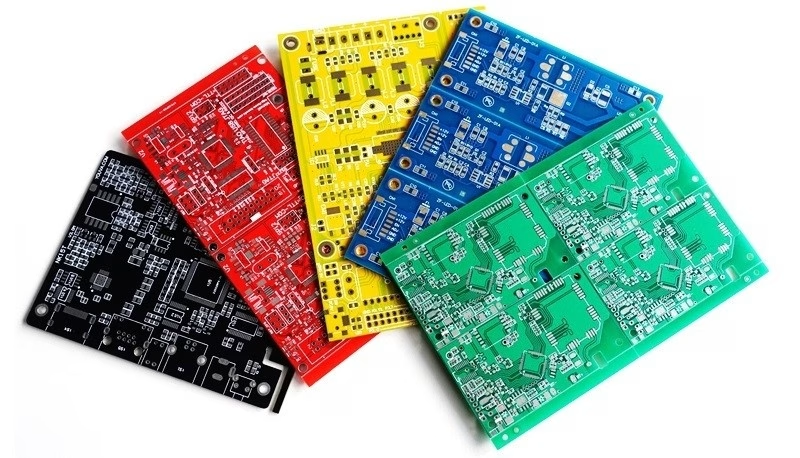
We offer six rigid PCB types: single-sided, double-sided, multilayer, high Tg, rigid-flex, and metal-backed. Each type is built for a specific function, material requirement, or thermal condition, with defined copper weights, stackups, and supported layer counts.
What is a Rigid PCB?
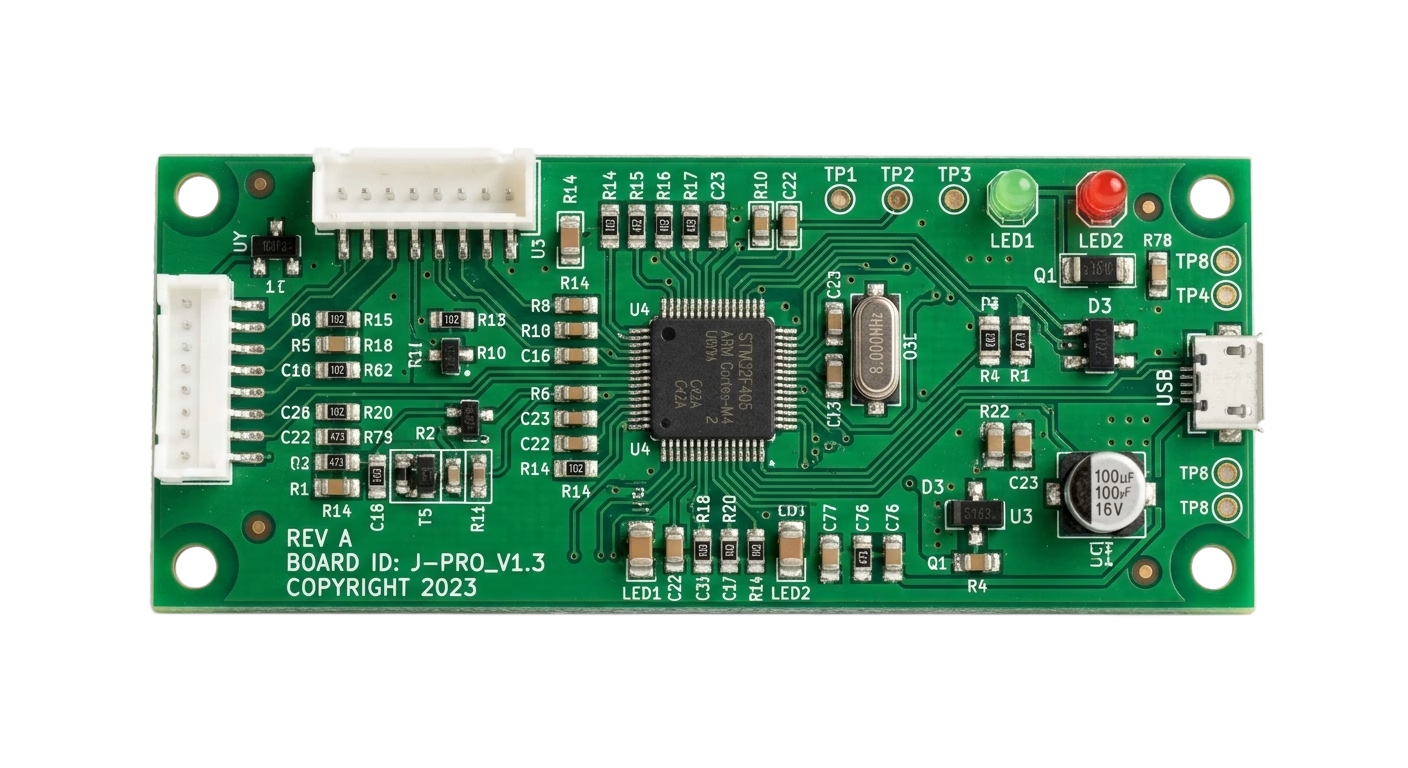
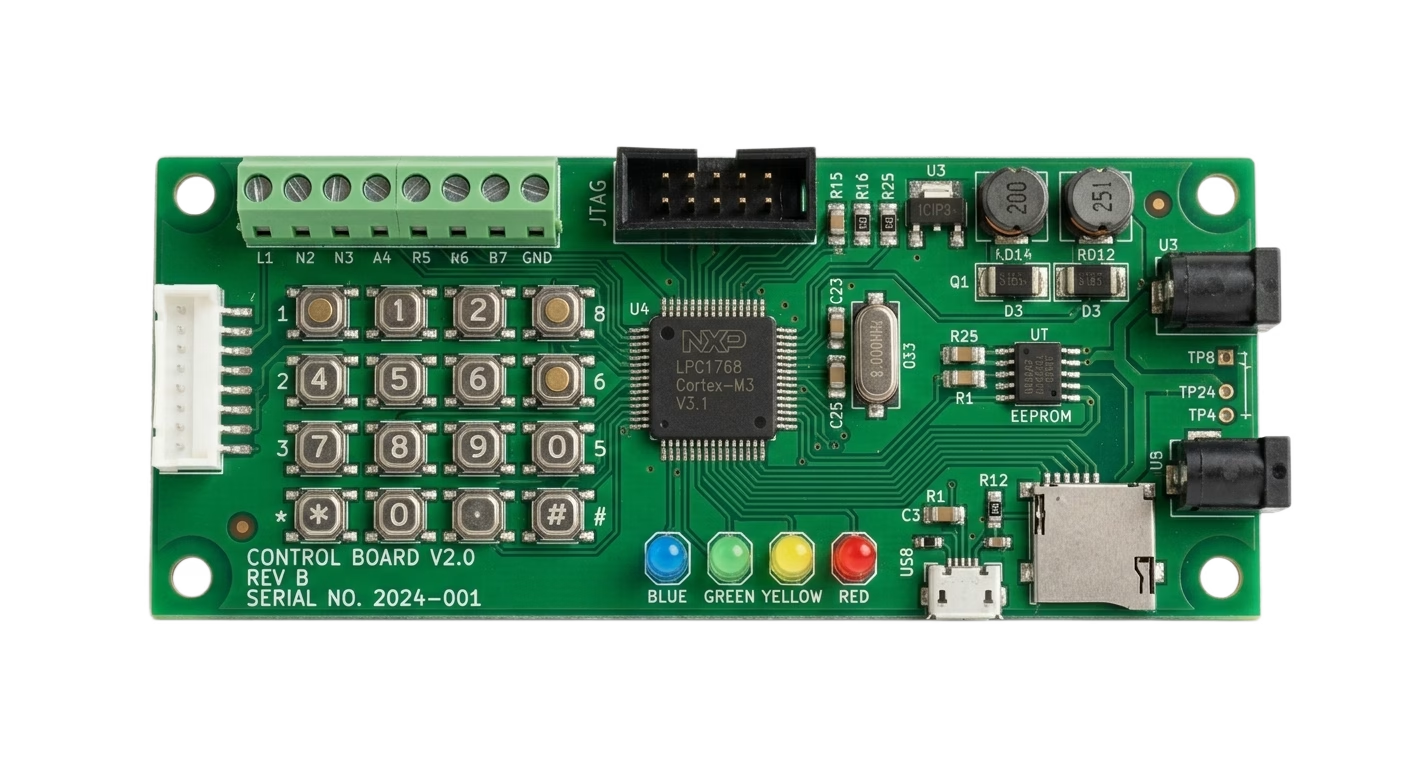
A rigid PCB is a printed circuit board built on a hard, non-bendable substrate, such as rigid FR4, CEM-3, or halogen-free laminate. Each board includes one or more copper layers laminated to the substrate material using heat and adhesive, with finished thicknesses ranging from 0.1 mm to 12 mm.
Standard constructions include single-sided, double-sided, and multilayer PCBs, with stack-ups designed for fixed mounting and dimensional retention. These rigid circuit boards are used when the final assembly requires tight layer registration, consistent pad spacing, and stable circuit performance over time.
What is the Layer Structure of a Rigid PCB?
The layer structure of a rigid PCB includes a dielectric substrate, one or more copper layers, a prepreg bonding layer, an outer solder mask, and a printed silkscreen. These layers are compressed into a fixed stack during lamination to form a mechanically rigid and electrically functional board.
Support for PCB Design and Manufacturability
The substrate is the base insulating material that provides the dielectric platform for copper bonding.
Most rigid PCBs use rigid FR4, halogen-free, or high Tg materials with a dielectric constant between 4.2 and 4.6, Tg ≥170 °C, and decomposition temperature over 340 °C.
Depending on the board stack-up, thicknesses range from 0.1 mm to 2.0 mm.
Silkscreen is a non-conductive epoxy ink printed on the outer surface for component labeling and assembly reference.
Standard colors include white, yellow, and black. It is applied after the solder mask and must not interfere with exposed copper.
Print resolution typically reaches 0.15 mm line width, allowing precise placement of reference designators and polarity markers.
When Should You Use a Rigid PCB?
Rigid PCBs should be used when the application requires mechanical stability, tight component alignment, or cost-optimized high-volume production. Board selection depends on both product form factor and the specific performance or manufacturing advantages of rigid constructions.
When Product Size and Shape Require Stability
Rigid PCBs are preferred for medium to large-scale electronic devices such as desktop computers, televisions, power amplifiers, and rack-mounted systems.
These assemblies benefit from rigid substrates that maintain flatness, support heavier components, and align with static enclosures.
The non-bendable structure prevents warpage and pad distortion under mechanical load or thermal expansion.
When Application Cost Targets Must Be Met
Rigid boards support predictable, low-cost production by reducing tooling variability and minimizing process adjustments.
Standard FR4 stackups use established lamination flows, simplified layer registration, and repeatable copper foil handling, all of which reduce waste and yield loss in volume runs.
When Shorter Lead Times are Required
Because rigid PCB fabrication uses standardized material sets, stocked copper weights, and stable routing tolerances,it can be completed faster than flexible or hybrid boards.
Most builds ship within 5 to 10 business days, and quick-turn prototypes can be delivered in as little as 48 hours without sacrificing Class 2 or Class 3 process control.
High Component Density
When the design includes dense BGA or QFN placement, rigid PCBs provide pad stability and minimal warpage.
Tighter layout tolerances depend on stable substrate thickness, rigid board thickness control, and reliable solder joint formation across small-pitch components.
