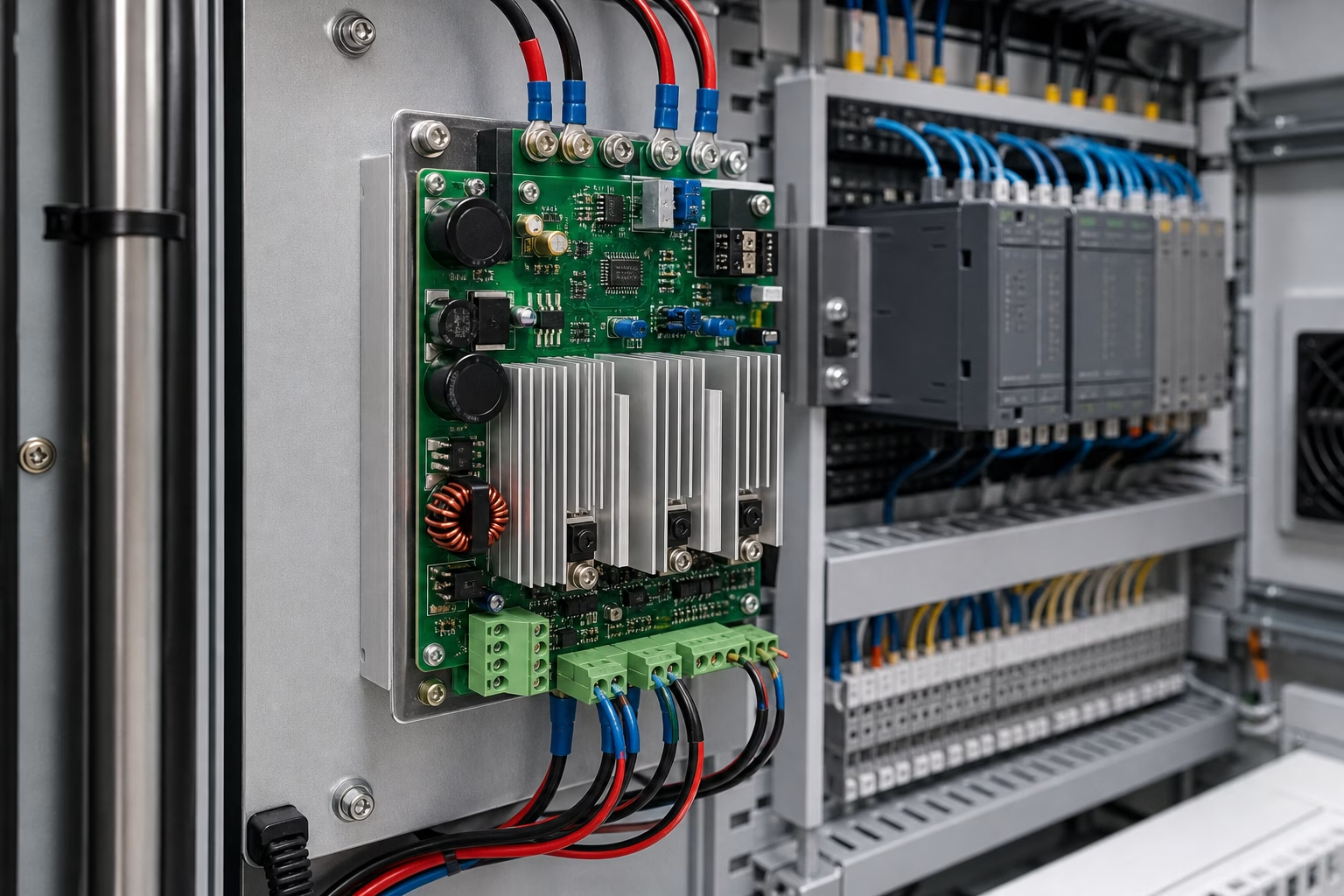
Aluminum PCB

Contact Us

Contact us for all your PCB, PCBA, and custom service needs!

pcb

What are Aluminum PCBs?

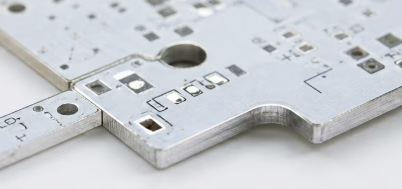
Aluminum PCBs are a type of metal-core printed circuit board (MCPCB) that uses an aluminum substrate as the base material instead of traditional fiberglass (FR4) or plastic substrates.

The aluminum core provides exceptional thermal conductivity, allowing the PCB to efficiently dissipate heat from components, making it ideal for high-power applications such as LED lighting, power electronics, and automotive systems.

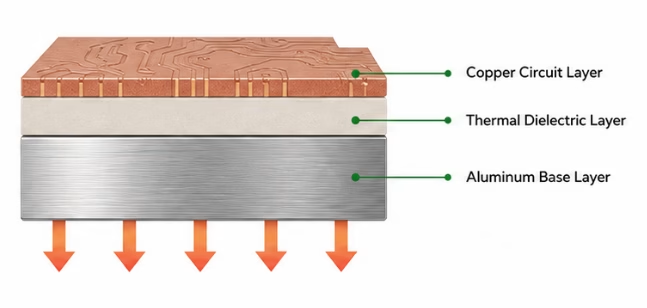
The main structure of an aluminum PCB:

  1. Copper Layer:
    Made of copper foil, this layer carries the electrical traces and provides high electrical conductivity.
  2. Dielectric Layer:
    A thermally conductive, electrically insulating layer, typically a ceramic-filled epoxy or polyimide, 50 to 200 µm thick, that transfers heat from the copper circuit to the aluminum base while preventing electrical shorts.
  3. Aluminum Base Layer:
    The aluminum alloy substrate is the core, providing mechanical strength and effective heat dissipation.

They can be structured in various ways, depending on the applications of the PCB.

what-are-aluminum-pcb

Aluminum PCB Advanced Circuits Specification

Among all Metal core PCBs (aka MCPCBs, known for their ability to provide effective thermal dissipation for electronic products), Aluminum PCBs is the most common type – the base material consists of aluminum core with standard FR4. It features a thermal clad layer that dissipates heat in a highly efficient manner, while cooling components and increasing the overall performance of the products. Currently, Aluminum Backed PCBs is regarded as the solution to high power and tight tolerance applications.

Aluminum PCB

Pcbandassembly: An Experienced MCPCB Manufacturer

PCBAndAssembly been manufacturing aluminum PCBs for 14+ years. Our full feature aluminum circuit boards making capabilities and Free DFM Check allow you to get high-quality aluminum PCBs done within budget. Our printed Aluminum PCBs are widely used for LED lighting, power equipment and automotive systems.

  • In-house aluminum PCB prototyping with 2 to 3 day lead times.
  • Single-sided, single-sided double-layer/multi-layer, thermoelectric separation.
  • Full surface finish options including ENIG, HASL, OSP, and ENEPIG.

The following table presents some of our Aluminum Core materials:

Items

Performance Index (Measured value)

Peeling strength (n/mm)

1.8

Insulation resistance (ω)

>1*10 g

Breakdown voltage (vdc)

>2 k

Soakable soldering (°C/m)

280°C / 260°C, 1 min, no bubble & delamination

Thermal conductivity (ω/m-k)

>0.8

Thermal resistance (°C/ω)

< 1.2

Combustibility

fv-o

Dielectric constant (1mhz)

4

Dielectric loss angle (tangent)

0.03

Materials and Stackups

We build on aluminum cores with FR4, flex, or rigid-flex overlays. Available base materials include Rogers, aluminum, and high-Tg FR4.

Hybrid builds with thermally conductive dielectrics over isolated aluminum sections are supported for applications combining power and RF. Standard thermal conductivity options include 1.0 and 2.0 W/m·K.

Feature

Specification

Core Material

Aluminum, Copper-Aluminum

Supported Stack-Up Types

Single-sided, single-sided double-layer/multi-layer, thermoelectric separation

Max. Finished Board Size

22.5″ x 30″

Board Thickness

Standard: 0.4 mm to 3.2 mm

Dielectric Thermal Conductivity

Standard: FR4, 1W/m·K, 2 W/m·K, 3 W/m·K (custom: up to 15 W/m·K)

Dielectric Thickness

50 µm to 150 µm (±10%).

Copper Thickness

0.33 to 10 oz

Surface Finishing

ENEPIG, Immersion Gold, Immersion Silver, Hard Gold, OSP

Min. PTH Hole

0.8mm

Min. Trace Width/Space

2.5 mil

Lead Time

2-3 days

Copper and Dielectric Specs

Copper is available from 0.33 oz to 10 oz. Dielectric layers are laminated between copper and the aluminum base with thicknesses from 50 µm to 150 µm, depending on thermal resistance targets.

Minimum trace spacing is 2.5 mil. Board thicknesses range from 0.4 mm to 3.2 mm.

Drilling and Via Processes

We support 0.8 mm minimum drill diameter and multiple via treatments: non-covered, tented, or resin-filled.

Through-hole vias that contact the aluminum core are isolated using pre-plated dielectric inserts or resin plugging.

Scoring, edge routing, and mechanical milling are performed using carbide or diamond tooling.

Surface Finishes and Coatings

Available surface finishes include ENIG, ENEPIG, OSP, hard gold, immersion silver, and immersion tin.

Solder mask colors include green, black, white, red, and blue. White silkscreen is standard; black is optional for dark mask builds. Finish and mask alignment are verified using AOI.

Finish thickness and coverage are verified per IPC-4552 (ENIG), IPC-4553 (immersion silver), and IPC-4556 (ENEPIG) standards.

Testing and Lead Time

All builds are tested using flying probe and AOI. Optional tests include impedance validation and X-ray for multilayer or plated-via boards.

All electrical and visual inspections conform to IPC-TM-650 and IPC-9252 for net continuity and isolation thresholds.

Standard lead time for aluminum PCB prototypes is 2 to 3 working days. Depending on layer count and surface finish, full production runs are available on expedited schedules.

Check our Aluminum core PCB manufacturing capabilities in the following table:

Feature

Capability

Quality Grade

Standard IPC 2

Number of Layers

4 – 24layers

Order Quantity

1pc – 10000+pcs

Build Time

2days – 5weeks

Material

Aluminum core (Domestic 1060), Copper core, FR4 covering

Board Size

Min 6*6mm | Max 610*610mm

Board Thickness

0.8mm – 5.0mm

Copper Weight (Finished)

0.5oz – 10.0oz

Min Tracing/Spacing

4mil/4mil

Solder Mask Sides

As per the file

Solder Mask Color

Green, White, Blue, Black, Red, Yellow

Silkscreen Sides

As per the file

Silkscreen Color

White, Black, Yellow

Surface Finish

HASL – Hot Air Solder Leveling
Lead Free HASL – RoHS
ENIG – Electroless Nickle/Immersion Gold – RoHS

Min Annular Ring

4mil

Min Drilling Hole Diameter

6mil

Other Techniques

Countersink holes
Screw holes

Single-Layer, Single Sided

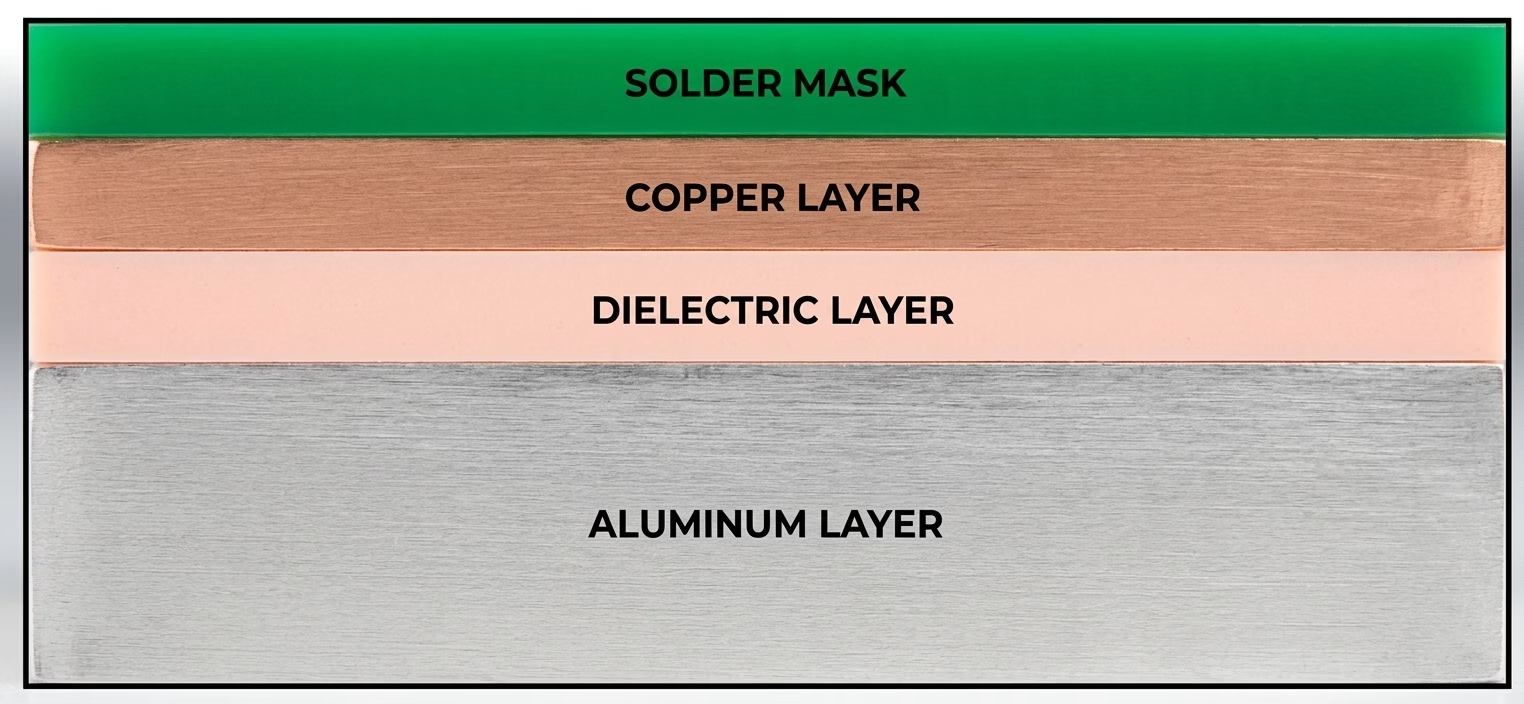
The simplest configuration. Components are mounted on one side, and heat flows from the copper trace through the dielectric to the aluminum base.

Two-Layer, Single-Sided 

Features two copper layers and insulating layers on one side. Heat travels through each copper and dielectric layer to reach the aluminum base.

two-layer-single-sided

Two-Layer, Dual-Sided

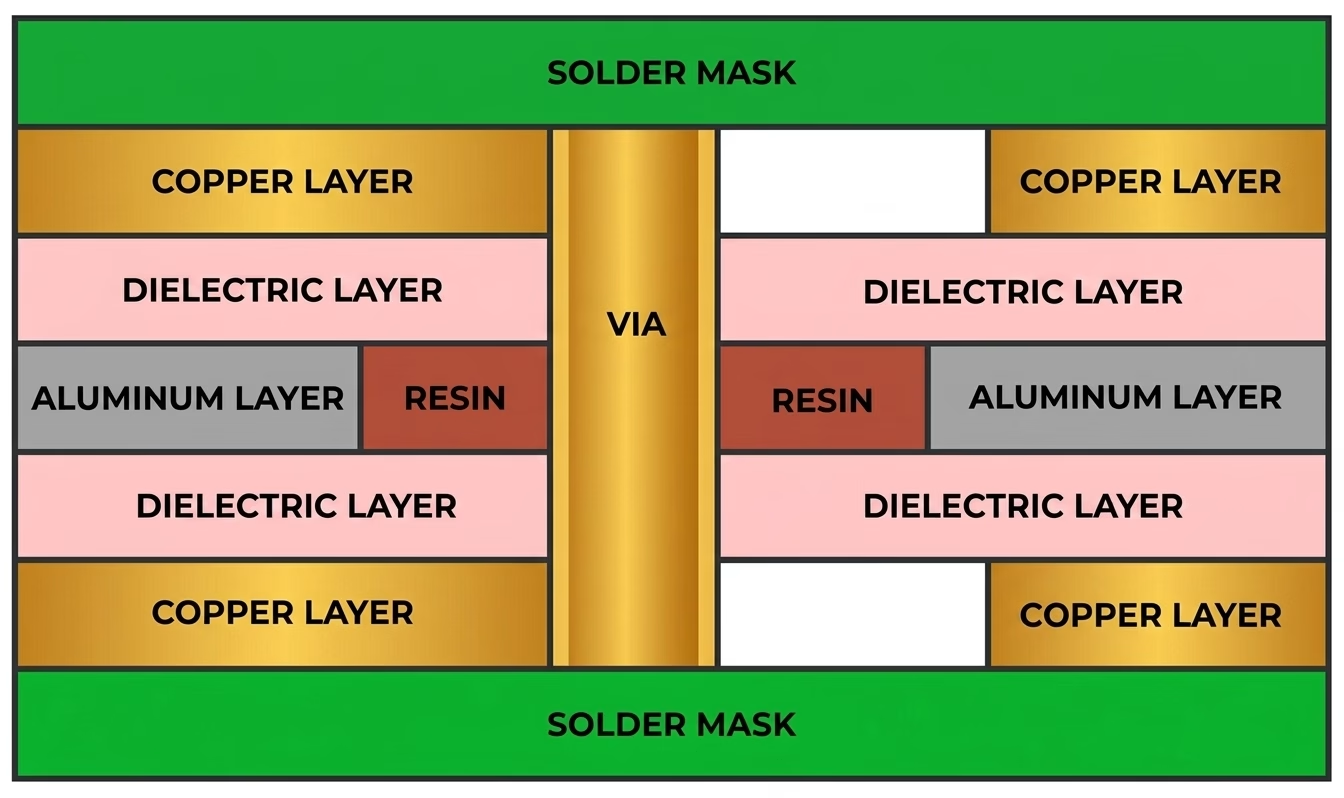
These are used when one side can’t fit all the required circuitry. Both sides support the mounting of components. The space between PTHs and the aluminum core is filled with resin. Heat moves through the copper and dielectric layers on both sides to the metal base.

two-layer-dual-sided

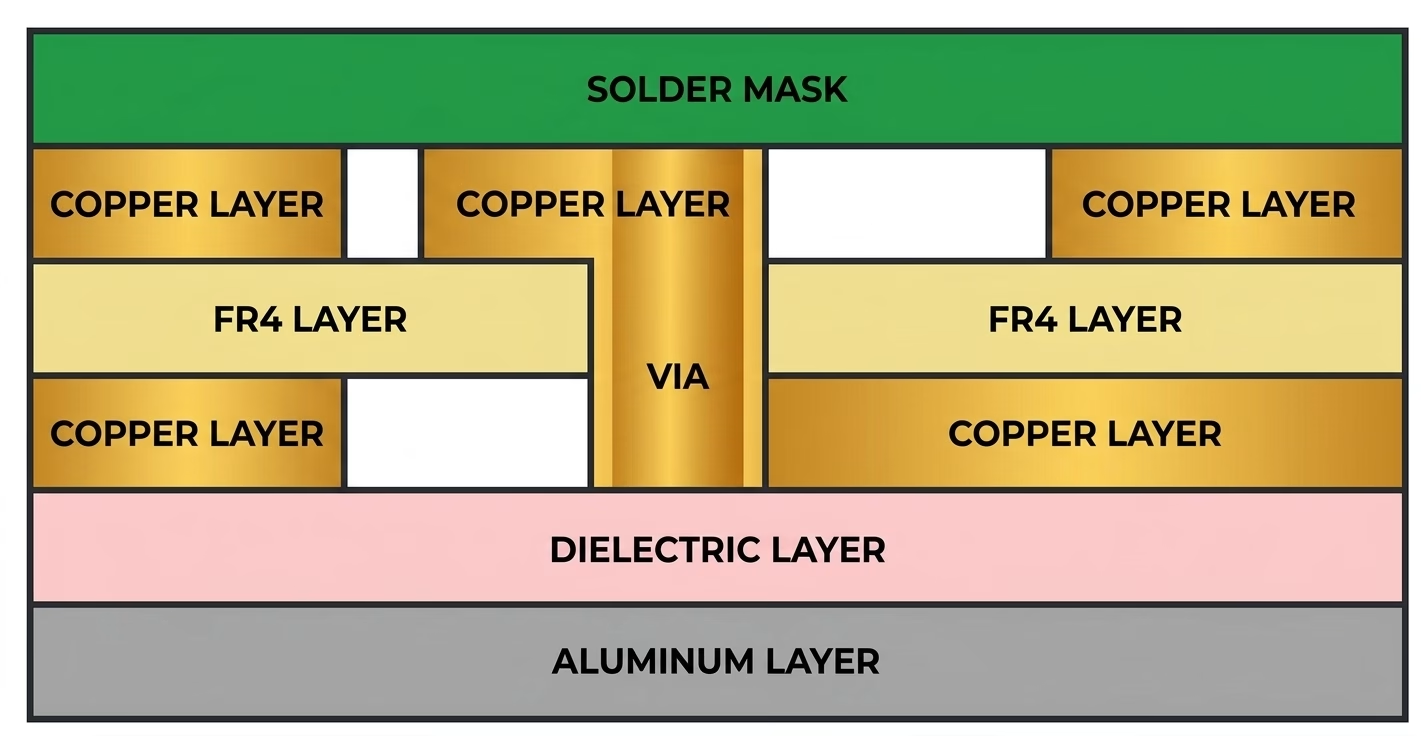
Four-Layer, Dual-Sided

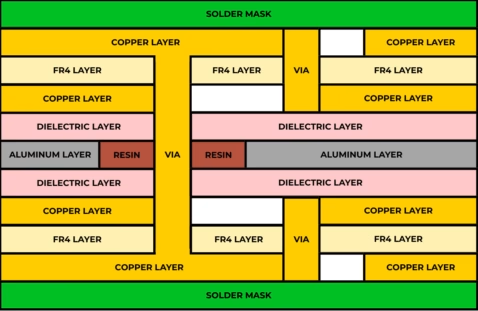
These have two copper layers and dual dielectric layers between component sides and the metal core. The longer thermal path lowers heat dissipation efficiency compared to single- or dual-layer PCBs.

four-layer-dual-sided

Why is Aluminum Ideal for Circuit Boards?

Aluminum is widely used in circuit board manufacturing because of its ability to support high-power applications without increasing complexity or cost. Its metal core structure simplifies thermal design, offers mechanical rigidity, and reduces material weight. These properties make it a practical base for circuits in lighting systems, power equipment, and automotive electronics.

Heat Dissipation

Aluminum conducts heat away from components more efficiently than traditional FR4 substrates. This reduces thermal buildup during operation and helps maintain stable electrical performance in circuits that generate high localized temperatures.

Durability and Strength

Aluminum substrates resist mechanical stress, thermal warping, and cracking better than standard fiberglass, making them well-suited for use in systems exposed to vibration or heat cycling.

Lightweight

Aluminum weighs less than copper and steel while maintaining structural integrity. This is valuable in applications where reduced weight improves product size, handling, or installation.

Environmental Friendliness

Aluminum is non-toxic and has a recycling rate of about 95%. It provides an environmentally friendly solution compared to materials like copper.

Cost-Effectiveness

Aluminum costs 3 to 4 times less than copper. Its abundance in the Earth’s crust and lower extraction cost make it a more affordable material

What Performance Capabilities
do Aluminum PCBs offer?

Aluminum PCBs are designed for environments where thermal load, mechanical stress, and dimensional accuracy must be tightly controlled. The combination of a metal core substrate, thermally conductive dielectric, and rigid structure gives aluminum PCBs predictable behavior under heat, vibration, and electrical noise.

Thermal Dissipation: A 1.5 mm aluminum core PCB has a thermal resistance of 1 to 2 °C/W, compared to 20 to 22 °C/W for an FR4 PCB of similar thickness. 

Thermal Expansion: Aluminum has a coefficient of thermal expansion (CTE) around 22 ppm/°C, slightly higher than copper. However, the even heat distribution in an aluminum core PCB minimizes.

Dimensional Stability​: Aluminum PCBs change in size by only 2 to 3% when exposed to temperatures up to 150 °C. This dimensional stability protects vias.

Electromagnetic Shielding: The aluminum base layer functions as a low-impedance ground plane, which can reduce electromagnetic interference in high-current.

What are the Different Types of Aluminum PCBs?

Aluminum PCB manufacturers classify these boards by how the core is structured, how heat is managed, and how components are mounted. The five primary types are single-layer, flexible, through-hole, multilayer, and hybrid. Depending on the application, each supports different mechanical demands, layer counts, and dielectric behavior.

Single-Layer Aluminum PCBs: A single-layer aluminum PCB consists of one copper trace layer bonded to a dielectric and aluminum base.

Flexible Aluminum PCBs: Flexible aluminum-based printed circuit boards use slotted or segmented aluminum cores.

Through-Hole Aluminum PCBs: A through-hole aluminum PCB is a rigid board with drilled holes that are insulated from the metal core using resin.

Multilayer Aluminum PCBs: A multilayer aluminum PCB is built with two or more copper layers separated by dielectric and anchored.

Hybrid Aluminum PCBs: A hybrid aluminum PCB combines an aluminum base under power components with a secondary dielectric (typically FR4 or polyolefin)

What are the Production Challenges and Solutions for Aluminum PCB Manufacturers?

Aluminum PCBs introduce distinct fabrication challenges due to the combination of metal substrates, thick copper layers, and thermal constraints. These challenges must be managed with process-specific controls to maintain dimensional accuracy, electrical integrity, and manufacturability.

Copper Etching:Copper layers above 3 oz etch unevenly due to sidewall thickness and lateral undercutting, which can cause trace width deviation.

Solder Mask Printing: Height variation from thick copper can lead to poor solder mask coverage and misalignment during exposure.

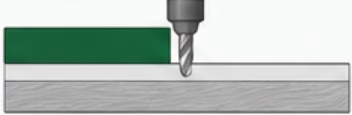
Mechanical Manufacturing: Aluminum PCB manufacturers find that drilling into aluminum often produces burrs and risks damaging dielectric isolation between copper.

What Applications Use Aluminum PCBs?

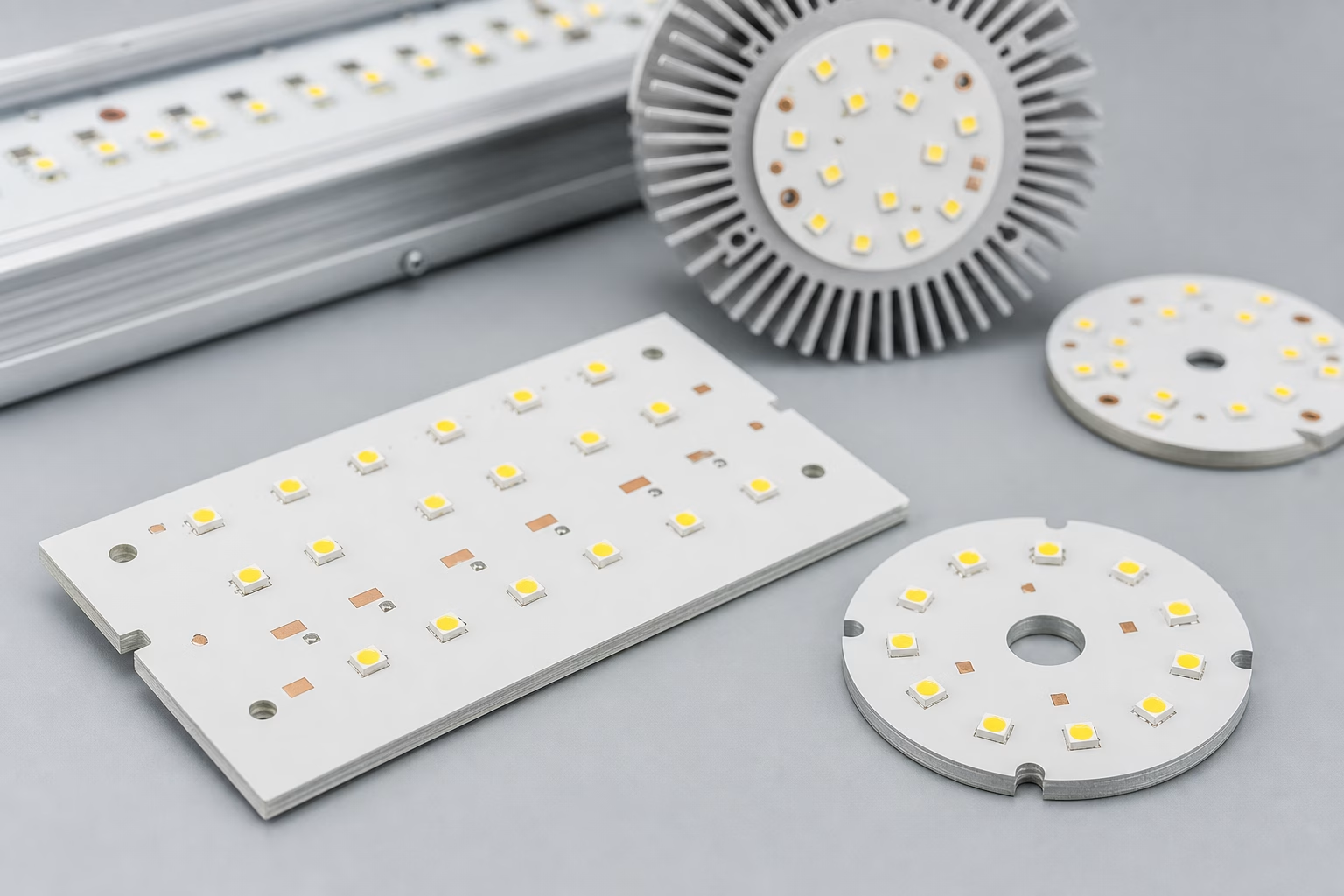
LED Lighting Systems:Aluminum core PCBs are used in LED backlights, headlamps, and high-intensity luminaires to transfer heat directly from the components to the heat sink or the ambient environment.

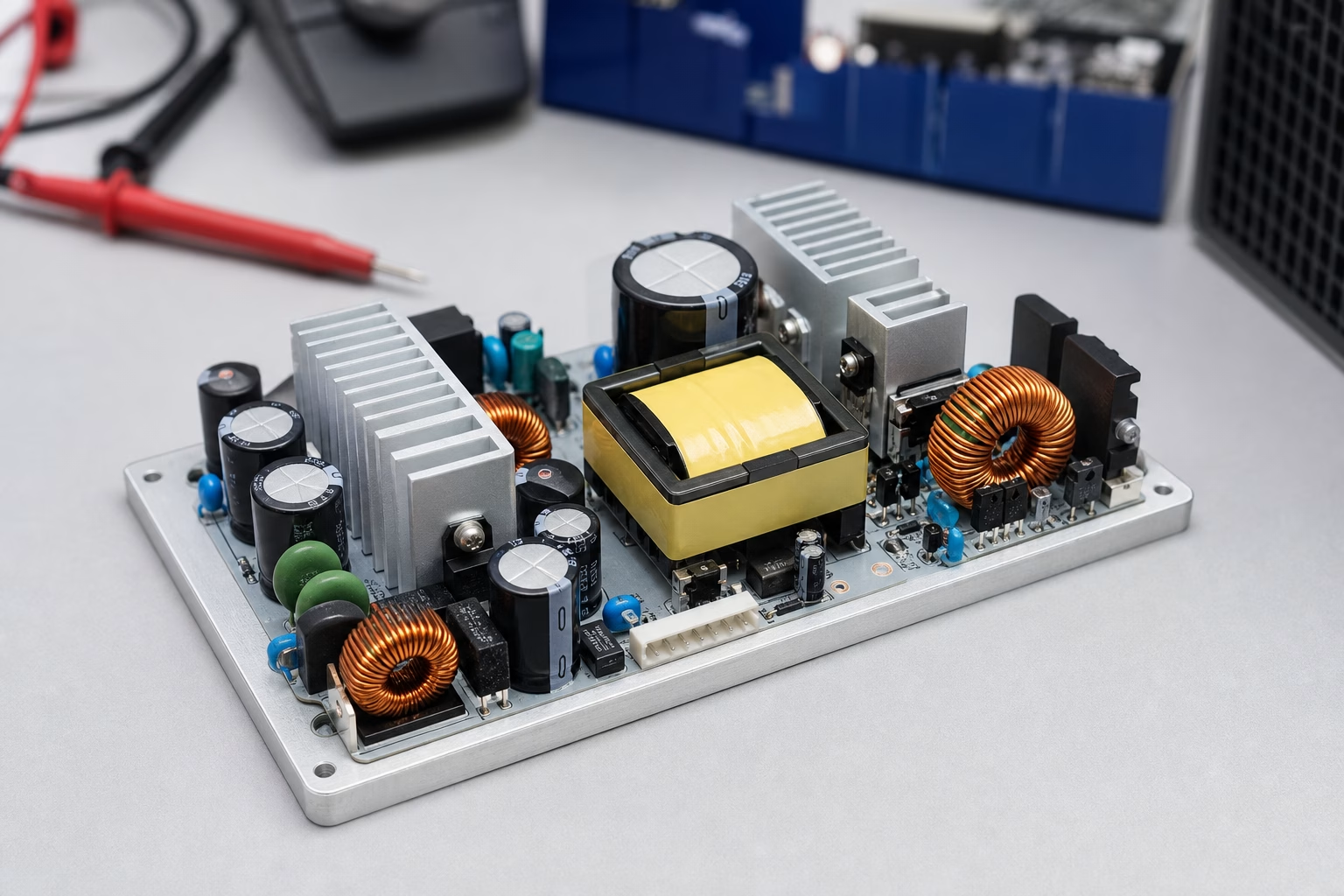
Power Supply Modules: AC-DC converters, DC-DC regulators, and motor drive inverters rely on aluminum substrate PCBs for thermal dissipation from power switching components to the system enclosure or a secondary heat sink.

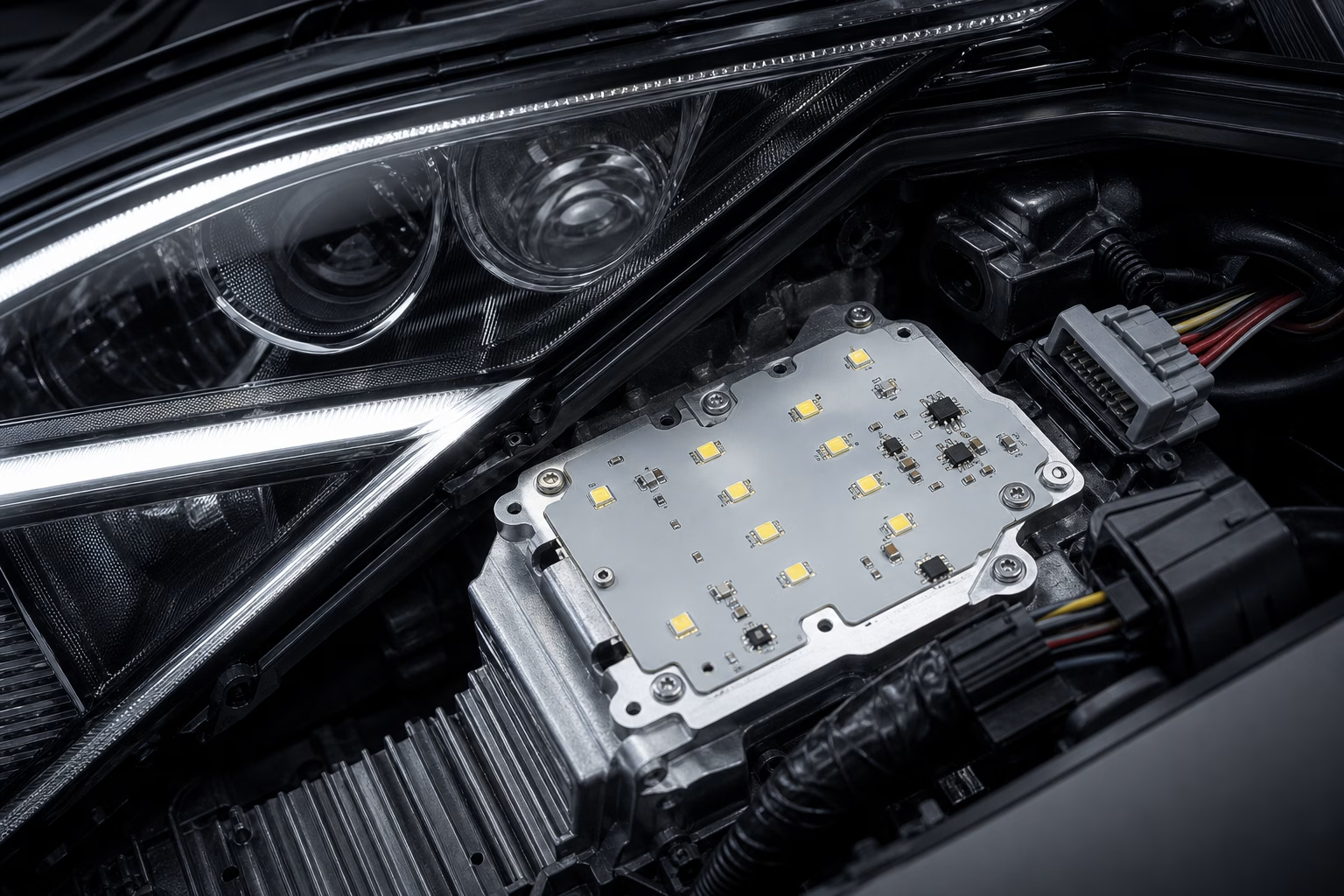
Automotive Electronics: LED signal assemblies, ignition control circuits, and battery interface boards use aluminum PCBs to manage vibration.

Industrial and Automation Controls: Aluminum PCBs are used in relay drivers, PLC power sections, and high-current gate boards. Their dimensional stability is superior to that of traditional FR-4 boards, maintaining consistent size and flatness even under extreme thermal cycling.

Contact Us

Contact us for all your PCB, PCBA, and custom service needs!

pcb