Electronic Components HS Codes: Duties & Compliance
HS codes are standardized numerical classifications used by customs authorities worldwide to identify products, calculate duties, and ensure compliance. For the global electronics market, accurate HS codes are crucial.
Get Your PCB Quote!
Table of Contents
- 1. Introduction
- Key Takeaways
- 2. What Are HS Codes? The Universal Language of Trade
- 3. Why Accurate HS Coding is Crucial for Electronic Components
- 4. Decoding Electronic Component HS Codes: Structure & Examples
- 5. How to Find and Verify HS Codes for Your Components
- 6. The Impact of HS Codes on Duty Rates and Compliance
- 7. Import vs. Export: How HS Codes Apply in Both Directions
- 8. Staying Current: HS Code Updates and the 2026 Revision
- 9. HS Code FAQ
- 10. Summary
1. Introduction
The global electronics trade is a vast, interconnected network, brimming with innovation and complex supply chains. From the smallest resistor to the most advanced integrated circuit, billions of electronic components cross international borders daily. In a market valued at nearly $94.93 billion in the United States alone in 2024, efficient and compliant movement of goods is paramount. Yet, navigating the intricacies of international customs can be a daunting challenge for businesses, importers, and exporters alike.
Enter Harmonized System (HS) codes. These standardized numerical classifications serve as the universal language of customs, ensuring products are correctly identified, categorized, and taxed. For anyone involved in importing or exporting electronic components, understanding HS codes isn’t just a regulatory formality—it’s a critical component of smooth operations, cost efficiency, and avoiding costly delays or fines. This guide will demystify HS codes for electronic components, explaining what they are, why they are indispensable, and how to accurately find and utilize them in your global trade endeavors.
Key Takeaways
- HS codes are the global standard for product classification, ensuring uniformity in international trade for electronic components. All countries share the same 6-digit base; national systems (U.S. HTSUS 10-digit, EU CN 8-digit, India HSN) add further digits for local tariff and regulatory purposes.
- Accurate HS coding is critical to avoid customs delays, prevent fines, and ensure correct duty and tax payments. Misclassification — even by a single digit — can shift a product into a different tariff bracket, triggering overpayment, underpayment penalties, or goods seizure.
- Key sub-codes to know: capacitors (8532), resistors (8533), transistors (8541), integrated circuits (8542), bare PCBs (8534.00), connectors (8536), smartphones (8517.12), laptops/tablets (8471.30), lithium-ion batteries (8507.60), and power supplies (8504.40).
- Import and export classification serve different but equally important purposes. On import, HS codes determine duty rates and FTA eligibility. On export, they trigger export control review requirements (e.g., ECCN under U.S. EAR) and are used for statistical reporting via Schedule B. Consistency between import and export records is a compliance best practice.
- Use authoritative tools for classification: HTS Search (USITC) and EU TARIC for official national schedules; WCO Trade Tools for the international 6-digit standard; Census Bureau Schedule B for U.S. export reporting; and commercial platforms like Easyship for quick lookups with duty estimates. Always cross-reference commercial results against official government sources.
- HS codes are revised approximately every five years by the WCO. The next update cycle (HS 2027) is underway. Businesses should audit their code libraries annually and pay special attention to multi-functional assemblies, which may be reclassified from component headings to finished-goods headings under revised rules. Using outdated codes risks shipment rejection or incorrect taxation.
- Understanding HS codes enables strategic business decisions beyond compliance: supply chain sourcing optimization, precise landed-cost forecasting, FTA duty savings, and informed market entry analysis. Mastering classification is both a risk management tool and a competitive advantage in global electronics trade.
2. What Are HS Codes? The Universal Language of Trade
At its core, the Harmonized System (HS) is a standardized numerical method of classifying traded products. Think of it as an international product dictionary for customs. Administered by the World Customs Organization (WCO), the HS provides a logical and systematic classification of goods, making international trade more efficient and transparent. The WCO updates the system every five years to keep pace with technological advancements and evolving trade patterns.
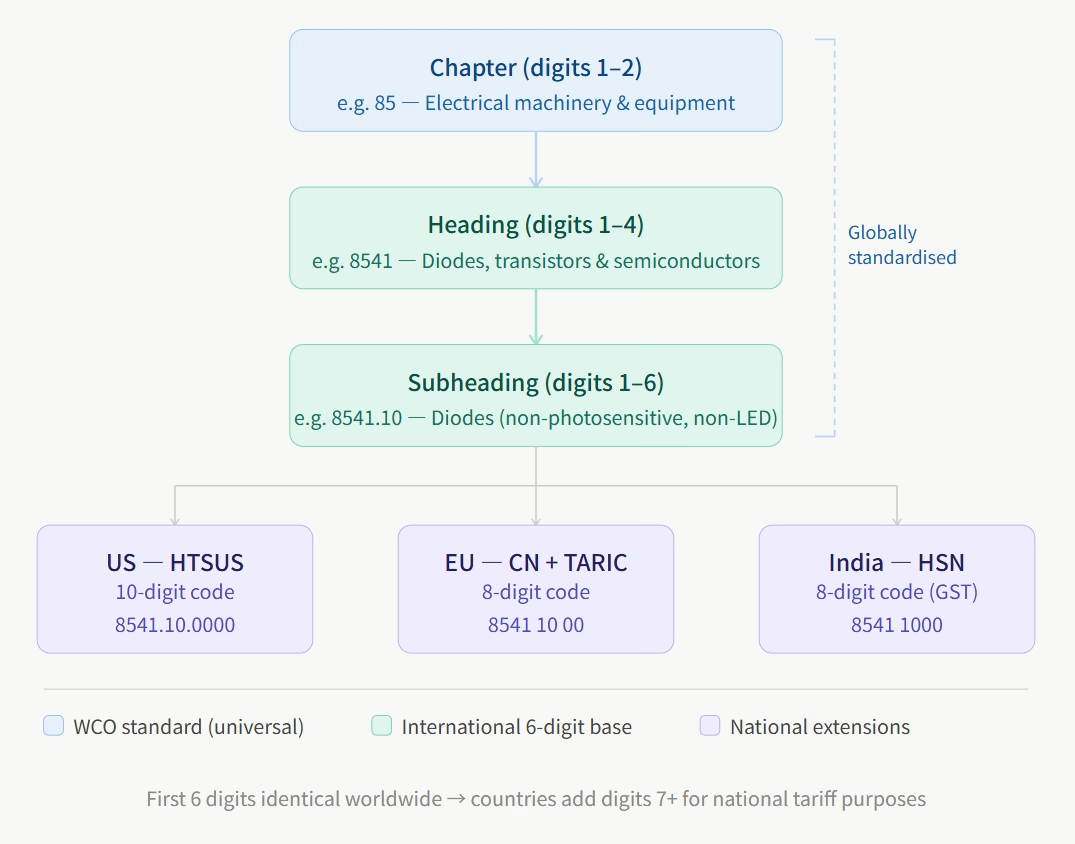
The beauty of the HS lies in its global uniformity. All countries use the same first six digits of an HS code to denote a product’s fundamental classification. These six digits are broken down into:
- Chapters (first two digits):Broad categories of goods.
- Headings (next two digits):More specific categories within a chapter.
- Subheadings (final two digits):Even more detailed classifications within a heading.
While the first six digits are globally standardized, individual countries are permitted to add longer codes—typically two to six more digits—for further, more granular classification. These national extensions allow countries to cater to their specific tariff structures, regulatory requirements, and statistical needs. For instance, in the United States, the 10-digit system is known as the Harmonized Tariff Schedule of the United States (HTSUS).
For electronic components, this structured system is vital. It enables customs officers worldwide to uniformly identify and describe products, which in turn facilitates the assessment of duties and the gathering of accurate trade statistics. Without this common language, global trade would be mired in confusion and inefficiency.
3. Why Accurate HS Coding is Crucial for Electronic Components
The importance of accurate HS coding for electronic components cannot be overstated. In an industry where speed, precision, and cost-effectiveness are paramount, incorrect classification can trigger a cascade of negative consequences. HS codes are very important for identifying items and grouping products like electronic components into clear categories.
Avoiding Delays and Fines
One of the most immediate impacts of misclassification is customs delays. When customs authorities encounter a shipment with an incorrect or ambiguous HS code, it often leads to scrutiny, requests for additional documentation, and holds. For businesses dealing with time-sensitive electronic components, these delays can disrupt production schedules, delay product launches, and strain customer relationships. Beyond delays, incorrect codes can result in significant fines and penalties, directly impacting a company’s bottom line.
Ensuring Correct Duty and Tax Payments
HS codes directly determine the duty rates and taxes applied to imported goods. Each classification carries a specific tariff, which can vary significantly depending on the product’s type, origin, and intended use. Misclassifying an electronic component can lead to:
- Overpayment of duties:If a product is coded into a category with a higher tariff than it should be, the importer pays more than necessary, eroding profit margins.
- Underpayment of duties:If a product is coded into a category with a lower tariff, it can lead to customs audits, retroactive duty payments, and severe penalties once the error is discovered.
Accurate coding ensures that businesses pay the correct amount, maintaining financial compliance and predictability.
Facilitating Smooth Customs Processing
Correct HS codes simplify the entire import and export process. They act as a clear signal to customs officers, allowing goods to pass through borders more efficiently. This streamlining reduces administrative burden, accelerates transit times, and enhances supply chain reliability. For the complex ecosystem of electronic component manufacturing and distribution, this efficiency is a competitive advantage.
Accurate Trade Statistics and Policy
Beyond individual transactions, HS codes play a critical role in gathering accurate global trade statistics. Governments and international organizations rely on these statistics to analyze trade flows, negotiate agreements, and formulate economic policies. Incorrect classifications can distort these data, leading to flawed policy decisions that could indirectly affect the electronics industry.
In essence, mastering HS codes for electronic components is not just about compliance; it’s about safeguarding your operations, managing costs, and contributing to the integrity of global trade.
4. Decoding Electronic Component HS Codes: Structure & Examples
For electronic components, the journey into the Harmonized System often begins in Chapter 85: “Electrical machinery and equipment and parts thereof; sound recorders and reproducers, television image and sound recorders and reproducers, and parts and accessories of such articles.” This broad chapter then branches out into more specific headings and subheadings, each tailored to different types of electronic items.
The electronics industry encompasses a wide range of items, such as mobile phones, semiconductors, printed circuit boards (PCBs), and various other electronic components. Each of these categories will have its own specific HS code.
Let’s look at how the HS code structure applies to some common electronic components, moving from general to specific:
| HS Code Level | Example for Electronic Components | Description |
| Chapter (2 digits) | 85 | Electrical machinery and equipment and parts thereof; sound recorders and reproducers, television image and sound recorders and reproducers, and parts and accessories of such articles. This is the starting point for most electronics. |
| Heading (4 digits) | 8541 | Diodes, transistors and similar semiconductor devices; photosensitive semiconductor devices, including photovoltaic cells whether or not assembled in modules or made up into panels; light-emitting diodes (LED); mounted piezoelectric crystals. |
| Subheading (6 digits) | 8541.10 | Diodes, other than photosensitive or light-emitting diodes (LED). This further narrows down to specific types of semiconductor devices. |
| National Extension (8-12 digits) | 8541.10.0000 (US HTSUS example) | Further specifies the type of diode, potentially by voltage, power rating, or other characteristics relevant for national tariff purposes. |
Similarly, other electronic components will fall under different headings within Chapter 85 or related chapters:
- Integrated Circuits (ICs):These would typically be found under a heading related to electronic integrated circuits, often following semiconductors (e.g., within 8542).
- Printed Circuit Boards (PCBs):Depending on whether they are populated or unpopulated, bare boards might fall under a different heading (e.g., within 8534 for “Printed circuits”).
- Resistors, Capacitors, Inductors: These passive components will have their own distinct headings and subheadings, usually within Chapter 85 as well (e.g., 8532 for capacitors, 8533 for resistors).
- Connectors, Switches, Relays:These electromechanical components are also classified within Chapter 85, under headings specific to their function.
The key is to understand that the classification becomes progressively more specific with each additional digit. Accurate classification requires a thorough understanding of the component’s function, materials, and design. Even slight variations can lead to a different HS code and, consequently, different duty rates and regulatory requirements.
4.1 Common HS Sub-Codes for Electronic Components: Quick Reference
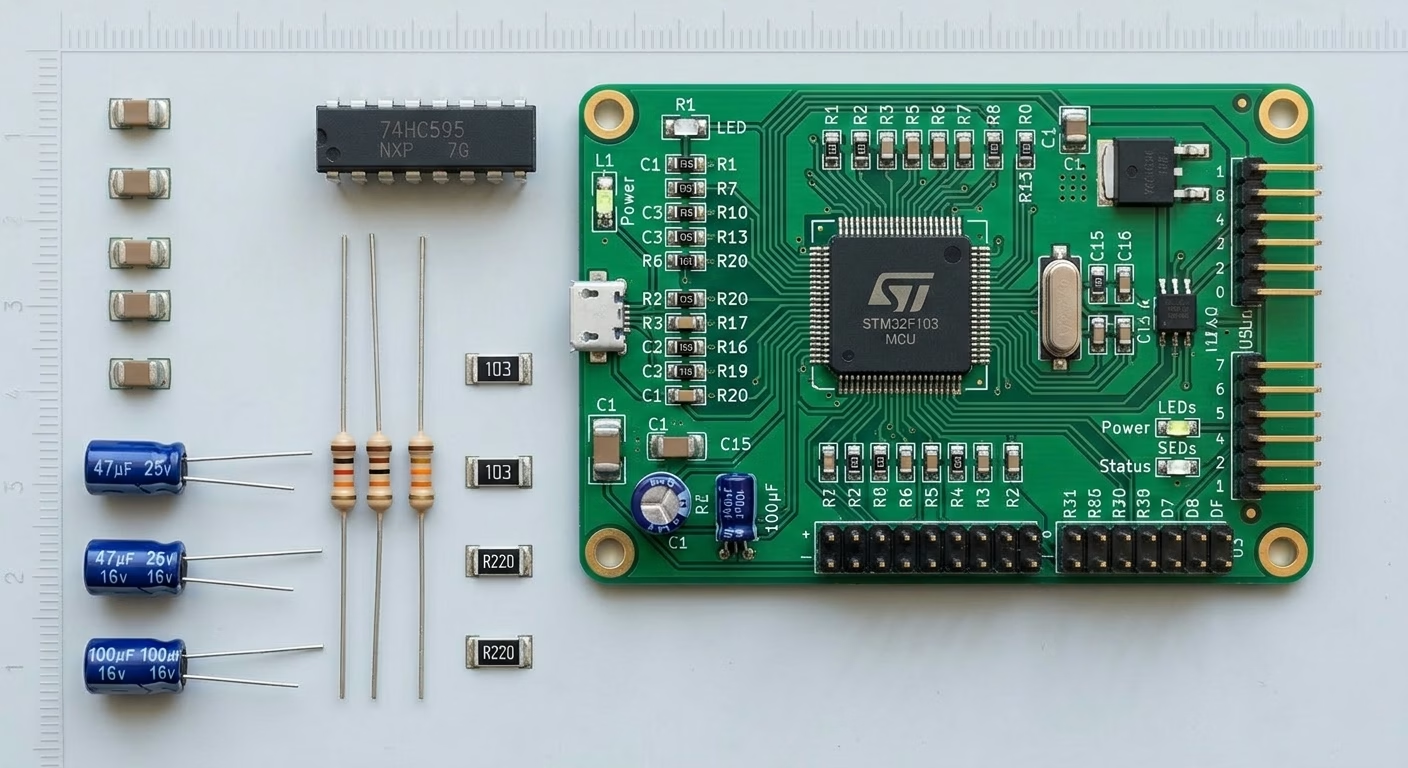
The following table provides a practical reference for frequently traded electronic components and their commonly applied HS sub-codes. While the 6-digit international standard is listed, always verify against the national tariff schedule of your import/export country, as additional digits may apply.
| Component Category | HS Code | Sub-type | Notes |
| Capacitors | 8532 | 8532.21 / 8532.24 | Tantalum (8532.21); Ceramic multilayer (8532.24); Aluminum electrolytic (8532.22) |
| Resistors | 8533 | 8533.10 / 8533.21 | Carbon film (8533.10); Wire-wound <20W (8533.21); Potentiometers (8533.40) |
| Transistors | 8541 | 8541.21 / 8541.29 | Dissipation <1W (8541.21); >1W incl. IGBT (8541.29); MOSFETs (8541.21) |
| Integrated Circuits (ICs) | 8542 | 8542.31 / 8542.32 | Processors/controllers (8542.31); Memory DRAM/Flash (8542.32); Amplifiers (8542.33); Other ICs (8542.39) |
| Printed Circuit Boards (PCBs) | 8534 | 8534.00 (bare boards) | Bare/unpopulated PCBs (8534.00); Assembled PCBAs for computing use 8473.30; Telecom PCBAs use 8517 |
| Connectors | 8536 | 8536.69 / 8536.90 | PCB connectors, USB/data ports, coaxial (8536.69); Other terminals (8536.90) |
| Smartphones | 8517.12 | Wireless handsets | Phones designed for cellular/wireless networks |
| Laptops & Tablets | 8471.30 | Portable data processing | Portable automatic data processing machines weighing under 10kg |
| Lithium-Ion Batteries | 8507.60 | Li-ion accumulators | Covers batteries for phones, laptops, and EVs |
| Power Supplies / AC Adapters | 8504.40 | Static converters | Chargers, SMPS units, DC-DC converters |
| LED Components | 8541.40 / 8541.52 | Light-emitting diodes | LED diodes (8541.40); LED modules/light sources (8541.52) |
| Game Consoles | 9504.50 | Video game systems | Video game consoles used with TV or other displays |
Note: Sub-codes shown are the internationally standardized 6-digit versions. National extensions (e.g., 10-digit US HTSUS, 8-digit EU CN, India HSN) may apply additional digits. Always verify with the official tariff schedule of the destination country.
5. How to Find and Verify HS Codes for Your Components
Finding the correct HS code for electronic components might seem daunting, but several reliable resources and strategies can guide you. Using online tools to find HS codes easily can help you follow rules and ensure compliance.
Official Government and International Databases
The most authoritative sources for HS codes are national customs websites and international trade portals:
- World Customs Organization (WCO):While the WCO administers the HS, it doesn’t provide a public, searchable database for all national codes. However, their official publications and updates are foundational.
- National Customs Websites:Every country maintains its own tariff schedule based on the HS. For example:
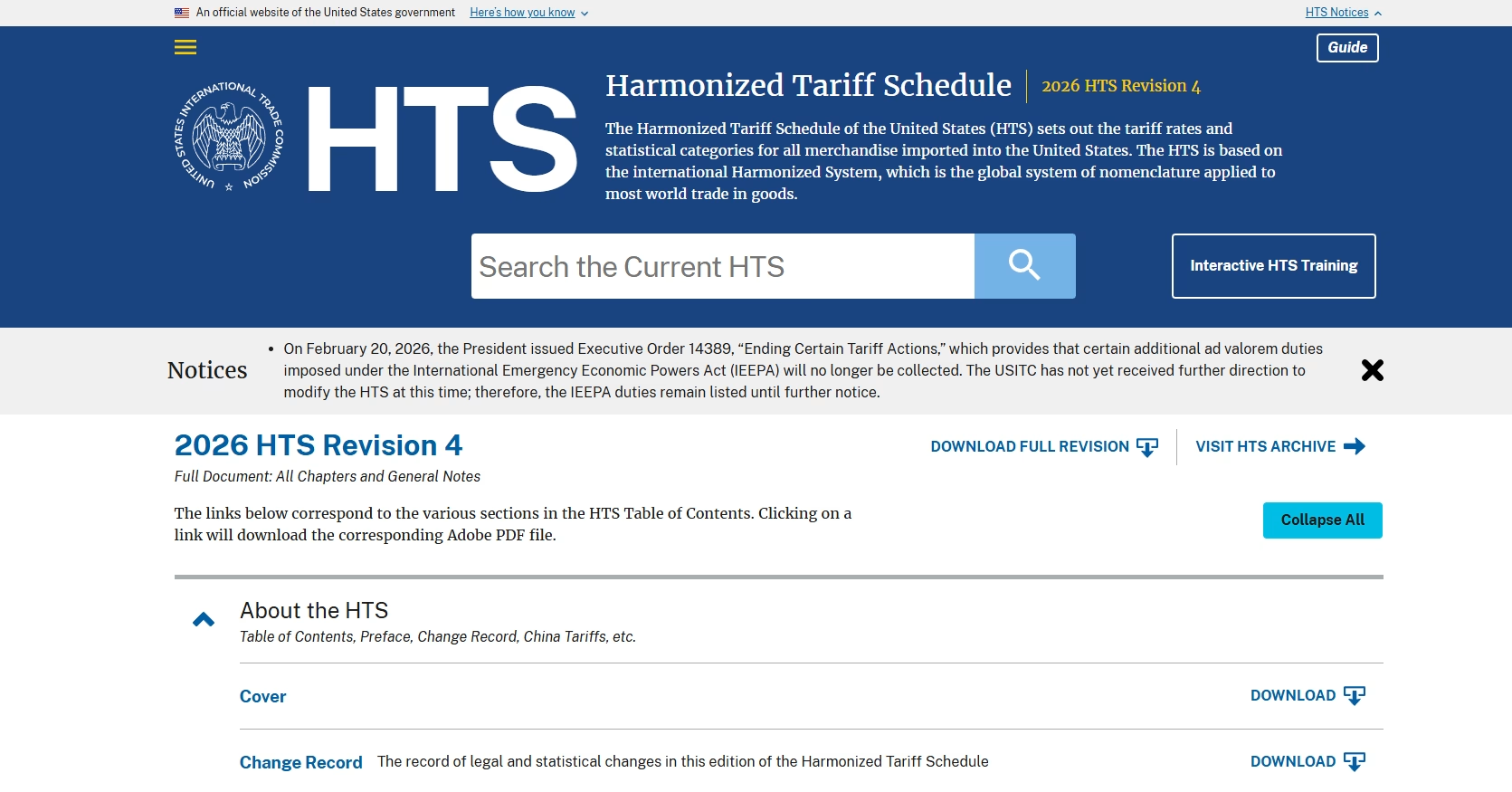
- United States:The Harmonized Tariff Schedule of the United States (HTSUS) is available on the U.S. International Trade Commission (USITC) website. You can search by keyword or browse by chapter.
- European Union:The TARIC database provides integrated tariff data for the EU, allowing users to find codes, duty rates, and import measures.
- Other Countries:Most national customs authorities offer similar searchable databases on their official government websites.
Online Classification Tools and Software
Several reliable online platforms are available for HS code classification. The following tools are particularly recommended for electronic components:
(1) HTS Search (USITC) — the official U.S. Harmonized Tariff Schedule search tool at hts.usitc.gov, covering over 17,000 codes with duty rates and trade preference notes;
(2) EU TARIC System — the European Union’s integrated tariff database providing customs duties, agricultural levies, and EU-specific regulations;
(3) WCO Trade Tools — the World Customs Organization’s portal for the international 6-digit HS standard, used in over 200 countries;
(4) Census Bureau Schedule B Search — used specifically for U.S. export statistical reporting of electronic components;
(5) Easyship HS Code Lookup — a commercial tool that searches by keyword and calculates estimated import taxes for a full landed-cost picture. While commercial tools offer convenience, always cross-reference results with official government sources, especially for complex or high-value components.
Consulting Trade Experts and Customs Brokers
For businesses with high volumes of diverse electronic components, or for those new to international trade, consulting a licensed customs broker or international trade expert is highly recommended. These professionals specialize in customs classification and can provide definitive guidance, reducing the risk of errors. Asking trade experts can help you pick the right HS code. Their advice can save you both time and money.
Steps for Self-Classification:
- Understand Your Product:Gather detailed information about the electronic component, including its function, primary material, exact specifications, and how it’s used. Is it active or passive? Is it a finished product or a sub-assembly?
- Start Broad, Then Narrow Down:Begin with the most general category.
- Utilize Explanatory Notes:The WCO publishes “Explanatory Notes” which provide detailed interpretations of the HS headings and subheadings. These are invaluable for ambiguous classifications.
- Check Legal Notes:Each chapter and section of the HS has legal notes that define terms, provide inclusions/exclusions, and offer rules for classification.
- Apply General Rules of Interpretation (GRIs):The WCO provides six General Rules of Interpretation (GRIs) that dictate how products should be classified when multiple headings seem applicable. These are the legal framework for classification.
- Document Your Decision:Keep detailed records of why a specific HS code was chosen, including the resources consulted. This documentation is vital in case of a customs audit.
Accurate HS code determination requires diligence and a methodical approach. Investing time upfront to correctly classify your electronic components will save considerable time and expense in the long run.
6. The Impact of HS Codes on Duty Rates and Compliance
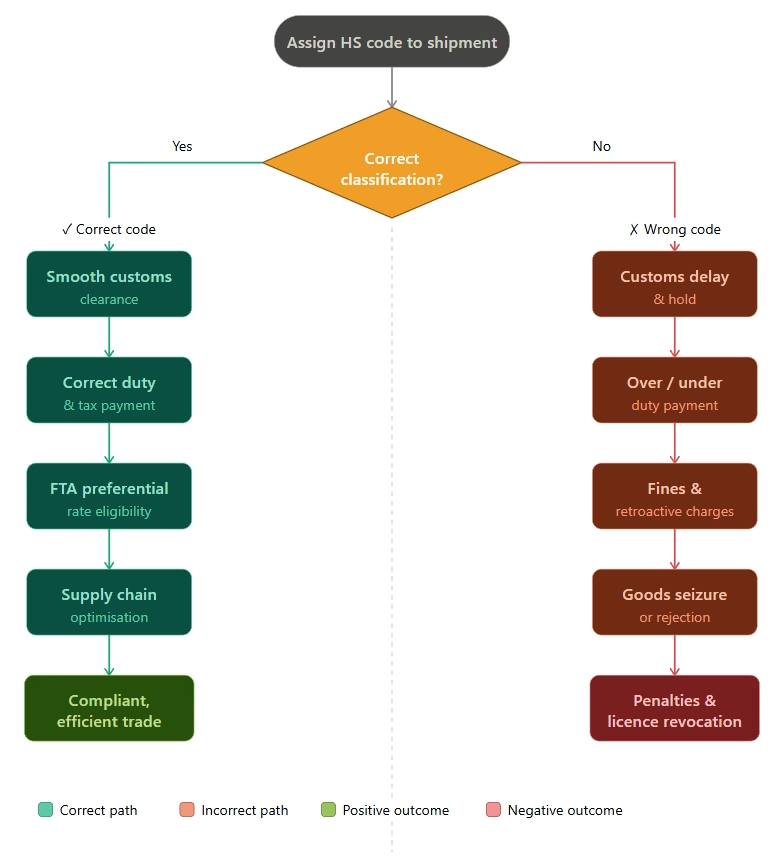
The assignment of an HS code is far more than just a bureaucratic tag; it directly dictates the financial implications and legal obligations of importing and exporting electronic components. The specific Harmonized System (HS) code attached to an electronic item determines the duty rates it carries, making accurate coding essential for anyone importing electronic components or parts.
Duty Rates and Tariffs
Each country’s tariff schedule links specific duty rates to particular HS codes. These rates can vary dramatically based on the component’s classification, its country of origin, and existing trade agreements between the exporting and importing nations. For example:
- A semiconductor from a country with a Free Trade Agreement (FTA) might enter with zero duty.
- The exact same semiconductor from a non-FTA country might incur a 5-10% duty, or even higher, depending on the most-favored-nation (MFN) rates or specific retaliatory tariffs.
Misclassifying a component, even by one digit, can shift it into a different tariff category, leading to either unnecessary overpayment or severe underpayment penalties, coupled with potential retroactive charges.
Trade Compliance and Regulations
HS codes are fundamental to ensuring compliance with a myriad of international and national trade regulations:
- Import/Export Controls:Certain sensitive electronic components (e.g., high-performance microprocessors, specific sensors) may be subject to export controls based on their HS code, requiring special licenses or permits.
- Quotas and Restrictions:Some countries impose import quotas or restrictions on specific goods, identified by their HS codes, to protect domestic industries or for national security.
- Product Standards:Many products must meet specific safety, environmental, or technical standards. The HS code often triggers the requirement for these certifications (e.g., RoHS compliance for electronic components in the EU).
- Anti-Dumping and Countervailing Duties:Governments may impose additional duties on goods, identified by their HS codes, if they are deemed to be dumped (sold below fair market value) or subsidized by foreign governments, to protect domestic producers.
Failing to adhere to these regulations, identified through the HS code, can lead to severe penalties, including seizure of goods, hefty fines, and reputational damage. It can also revoke import/export privileges, effectively barring a business from international trade.
Strategic Business Planning
Beyond immediate compliance, understanding HS codes empowers businesses to make strategic decisions:
- Supply Chain Optimization:Knowing the duty implications of different component types and origins can influence sourcing decisions and logistics planning.
- Cost Forecasting:Accurate HS codes enable precise landed cost calculations, improving pricing strategies and financial projections.
- Market Entry:Businesses exploring new international markets can use HS codes to research tariffs, taxes, and regulatory hurdles, informing their market entry strategy.
In essence, the HS code acts as a gateway to understanding the full financial and regulatory landscape for electronic components in global trade. Proper management of these codes is not just a defensive measure against penalties but an offensive tool for strategic growth and efficient operations.
7. Import vs. Export: How HS Codes Apply in Both Directions
HS Codes for Importing Electronic Components
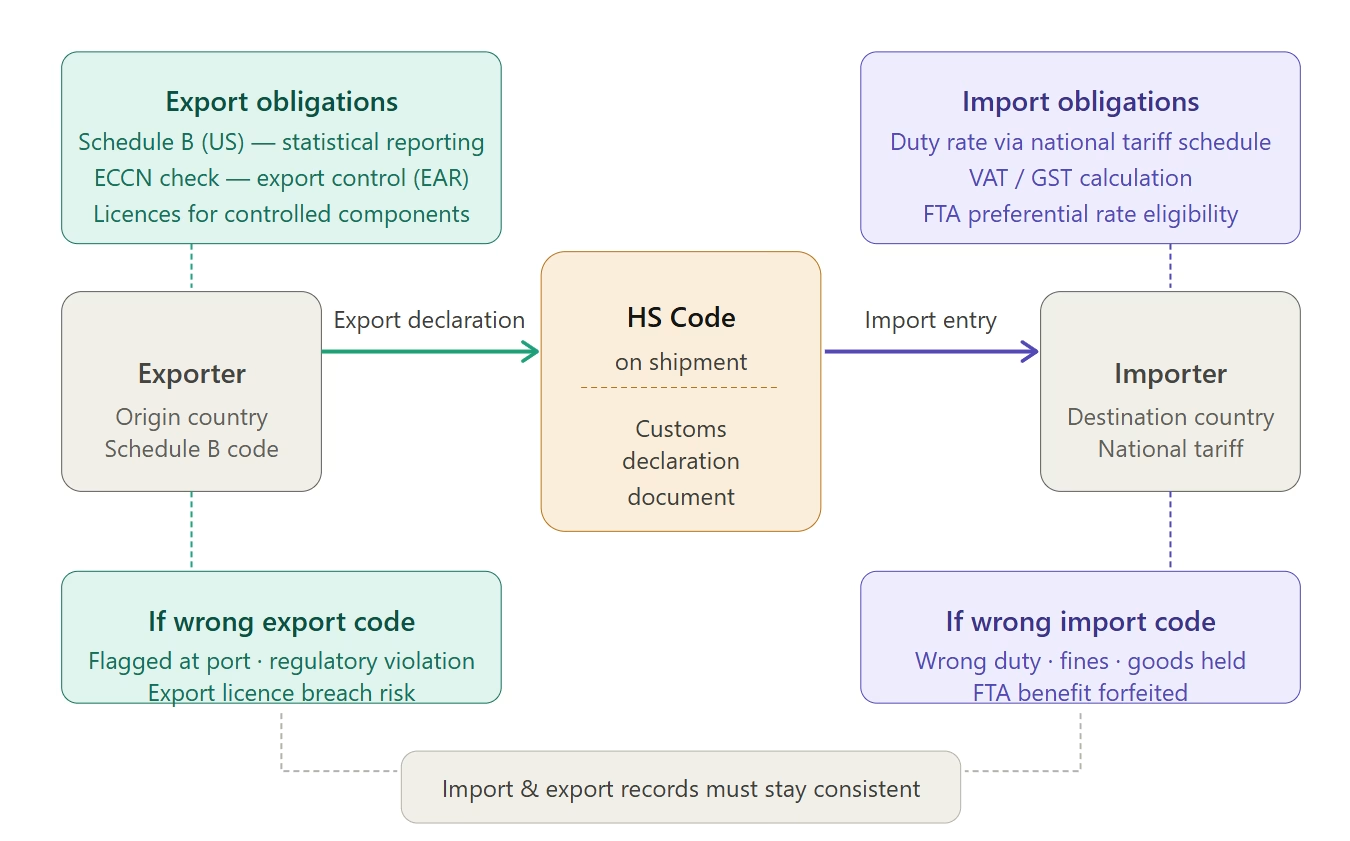
When importing electronic components, HS codes are used by the destination country’s customs authority to determine applicable duty rates, VAT or GST obligations, and whether the goods are subject to import restrictions or special licensing requirements. For example, importing high-performance microprocessors or certain sensing technologies may trigger export control review requirements in some jurisdictions. Accurate import classification also enables businesses to take advantage of preferential duty rates under Free Trade Agreements (FTAs), potentially reducing landed costs significantly. Importers should always verify that the HS code they use matches the national tariff schedule (e.g., HTSUS in the U.S., CN in the EU, HSN in India) of the destination country, as national extensions beyond the 6-digit base can affect the rate of duty applied.
HS Codes for Exporting Electronic Components
On the export side, HS codes help foreign customs authorities identify your products and apply the correct tariffs at the point of entry. In the United States, exporters use the Schedule B code system (based on the HS) for statistical reporting with the Census Bureau. Accurate export classification is equally critical: it determines whether the product requires an Export Control Classification Number (ECCN) under the Export Administration Regulations (EAR), which governs the export of sensitive electronic technologies. Incorrect export codes can result in shipments being flagged for review, delayed at the port of exit, or—in serious cases—constitute a regulatory violation. For businesses trading electronic components internationally, maintaining consistency between import and export classification records across jurisdictions is a key element of trade compliance best practice.
8. Staying Current: HS Code Updates and the 2026 Revision
The Harmonized System is not static. The World Customs Organization (WCO) revises the HS approximately every five years to reflect technological developments, evolving trade patterns, and new product categories. The most recent update cycle—HS 2022—introduced significant changes affecting electronics, including revised headings for certain semiconductor devices and updated subheadings for emerging product categories.
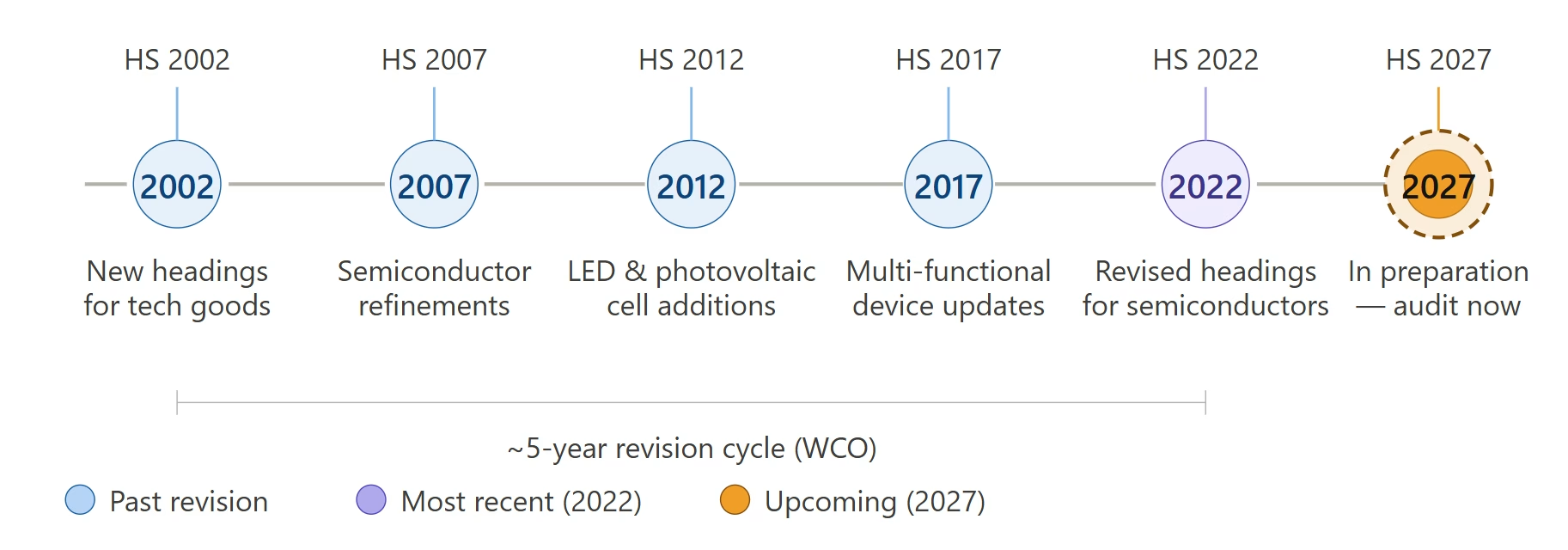
The next revision, HS 2027, is currently under preparation. Businesses trading in electronic components should be aware that codes applicable today may be restructured or renumbered in future cycles. Of particular relevance to the electronics industry is the classification of multi-functional devices: for example, a board that combines computing, communication, and sensor functions may be reclassified from a component heading to a finished assembly heading under updated rules. Using outdated codes can result in shipments being rejected or incorrectly taxed.
Recommended practice: Review your HS code library at least annually, and consult the WCO’s official update notices or your national customs authority’s binding ruling service whenever classifying a new product category or when a significant HS revision cycle takes effect.
9. HS Code FAQ
Q:What is the main purpose of an HS code?
A: The main purpose of an HS code is to uniformly classify traded products across the globe, allowing for consistent identification, assessment of duties, and collection of trade statistics by customs authorities worldwide.
Q:Are HS codes the same in every country?
A: The first six digits of an HS code are standardized globally by the World Customs Organization (WCO). However, individual countries can add additional digits (making them 8, 10, or 12 digits long) for more specific national tariff and statistical purposes.
Q:What happens if I use the wrong HS code for my electronic components?
A: Using an incorrect HS code can lead to customs delays, unexpected fines and penalties, incorrect duty payments (either overpaying or underpaying), potential seizure of goods, and complications with trade compliance regulations.
Q:Where can I find the official HS codes for electronic components?
Answer: You can find official HS codes on national customs websites (e.g., U.S. International Trade Commission for HTSUS, EU TARIC database). Consulting with licensed customs brokers or international trade experts is also a reliable method for complex classifications.
10. Summary
Harmonized System (HS) codes are the indispensable backbone of international trade, providing a universal language for classifying goods in the complex world of electronic components. Administered by the World Customs Organization (WCO), these 6-digit global codes—extended by national systems such as the U.S. HTSUS (10 digits), EU CN (8 digits), and India HSN—ensure consistent product identification and duty assessment across borders. For the global electronics market, accurate HS coding is paramount: it prevents costly customs delays, avoids significant fines, and guarantees correct duty and tax payments.
Classification of electronic components typically begins in Chapter 85 of the HS, branching into detailed sub-codes for capacitors (8532), resistors (8533), transistors (8541), integrated circuits (8542), PCBs (8534), connectors (8536), and consumer devices such as smartphones (8517.12) and laptops (8471.30). Import and export classification serve distinct but equally critical functions: on the import side, HS codes determine duty rates and Free Trade Agreement eligibility; on the export side, they trigger export control review requirements and statistical reporting obligations. Businesses should leverage authoritative tools—HTS Search (USITC), EU TARIC, WCO Trade Tools, and Census Bureau Schedule B—and consult licensed customs brokers for complex assemblies. With the HS 2027 revision cycle underway, annual code library audits are essential, particularly for multi-functional electronic assemblies that may be reclassified under updated rules. Ultimately, mastering HS codes is not merely a compliance task—it is a strategic imperative that enables supply chain optimization, precise landed-cost forecasting, FTA duty savings, and confident market entry across the global electronics industry.
Table of Contents
- 1. Introduction
- Key Takeaways
- 2. What Are HS Codes? The Universal Language of Trade
- 3. Why Accurate HS Coding is Crucial for Electronic Components
- 4. Decoding Electronic Component HS Codes: Structure & Examples
- 5. How to Find and Verify HS Codes for Your Components
- 6. The Impact of HS Codes on Duty Rates and Compliance
- 7. Import vs. Export: How HS Codes Apply in Both Directions
- 8. Staying Current: HS Code Updates and the 2026 Revision
- 9. HS Code FAQ
- 10. Summary
Get Your PCB Quote!