ICT Testing Principles and the Role of ICT Testing
This article delves deep into the core concepts of ICT, exploring how it operates, its significant contributions to the PCB manufacturing process, and how it differentiates itself from other testing methods like Functional Circuit Test ( FCT). We'll uncover why ICT is not just a testing step, but a critical investment in product reliability and manufacturing efficiency.
Get Your PCB Quote!
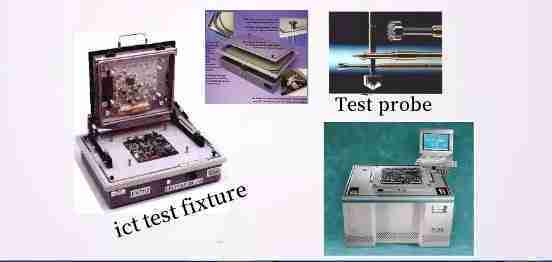
Table of Contents
What is In-Circuit Test (ICT)?
In- Circuit Test (ICT) is an electrical test method commonly used in the electronics manufacturing industry to verify whether individual electronic components on a Printed Circuit Board (PCB) are correctly placed, oriented, and functioning within their specified parameters. It essentially acts as a comprehensive ” health check” for each component and connection on a bare or assembled PCB, typically early in the production cycle. The primary goal of ICT is to detect manufacturing defects that might arise from the assembly process, such as soldering issues, incorrect component values , shorts, or opens, before the board progresses to more complex, and often more expensive, functional testing stages.
The significance of ICT testing lies in its ability to pinpoint defects with high accuracy and speed. By applying voltages and signals to specific points on the circuit board and measuring the responses, an ICT machine can quickly identify faults. This diagnostic capability is crucial for manufacturers, as it allows for the early detection and rectification of errors, thereby reducing rework costs and improving overall product quality.
ICT Testing Principles
ICT testing(In-Circuit Test) is a detection method commonly used in the electronics manufacturing industry to check whether electronic components on a printed circuit board (PCB) are normally working.
It tests the functionality and connectivity of electronic components by applying voltage and signals in circuit boards.
The effectiveness of In-Circuit Test (ICT) hinges on several fundamental principles that enable precise detection of component-level defects. This method relies on establishing direct electrical contact with various points on the PCB to isolate and test individual electronic components and connections.
The following are the basic principles of ICT testing:
Test Pins and Test Fixture: The “Bed of Nails”
At the heart of ICT is the concept of the “bed of nails” fixture. This specialized test fixture is custom-designed for each unique PCB layout. It consists of an array of spring-loaded metal pins (test pins) precisely aligned to make contact with specific test points on the PCB. These test points can include component pads, vias, traces, or dedicated test pads incorporated into the PCB design. The test pins are connected to the ICT machine’s measurement circuitry.
When a PCB is placed onto the fixture, pressure is applied to push the board down onto the pins, ensuring robust electrical contact. This physical connection allows the ICT machine to access individual components and circuit nodes for testing. The design of the fixture is critical, as any misalignment or poor contact can lead to erroneous test results.
Circuit Connection and Measurement
Once the PCB is firmly engaged with the test pins, the ICT machine proceeds with its diagnostic routine. It works by applying small , controlled voltages and signals through specific test pins to isolate and stimulate individual components or circuits. Concurrently, other test pins are used to measure the electrical response from these components. Because the “bed of nails” allows access to nearly every node on the board, components can be tested in isolation, or nearly so, minimizing interference from other parts of the circuit.
Types of Measurements
ICT testing performs a variety of measurements to verify component integrity and connectivity:
- Resistance:Measures the resistance of resistors and detects shorts or opens in traces.
- Capacitance:Checks the capacitance of capacitors.
- Inductance: Measures the inductance of inductors.
- Diode and Transistor Tests:Verifies the forward voltage drop and breakdown characteristics of semiconductors.
- Shorts and Opens:Detects unintended connections ( shorts) between traces or component leads, and breaks (opens) in circuits.
- Component Value Verification:Compares measured values against pre-defined tolerance ranges for resistors, capacitors, and inductors.
- Orientation Checks:For polarized components like diodes and electrolytic capacitors, ICT can verify correct orientation.
The ICT machine, equipped with advanced measurement instruments, provides quantitative results for these parameters. This data is then compared against pre-programmed specifications and tolerances. Any deviation outside the acceptable range flags a defect, allowing for precise fault location and subsequent repair.
The Role of ICT Testing
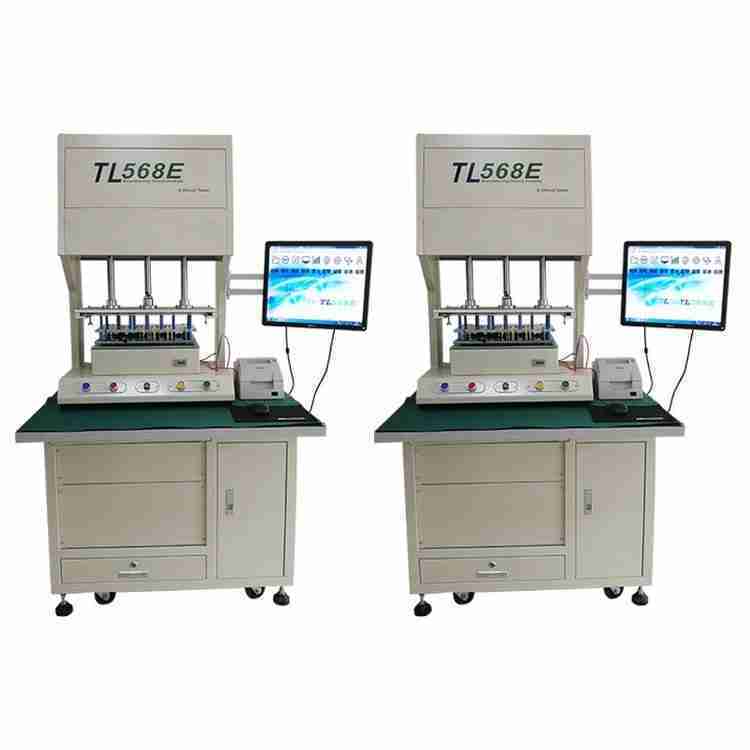
ICT testing ensures product quality, improves production efficiency, reduces costs, improves product reliability and safety, and meets traceability requirements.
ICT (In-Circuit Test) plays a significant role in electronic manufacturing and maintenance. Its functions mainly include the following aspects:
1. Quality Control: ICT testing ensures the quality of electronic products.
It can detect whether the electronic components on the circuit board are working regularly and whether the connections between them are correct.
PCB manufacturers can reduce defect rates and improve product quality and reliability by detecting and identifying defects.
2. Manufacturing process control: ICT testing can monitor the manufacturing process at different stages of electronic product manufacturing.
It can help manufacturers to find problems on the production line in time and prevent defective products from entering the market. It helps save time and cost and
3. Assembly Verification: In the final stage of electronic circuit board assembly, ICT testing can verify the functionality of the assembled circuit board.
It helps detect assembly issues such as incorrectly installed components, bent pins, or short circuits to ensure the final product performs as expected.
4. Fault diagnosis: ICT detection can also diagnose and repair faults.
When an electronic product fails, ICT detection can help locate faulty components, shorten repair time, reduce repair costs, and improve product maintainability.
5. Traceability: ICT testing usually records test results and related information, including electronic components batch and supplier information.
It helps establish product traceability. When a product has a problem, it can traced back to the specific component batch to take measures.
6. Cost savings: By automating the testing process, ICT testing can significantly reduce manual inspection and improve testing speed and accuracy. It helps minimize production and repair costs.
7. Improve product reliability: ICT testing helps improve the products’ reliability by detecting and repairing potential electronic component problems.
It is essential for applications that require high stability and long life, such as aerospace, medical equipment, etc.
ICT vs. FCT: A Critical Distinction
While both In-Circuit Test (ICT) and Functional Circuit Test (FCT) are essential testing methods in PCB manufacturing, they serve distinct purposes and operate on different principles. Understanding their fundamental differences is crucial for implementing an effective testing strategy.
In-Circuit Test (ICT): Precision at the Component Level
As discussed, ICT focuses on the structural and electrical integrity of individual components and connections on the PCB. It uses a “bed of nails” fixture to access virtually every accessible node on the board. The goal is to verify that components are correctly installed, have the right values, and that there are no shorts or opens in the circuit pathways. ICT measures parameters like resistance, capacitance, inductance, and diode junctions against design specifications.
The key characteristic of ICT is its component-level diagnostic capability. It answers the question: “Are all the components present, correctly installed, and electrically sound?” Functional Circuit Test (FCT): Performance at the Board Level
In contrast, Functional Circuit Test (FCT) evaluates the PCB as a complete operational unit. Instead of testing individual components, FCT simulates the real-world operating environment of the PCB within the final product. It applies power to the board and checks if it performs its intended functions according to the design specifications. This includes verifying output signals, processing capabilities, communication protocols, and overall system behavior.
FCT typically uses specialized test software and hardware that mimic the interaction the PCB will have with other components in the final assembly. It often involves complex stimulus and measurement sequences, sometimes with sophisticated graphical user interfaces for test operators.
The key characteristic of F CT is its board-level performance verification. It answers the question: “Does the entire PCB assembly work as intended?”
When to Use Each
The ideal scenario often involves using both ICT and F CT. ICT is usually performed earlier in the manufacturing process, right after component placement and soldering (SMT assembly and THT PCB assembly). Its strength lies in quickly catching manufacturing defects at their source, preventing them from escalating. FCT, on the other hand, is typically performed later, once the basic integrity has been established by ICT, to ensure that the entire system functions correctly.
ICT is highly effective for detecting “manufacturing defects” or “assembly defects.” FCT is better for detecting “design defects” or “interaction defects” that only become apparent when the entire circuit is powered and operating.
Comparison Table: ICT vs. FCT
Here’s a comparison summarizing the fundamental differences:
| Feature | In-Circuit Test (ICT) | Functional Circuit Test (FCT) |
| Focus | Individual components, structural integrity, manufacturing defects | Overall board functionality, performance, design defects |
| Test Type | Parametric (resistance, capacitance, etc.), structural | Behavioral, operational |
| Test Points | Requires access to virtually all nodes via test pins/fixture | Typically accesses edge connectors, specific I/O ports |
| Fault Diagnosis | Precise component-level fault isolation | System-level fault indication , often requires further diagnosis |
| Cost of Fixture | Generally higher due to “bed of nails” complexity | Can be simpler, but custom electronics/software can add cost |
| Test Speed | Fast, typically seconds per board | Can be slower, depending on functional complexity |
| Best For | Detecting manufacturing defects (shorts, opens, wrong components, soldering issues) | Ver ifying design intent, overall performance, complex interactions |
While ICT offers quantitative measurement results and qualitative analysis of faults, FCT ensures that the integrated components work harmoniously to deliver the intended operational performance. Together, they form a robust testing strategy for high-quality PCB manufacturing.
For a deeper understanding, please read our detailed analysis of [ICT vs FCT: Choosing Your PCB Test Strategy]
Need PCB Manufacturing or Assembly?
Get a free quote within 24 hours. We specialize in prototype-to-production PCB/PCBA for hardware teams worldwide.
Advantages and Limitations of ICT
Like any testing methodology, In-Circuit Test (ICT) comes with its own set of advantages and limitations . Understanding these aspects helps manufacturers make informed decisions about its application within their specific production environments.
Advantages of ICT
- High Fault Coverage:ICT provides excellent fault coverage for manufacturing defects. It can detect a wide range of issues, including shorts, opens, incorrect component values, missing components, and incorrectly oriented parts, with high accuracy.
- Precise Fault Location:One of the most significant benefits is its ability to pinpoint the exact location of a fault down to a specific component or connection. This dramatically reduces troubleshooting time and simplifies the rework process, leading to faster repairs.
- Speed:ICT machines can test a PCB very quickly, often within seconds. This makes it an ideal solution for high-volume production lines where rapid throughput is essential.
- Quantitative Data:ICT provides quantitative measurement results (e.g., actual resistance values, capacitance values) that can be compared against tolerances, offering objective data for quality control and process improvement.
- Early Detection:By identifying defects early in the assembly process, ICT prevents faulty boards from moving to later, more expensive stages of manufacturing, saving significant costs.
- Automation:ICT is highly automatable, allowing for consistent and repeatable testing with minimal human intervention, reducing the risk of human error.
Limitations of ICT
- Fixture Cost and Complexity:The primary limitation is the high cost and complexity of developing a custom “bed of nails” test fixture for each unique PCB design. This can be a substantial upfront investment, especially for low-volume or prototype production.
- Test Point Accessibility:ICT requires physical access to test points for each component or node to be tested. Modern, highly dense PCBs with fine-pitch components (like BGAs) or double-sided SMT components may have limited accessibility for test pins, making fixture design challenging or even impossible for some areas.
- Does Not Test Functionality:ICT is excellent for structural integrity but does not verify the overall functionality of the board under operational conditions. A board that passes ICT might still fail functional tests if there are design flaws or issues that only appear when the circuit is fully powered and interacting.
- Programming Time:While the test execution is fast, the initial programming and debugging of the ICT test program can be time-consuming, requiring skilled engineers.
- Component Damage Risk:The physical pressure from the test pins during engagement can, in rare cases, potentially stress or damage delicate components or solder joints if the fixture is not designed or used correctly.
- Power-Off Test:Most ICT operations are performed with the board unpowered (power-off testing). While some advanced ICT systems can perform limited power-on testing , the primary function is for passive component and connectivity checks.
Despite its limitations, the advantages of ICT in terms of early defect detection, precise fault location, and cost savings in high-volume production often make it an indispensable part of a comprehensive PCB testing strategy.
What Does ICT Testing Mainly Measure?
ICT (In-Circuit Test) testing is mainly used to gauge the performance of electronic components, connections, and circuits to ensure normal operation and correct connection.
The following are the primary measurements of ICT testing:
1. Component Function: ICT testing checks whether electronic components (such as resistors, capacitors, diodes, transistors, etc.) are normally operating.
By applying voltages and signals, test systems can verify that these components operate within specified parameters, such as resistance value, capacitance value, and switch state.
2. Component Connectivity: ICT testing is used to verify that the connections between electronic components are correct. The test system checks the connectivity between component pins to ensure that they match the layout and design of the circuit board.
3. Circuit connectivity: ICT testing verifies that connections on the circuit board are correct. It checks the wires, circuit paths, and jumpers of the circuit board. It ensures they are not open or short-circuited.
4. Power and Ground Connections: ICT testing checks whether the electronic components’ power and ground connections are correct. It helps ensure that components on the board are properly powered, not damaged or subjected to incorrect voltages or current effects.
5. Signal transmission: ICT testing can also verify the transmission of digital and analog signals on the circuit board. It checks the signals’ transmission path to ensure they are not interfered with or distorted.
6. Circuit board layout: ICT testing can check whether the circuit board layout meets the design specifications. It includes the correctness of component position, pin arrangement, and connection points.
7. Fault Detection: ICT testing also can detect faults on circuit boards, such as short circuits, open circuits, or component failures. It helps to detect problems early and take measures.
ICT Testing Usually Includes the Following Steps
1. Design a test fixture: Based on the circuit board layout and the components’ location, design a test fixture to ensure that the test pins can connect to the pins or connection points on the circuit board.
2. Develop test procedures: Write test procedures to define which pins need to be tested and how to test them. It includes applying voltages, signals, test patterns, and determining the expected responses.
3. Make the test fixture: Make the test fixture, including installing the test pins and connecting cables to communicate with the test system.
4. Perform the test: Place the board in the test fixture and execute the test procedure. The test system will apply voltages and signals, record the pins’ responses, and compare them with the expected results.
5. Analyze the results: Based on the test results, determine whether the electronic components are working properly. A faulty part can be flagged for subsequent processing.
6. Reports and records: Generate test reports to record test results and issues. The purpose of these records is for quality control and traceability.
FAQ
Question1: What is the main difference between ICT and FCT?
Answer: ICT (In-Circuit Test) focuses on the structural integrity and individual electrical parameters of components on a PCB, checking for manufacturing defects like shorts, opens, and wrong component values. FCT (Functional Circuit Test) assesses the overall operational performance of the PCB as a complete unit, verifying if it performs its intended functions according to design specifications.
Question2: Why is ICT considered important in PCB manufacturing?
Answer: ICT is crucial because it detects manufacturing defects early in the production cycle (e.g., soldering issues, faulty components). This early detection significantly reduces rework costs, improves overall product quality, and prevents defective boards from progressing to more expensive later stages of assembly.
Question3: What is a “bed of nails ” fixture in ICT?
Answer: A “bed of nails” fixture is a custom-designed array of spring-loaded test pins that make direct electrical contact with specific test points on a PCB. It allows the ICT machine to isolate and test individual components and circuit nodes by applying voltages and signals and measuring their responses.
Question4: Can ICT detect all types of defects?
Answer: ICT is highly effective for detecting a wide range of manufacturing defects, particularly those related to component presence, value, orientation, and basic connectivity (shorts/opens). However, it generally does not test the board’s full functional performance under real-world operating conditions or subtle timing -related issues, nor can it easily access hidden solder joints (like those under BGAs) without specialized techniques.
Key Takeaways
- ICT is Essential for Early Defect Detection:It catches manufacturing flaws like shorts, opens, and component errors immediately after assembly.
- “Bed of Nails” is Core to ICT:Custom test fixtures with spring-loaded pins enable precise component isolation and measurement.
- Cost Savings are Significant:Detecting and fixing faults early with ICT drastically reduces expensive rework and warranty claims.
- ICT Com plements FCT:ICT verifies structural integrity, while FCT confirms overall functional performance of the PCB.
- High Fault Coverage & Precision:ICT offers excellent coverage for manufacturing defects with accurate fault localization.
- Critical for Quality Control:Ensures PCBs meet design specifications, enhancing product reliability and performance.
Get Quote Free