ICT vs FCT: Choosing Your PCB Test Strategy
ICT catches assembly defects early. FCT verifies the finished board actually works. Learn which test method fits your production volume, reliability requirements, and budget — and when to use both.
Get Your PCB Quote!
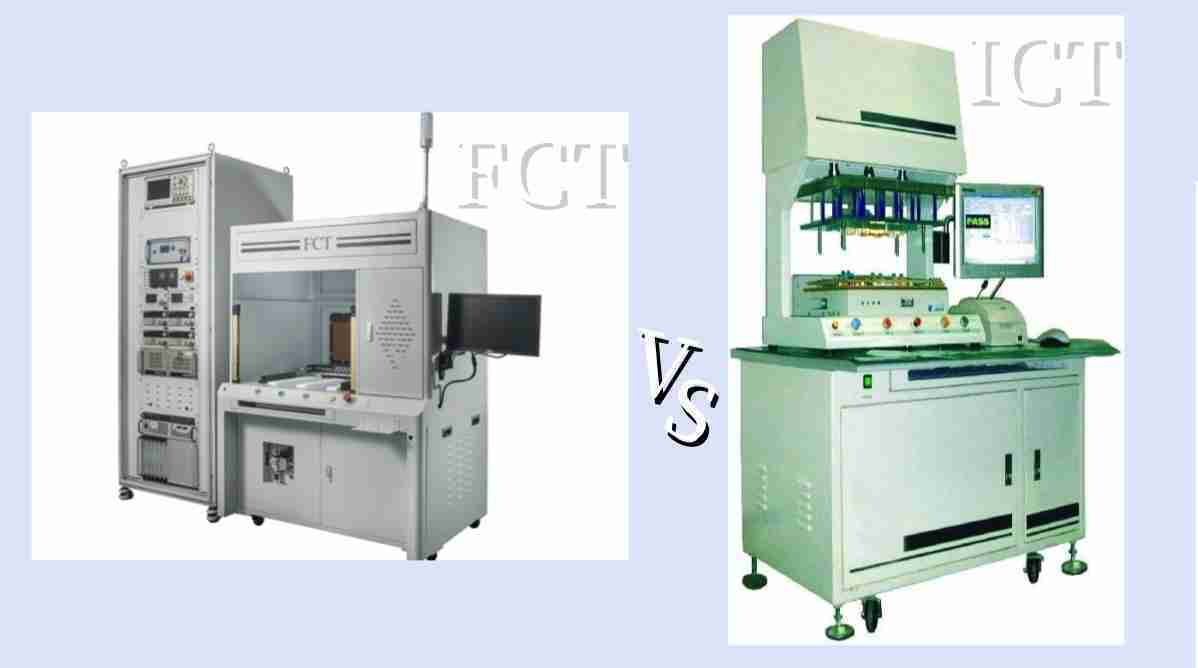
Table of Contents
- 1. Einleitung
- Wichtige Erkenntnisse
- 2. In-Circuit-Testing (ICT) verstehen
- 3. Funktionstests (FCT) näher betrachten
- 4. ICT vs. FCT: Ein direkter Vergleich
- 5. Wann welcher Test durchführen?
- 6. Die Stärke einer hybriden Teststrategie
- 7. Auswirkungen auf Qualität, Kosten und Markteinführungszeit
- 8. FAQ
- 9. Zusammenfassung
Table of Contents
- 1. Einleitung
- Wichtige Erkenntnisse
- 2. In-Circuit-Testing (ICT) verstehen
- 3. Funktionstests (FCT) näher betrachten
- 4. ICT vs. FCT: Ein direkter Vergleich
- 5. Wann welcher Test durchführen?
- 6. Die Stärke einer hybriden Teststrategie
- 7. Auswirkungen auf Qualität, Kosten und Markteinführungszeit
- 8. FAQ
- 9. Zusammenfassung
1. Introduction
FCT (Functional Circuit Testing) and ICT circuit test (In-Circuit Testing) are two commonly used testing methods in circuit board manufacturing to ensure the quality and performance of printed circuit boards and electronic devices.
There are obvious differences between them in test purpose, test methods, and applicable scenarios. This article will explore the differences between these two test methods in detail.
Key Takeaways
- ICT focuses on manufacturing defects: Pinpoints individual component and connection errors early in the process.
- FCT validates overall functionality: Ensures the PCB performs its intended job under realistic conditions.
- Cost vs. Coverage: ICT has high fixture costs but low programming costs; FCT has lower fixture costs but higher programming complexity.
- Speed and Precision: ICT is fast with precise fault isolation; FCT is slower but offers comprehensive functional verification.
- Hybrid Strategy is Optimal: Combining ICT (for assembly defects) and FCT (for functional performance) provides the most robust test coverage for modern PCBs.
2. Understanding In-Circuit Testing (ICT)
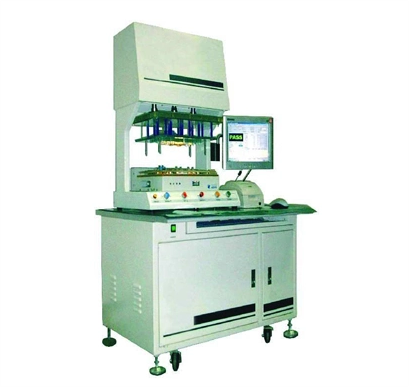
In-Circuit Testing (ICT) is a precision-focused method used early in the PCB manufacturing process, typically right after Surface Mount Technology (SMT) assembly. Often referred to as the “precision sniper” for solder and component errors, ICT’s primary goal is to verify the correct installation and static correctness of individual components and connections on a PCB. It’s an indispensable tool for detecting manufacturing defects before they propagate into more complex issues.
How ICT Works
ICT involves connecting the PCB to specialised testing equipment, often called a “bed of nails” tester. This equipment utilises a custom-drilled fixture with an array of spring-loaded probes or pins. These probes make direct contact with critical test points on the PCB, such as component pads, vias, and traces. The tester then applies signals to these points and measures various electrical parameters, including:
- Resistance: To check for shorts, opens, and correct resistor values.
- Capacitance: To verify capacitor presence and value.
- Inductance: To ensure inductors are correctly installed.
- Continuity: To detect opens in traces or connections.
- Diode and Transistor Functionality: Basic checks for semiconductor components.
By measuring these parameters and comparing them against a software model of the circuit design, ICT can rapidly identify issues like short circuits, open circuits, missing components, incorrectly oriented parts (e.g., reversed diodes), or wrong component values.
Advantages of ICT
- High Fault Isolation: ICT excels at pinpointing the exact location of a defect, often down to a specific pin of a component. This makes repair quick and efficient.
- Speed: Tests are typically very fast, ranging from 30 seconds to 2 minutes per board, making it ideal for high-volume production environments.
- Early Detection: By identifying manufacturing defects early in the process, ICT prevents the assembly of faulty boards and reduces rework costs down the line.
- Comprehensive Coverage for Manufacturing Defects: It effectively catches issues like opens, shorts, wrong parts, missing parts, and incorrectly oriented parts.
- Parametric Testing: Can verify component values against specifications.
Shortcomings of ICT
- High Upfront Cost: The creation of custom fixtures (“beds of nails”) for each unique PCB design can be expensive and time-consuming.
- Limited Functional Verification: ICT primarily verifies static correctness and individual components. It does not test the board “at speed” or verify its overall functionality and interoperability with other components in a system.
- Access Requirements: Requires sufficient test points on the PCB for probe access, which can impact board design and density.
- Reduced Effectiveness for Highly Integrated Components: As circuitry moves towards highly integrated, programmable components, ICT’s ability to thoroughly test individual components diminishes, requiring more emphasis on functional testing.
3. Exploring Functional Testing (FCT)
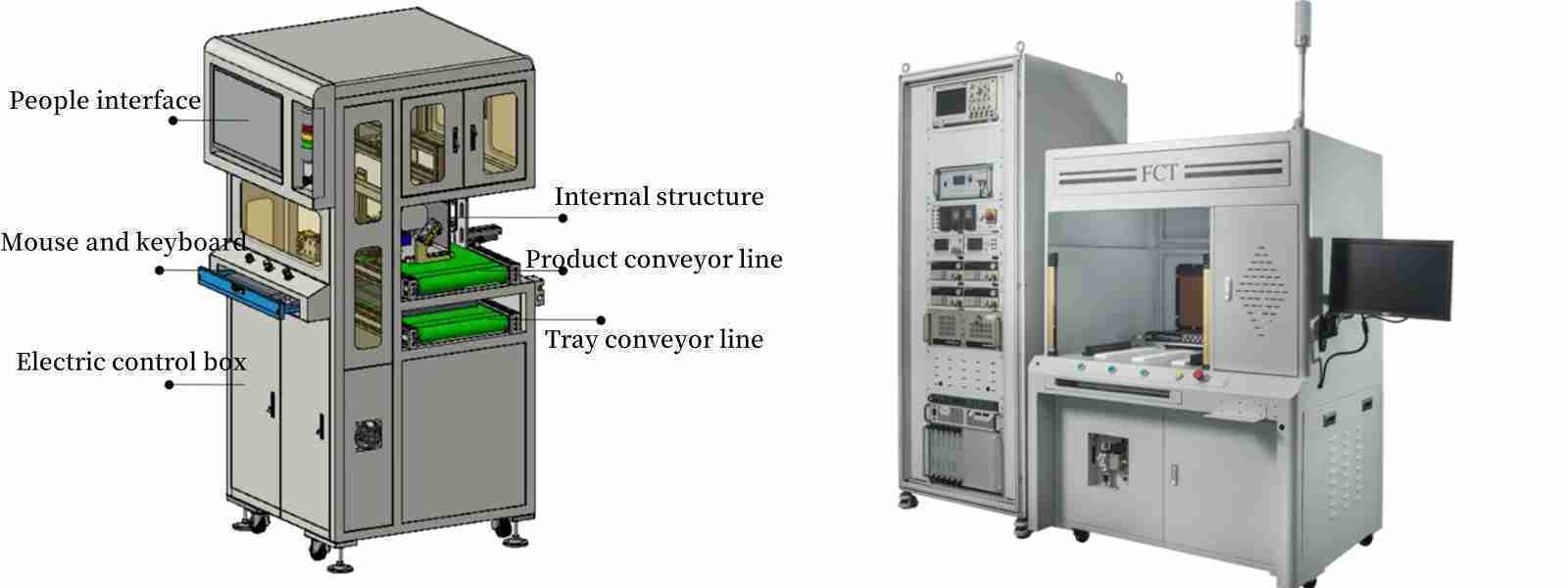
Functional Testing (FCT), often described as the “full-system health check,” is performed later in the manufacturing process, usually before the PCB assembly is enclosed or integrated into a final product. Unlike ICT, FCT’s primary objective is to validate that the entire PCB assembly operates as intended, simulating its real-world environment and ensuring it meets design specifications.
How FCT Works
FCT involves powering up the PCB assembly and applying realistic input stimuli, much like it would experience in its end application. The tester then monitors the board’s outputs to confirm they match the expected behaviour. This can involve:
- Applying power and checking power consumption.
- Sending digital signals and verifying output responses.
- Generating analog signals and measuring their fidelity.
- Testing communication interfaces (USB, Ethernet, SPI, I2C, etc.).
- Exercising microcontrollers, memory, and other complex ICs.
- Verifying software functionality embedded on the board.
FCT often uses specialised test software and instrumentation to interact with the Device Under Test (DUT) via its connectors or a less intrusive board fixture (sometimes requiring fewer pogo pins than an ICT fixture). It essentially asks: “Does this board perform its specified job correctly?”
Advantages of FCT
- Comprehensive Functional Verification: FCT ensures the entire board, including its software, operates correctly under simulated real-world conditions.
- “At Speed” Testing: It can test the PCB at its operational speed, catching timing-related issues or performance bottlenecks that ICT cannot.
- Validates System Interoperability: Checks how different components interact with each other as a complete system.
- Higher Customer Satisfaction: By verifying the end-product’s functionality, FCT directly contributes to delivering a reliable product to the customer.
- Flexibility: Can be adapted for various levels of testing, from basic functionality to rigorous performance characterisation.
Shortcomings of FCT
- Higher Programming Costs: Developing FCT programs requires a thorough understanding of the DUT’s performance specifications and often involves complex software development, leading to higher programming costs.
- Less Precise Fault Isolation: When a fault is detected, FCT might indicate a functional failure but not immediately pinpoint the exact faulty component or connection. Diagnosis can be more time-consuming.
- Slower Test Times: Depending on the complexity of the functions being tested, FCT can take longer than ICT per board.
- Performed Later: Defects found at this stage are more expensive to repair as more value has been added to the board.
- Test Fixture Complexity: While sometimes requiring fewer pins, the overall setup can be more complex due to the need for power supplies, signal generators, and measurement equipment.
Need PCB Manufacturing or Assembly?
Get a free quote within 24 hours. We specialize in prototype-to-production PCB/PCBA for hardware teams worldwide.
4. ICT vs. FCT: A Direct Comparison
To summarise the distinctions, here is a comparative overview of In-Circuit Testing and Functional Testing:
| Feature | In-Circuit Testing (ICT) | Functional Testing (FCT) |
| Primary Purpose | Detect manufacturing defects (shorts, opens, wrong/missing components). | Verify overall board functionality and performance against specifications. |
| Focus | Individual components, static electrical properties, schematic verification. | Entire PCB assembly, at-speed operation, system interaction. |
| Stage in Manufacturing | Early — immediately after SMT assembly. | Later — before final enclosure or system integration. |
| Methodology | Probes contact specific test points; measures resistance, capacitance, shorts, etc. | Powers board, applies realistic stimuli via connectors; monitors outputs. |
| Fault Isolation | High precision — often identifies exact faulty component/pin. | Lower precision — identifies functional failure; diagnosis can be complex. |
| Fixture Cost | Higher upfront — custom bed-of-nails ($5,000–$20,000+) per PCB design. | Generally lower fixture cost ($2,000–$15,000), but overall setup can be complex. |
| Programming Cost | Lower — based on component list and netlist. | Higher — requires deep understanding of DUT performance and behavior. |
| Test Speed | Very fast: 30 seconds to 2 minutes per board. | Can be slower — 1 to 15 minutes depending on functions tested. |
| Defects Detected | Manufacturing errors: shorts, opens, wrong/missing/reversed components, solder issues. | Functional errors, performance issues, design flaws, software bugs, timing problems. |
| Test Point Requirement | High — requires dedicated test points for nearly every component/net. | Lower — often utilises existing functional connectors on the board. |
5. When to Implement Which Test
The choice between ICT and FCT, or the decision to use both, often depends on several factors:
When to Lean Towards ICT
- High Volume Production: The speed and efficiency of ICT make it ideal for mass production where quickly identifying and rectifying manufacturing defects is critical to maintaining throughput. As a general benchmark, ICT fixture costs of $5,000–$20,000 typically become justifiable at production volumes above 1,000–2,000 units per design revision.
- Cost-Sensitive Products: Catching manufacturing errors early with ICT reduces the cost of repair, as less value has been added to the board.
- Complex Boards with Many Components: ICT can efficiently check thousands of points on a dense PCB for basic assembly errors.
- Before Value-Added Processes: Performing ICT before integrating expensive components or enclosing the board minimises waste if a defect is found.
When to Lean Towards FCT
- High-Reliability Products: For critical applications (medical, aerospace, automotive), ensuring the board functions perfectly in its intended environment is paramount.
- Low to Medium Volume Production: When volumes are lower, the upfront cost of an ICT fixture might be prohibitive, making a more flexible FCT setup more appealing. For volumes below 500–1,000 units, FCT’s lower fixture cost and design flexibility often deliver better return on investment.
- Products with Integrated Software/Firmware: FCT is essential for validating the interaction between hardware and embedded software.
- When System-Level Performance is Key: If the product’s success hinges on its overall performance, timing, and interaction with other systems, FCT is indispensable.
- Evolving Designs: FCT fixtures are often more adaptable to minor design changes compared to rigid ICT fixtures.
6. The Power of a Hybrid Test Strategy
For many modern PCB assemblies, especially in high-volume, high-complexity scenarios, the most effective strategy is a combination of both ICT and FCT. This hybrid approach leverages the strengths of each method to create comprehensive test coverage.
A typical flow might involve:
- Automated Optical Inspection (AOI) / X-ray Inspection: Initial visual checks for component presence, orientation, and solder joint quality.
- In-Circuit Test (ICT): Performed next to rapidly catch the majority of manufacturing defects (shorts, opens, wrong components). This quickly weeds out “bad” boards before further investment.
- Functional Test (FCT): Applied to boards that have passed ICT. FCT then verifies the overall functionality and performance, catching any design flaws, subtle interaction issues, or “at-speed” problems that ICT missed.
This combined strategy ensures that both individual component integrity and overall system performance are validated, significantly reducing the chances of defective products reaching customers. By addressing different layers of potential product issues, this approach leads to higher yield and lower total cost of ownership.
7. Impact on Quality, Cost, and Time-to-Market
| ICT | FCT | ICT + FCT Combined | |
| Fixture/setup cost | $5,000–$20,000 | $2,000–$15,000 | Both investments required |
| Programming cost | Low (netlist-based) | High (behavior-based) | Both required |
| Test speed | 30 sec – 2 min per board | 1–15 min per board | Sequential; adds total time |
| Fault isolation | High — exact component/pin | Low — functional failure only | ICT isolates; FCT confirms |
| Defect escape risk | Low for assembly defects | Low for functional defects | Lowest overall |
| Best total cost outcome | Reduces rework cost early | Reduces field return cost | Minimises total cost of quality |
| Time-to-market effect | Fast assembly feedback | Confirms shipment readiness | Adds test time, reduces field failures |
For most high-reliability production environments, the combined approach delivers the lowest total cost of ownership despite the higher upfront investment.

About OrinewPCB
Time is money in your projects – and OrinewPCB gets it. OrinewPCB is a PCB assembly company that delivers fast, flawless results every time. Our comprehensive PCB assembly services include expert engineering support at every step, ensuring top quality in every board. As a leading PCB assembly manufacturer, we provide a one-stop solution that streamlines your supply chain. Partner with our advanced PCB prototype factory for quick turnarounds and superior results you can trust.
8. FAQ
Q1: Does ICT require changes to the PCB layout?
Yes — ICT requires dedicated test points (typically 1.0–1.27mm pads) for probe access on nearly every net. This must be planned during the layout stage, as retrofitting test points onto a completed design typically forces a board revision. Designers should confirm ICT fixture requirements with their manufacturer early in the design cycle.
Q2: What is flying probe testing and how does it differ from bed-of-nails ICT?
Flying probe testing is a variant of ICT that uses a small number of movable probes rather than a custom fixture. It requires no upfront fixture cost and needs no dedicated test points, making it well-suited for prototypes and low-volume production. The tradeoff is speed — flying probe tests take 5–30 minutes per board versus 30–120 seconds for bed-of-nails, making it impractical for high-volume lines.
Q3: What types of defects does ICT primarily detect?
ICT primarily detects manufacturing defects such as opens, shorts, wrong components, missing components, incorrectly oriented components, and incorrect component values (e.g., parametric deviations).
Q4: What are the main benefits of using FCT?
FCT ensures the overall functionality of the PCB, verifies “at speed” performance, tests the interaction between components, and validates any embedded software or firmware, ensuring the board meets its real-world operational specifications.
Q5: Can ICT test BGA components?
Standard bed-of-nails ICT cannot directly access solder balls underneath BGA packages. Boundary scan (JTAG) testing is commonly combined with ICT to verify BGA connections electrically, while X-ray inspection is used to confirm BGA solder joint quality visually. For boards with significant BGA content, this combination effectively fills the coverage gap.
9. Summary
ICT excels at pinpointing exactly “what went wrong during the assembly process,” whereas FCT is responsible for verifying “whether the product actually functions as intended by the design.” Consequently, the optimal strategy often involves adopting a hybrid testing model: one that fully leverages the high efficiency of ICT to facilitate early defect detection, while simultaneously utilizing the comprehensive nature of FCT to validate the final product. By deeply understanding the unique functions of these two testing methodologies and deploying them strategically, manufacturers can not only significantly enhance product quality and drastically reduce rework costs, but also effectively shorten product time-to-market—ultimately delivering electronic products of exceptional performance and reliable quality to the market.
Get Quote Free