Circuit Card Assembly vs. PCB Assembly: Understanding the Key Differences
The short answer is that circuit card assembly and PCB assembly often refer to the same populated board, but they do not guarantee the same scope of work. This guide explains the terminology, shows where the terms overlap, and gives you a practical request-for-quote checklist that removes ambiguity.
Get Your PCB Quote!
Table of Contents
- Circuit card assembly vs PCB assembly at a glance
- What is a PCB, PCBA, and circuit card assembly?
- The difference is usually scope, not technology
- Why the original distinction causes procurement problems
- How to request the right deliverable
- Which term should you use?
- How PCBAndAssembly can support either scope
- Frequently asked questions
- Conclusion
Table of Contents
- Circuit card assembly vs PCB assembly at a glance
- What is a PCB, PCBA, and circuit card assembly?
- The difference is usually scope, not technology
- Why the original distinction causes procurement problems
- How to request the right deliverable
- Which term should you use?
- How PCBAndAssembly can support either scope
- Frequently asked questions
- Conclusion
That distinction matters when you request a quote. One supplier may use PCB assembly to mean component placement and soldering. Another may use circuit card assembly to mean a tested, serialized, programmed board. A third may use both terms interchangeably and define the actual deliverable in the quotation.
So the useful comparison is not simply “CCA versus PCBA.” It is:
What will be built, what will be tested, what records will be provided, and what level of integration is included?
Circuit card assembly vs PCB assembly at a glance
| Question | PCB assembly / PCBA | Circuit card assembly / CCA |
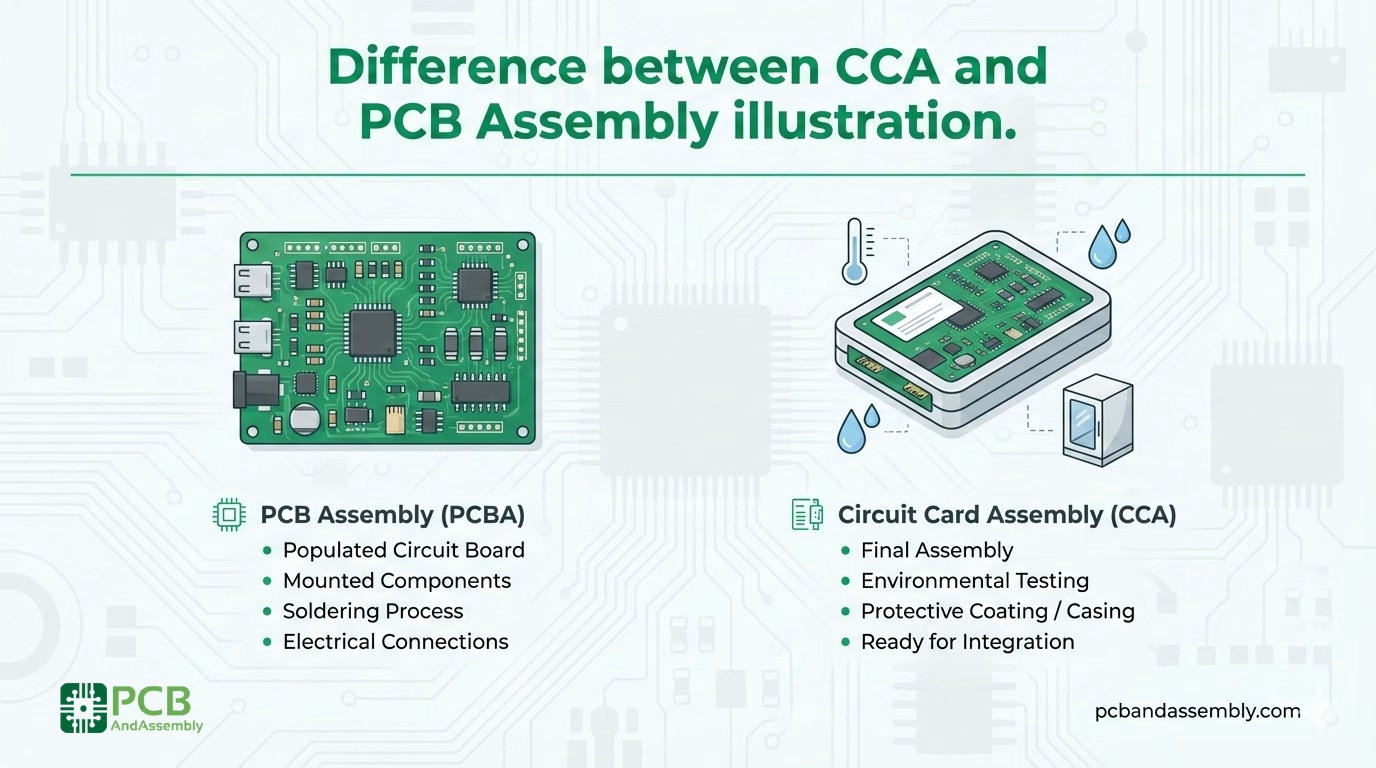
| Basic meaning | The process and result of mounting components onto a bare PCB | A populated electronic card, often used as a product or procurement term |
| Is it automatically tested? | No. Testing must be specified | No. “CCA” alone does not prove functional test, environmental test, or certification |
| Does it include components? | Usually, but confirm whether the quote is assembly-only or turnkey | Usually, but confirm the BOM, sourcing, and assembly scope |
| Does it include programming? | Only when included in the build or test plan | Only when included in the build or test plan |
| Does it include enclosure or cables? | Not normally unless box build is specified | Not normally unless the supplier defines a higher-level integration scope |
| Where is it common? | Broadly used in commercial, industrial, consumer, and contract manufacturing | Common in aerospace, defense, industrial, and legacy procurement language, but usage varies |
| What controls the result? | The statement of work, drawings, BOM, tests, and acceptance criteria | The same controlled documentation, not the label alone |
The most important takeaway
Do not assume that “circuit card assembly” means fully tested or that “PCB assembly” means incomplete. Ask the supplier to define the deliverable in measurable terms.
What is a PCB, PCBA, and circuit card assembly?
The terms describe different levels of a product, but industry usage is not perfectly consistent.
PCB: the bare printed circuit board
A PCB is the fabricated substrate before components are installed. It may include laminate, copper layers, plated holes, solder mask, surface finish, silkscreen, and controlled-impedance structures. It does not normally include resistors, integrated circuits, connectors, or soldered components.
The PCB fabrication specification controls the board itself: layer count, material, copper weight, drill and hole requirements, surface finish, tolerances, electrical performance, and inspection requirements.
PCB assembly or PCBA: the populated board
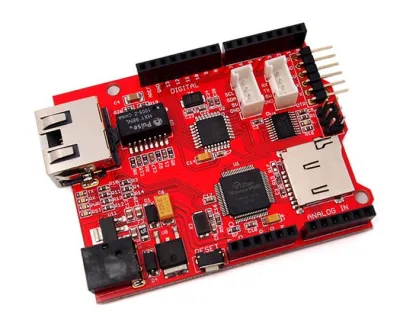
PCB assembly can refer to the manufacturing process of placing and soldering components onto a bare PCB. PCBA, or printed circuit board assembly, commonly refers to the resulting populated board.
The assembly may use:
- Surface-mount technology (SMT)
- Through-hole technology (THT)
- Selective soldering or wave soldering
- Press-fit connectors
- Manual insertion or soldering for selected parts
- Cleaning, coating, programming, calibration, and testing when specified
The phrase “PCB board assembly” is common in search queries, although PCB already means printed circuit board. In a technical package, it is clearer to write PCB for the bare board and PCBA for the populated assembly.
Circuit card assembly: an industry-dependent name
A circuit card assembly, or CCA, is usually a populated circuit card that can be installed into a larger product or system. In some organizations, CCA is simply another name for PCBA. In others, it implies a controlled module with connectors, mechanical hardware, firmware, inspection, test records, and configuration control.
The word “assembly” does not automatically define the testing level. A CCA can be a soldered board awaiting test, a tested board ready for integration, or a higher-level card assembly with additional parts. The customer and supplier must define the boundary.
The difference is usually scope, not technology
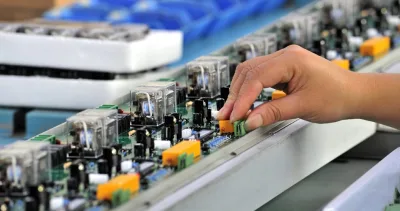
Both a PCBA and a CCA may contain the same PCB, the same components, and the same SMT or THT solder joints. The difference often comes from how the product is named inside a company or industry.
Terminology differences
Consumer and commercial electronics manufacturers often use PCB assembly or PCBA because the phrase describes the manufacturing service clearly. Aerospace, defense, transportation, and industrial organizations may use circuit card assembly because the board is treated as a replaceable card within a larger system.
That language can affect documentation and procurement, but it does not create a universal technical boundary. A defense supplier may deliver a CCA that is functionally identical to what another supplier calls a PCBA. The acceptance criteria and configuration records matter more than the acronym.
Deliverable differences
An assembly-only order may deliver a populated board after soldering and visual inspection. A broader CCA order may include:
- Component sourcing and approved alternates
- PCB fabrication and incoming inspection
- SMT and THT assembly
- Conformal coating or selective coating
- Firmware loading and configuration
- Serial-number assignment and labeling
- Electrical safety or functional test
- Environmental screening or burn-in
- Connector, bracket, shield, cable, or hardware installation
- Inspection and traceability records
None of these items should be assumed from the term CCA. Put them in the statement of work.
The following five dimensions are more useful than a dictionary definition.
1. Manufacturing process
The physical process can be identical. Both terms may involve stencil printing, solder-paste inspection, pick-and-place, reflow, THT insertion, selective soldering, AOI, X-ray, and final test.
If a supplier says it can build a CCA, ask which operations apply to your design. The answer should identify the SMT and THT process, solder alloy, reflow or selective-solder profile, inspection points, rework rules, and test method.
2. Testing and acceptance
This is where the terms are most often misused.
PCB assembly does not necessarily mean “no testing.” A PCBA may receive SPI, AOI, X-ray, ICT, flying-probe, or functional testing depending on the quote. A CCA does not necessarily mean “fully tested.” The test scope must be defined separately.
Useful test distinctions include:
- SPI: Checks solder-paste position, area, height, and volume before placement.
- AOI: Checks visible components, polarity, placement, and selected visible solder features.
- X-ray: Checks selected hidden joints or internal solder features that cameras cannot see.
- ICT or flying probe: Checks defined electrical nets, opens, shorts, and component-level conditions.
- Functional test: Powers the board and verifies product behavior.
- Environmental or reliability test: Applies defined thermal, vibration, humidity, or operating stress when required by the product specification.
IPC-A-610J is a post-assembly visual acceptability standard. IPC J-STD-001J addresses materials, methods, and acceptance criteria for soldered electrical and electronic assemblies. IPC explains that the two standards are commonly used together, but neither acronym on a purchase order replaces a product-specific test plan.
3. Documentation and traceability
A routine PCBA order may require only inspection status and quantity. A higher-reliability CCA program may require:
- Component manufacturer and lot information
- PCB fabrication lot and revision
- Assembly machine or work-order record
- Solder paste or material lot
- Inspection and test results
- Serial number or barcode history
- Firmware and test-software revision
- Rework, deviation, and nonconformance records
- Certificate of conformity or other release documentation
IPC-1782 defines minimum requirements for manufacturing and supply-chain traceability based on perceived risk. It applies to printed board assemblies and related materials, processes, components, and equipment. The standard supports a risk-based discussion between the customer and supplier; it does not mean every CCA needs the same record package.
4. Configuration control
CCA is often used in programs where the card is a controlled replaceable unit. That can make revision control particularly important. The PCB revision, BOM, assembly drawing, firmware, test fixture, test software, and acceptance criteria should identify compatible versions.
This is also important for ordinary PCB assemblies. A board can be assembled correctly against the wrong BOM revision. The machine may place every component exactly as programmed and still produce the wrong product.
5. System integration
A CCA may be designed to plug into a backplane, enclosure, cable harness, or larger electronic system. That does not automatically make it a box build.
Clarify whether the supplier is delivering:
- A bare PCB
- A populated PCBA
- A tested circuit card assembly
- A card with connectors, labels, shields, brackets, and hardware
- A programmed and calibrated card
- A complete box-build product with enclosure, cables, and final system test
These are different deliverables even when the same board is inside each one.
Why the original distinction causes procurement problems
The assumption that “PCB assembly is only the process” and “CCA is always the finished tested unit” creates several avoidable problems.
Under-scoped quotations
If the buyer requests PCB assembly but expects programming, functional test, coating, and serialized records, the supplier may price only placement and soldering. The gap appears late, when fixtures, test software, or documentation are already needed.
Overstated quality assumptions
Calling a board a CCA does not prove that it meets IPC Class 3, aerospace, medical, automotive, or defense requirements. The product class, acceptance criteria, certifications, environmental tests, and customer-specific requirements must be stated.
Ambiguous responsibility
If a board fails in the field, the team needs to know whether the supplier was responsible for PCB fabrication, component sourcing, assembly, programming, functional test, or system integration. A clear scope prevents the label from replacing the contract.
Incorrect cost comparisons
Two quotes may use different labels for different scopes. One “PCBA” quote may include turnkey sourcing and FCT. One “CCA” quote may include only assembly. Compare line items, NRE, components, tooling, fixtures, testing, programming, documentation, and logistics instead of comparing CCA and PCBA as if they were standardized price categories.
5. Role in Modern Electronics
In the realm of design of smartphones, building drones, and manufacturing industrial equipment, both PCB assembly and CCA shared a common role in the lifecycle. Poor assembly equals either poor performance of a gifted device or its total demise.
Each layer of the circuit, every trace, and component must be aligned perfectly. Negligence in any one of the processes could lead to faults which may almost never be detected but will be darn easy to replicate in a multitude of units.
How to request the right deliverable
Use a scope statement that describes the output. For example:
Supply 100 populated PCBAs using the attached revision-controlled PCB files, BOM, and assembly drawing. Include SMT and THT assembly, lead-free reflow and selective soldering, AOI, X-ray for specified BGA joints, functional test using the supplied procedure, serial-number traceability, and a final inspection report.
If you need a CCA for a larger system, add the integration requirements:
Deliver a tested circuit card assembly with specified connectors, mechanical hardware, labels, firmware revision, configuration record, and acceptance test report. Do not substitute components or alter firmware without written approval.
This wording is more useful than simply writing “CCA” or “PCB assembly.”
RFQ checklist
Before requesting a quote, define:
- Bare PCB fabrication included or customer-supplied
- Turnkey, partial-turnkey, or consignment component sourcing
- SMT, THT, selective, wave, press-fit, or manual operations
- Solder alloy and cleaning requirements
- Coating, shielding, labeling, and mechanical hardware
- AOI, 3D SPI, X-ray, ICT, flying probe, FCT, burn-in, or environmental test
- Programming, calibration, and serialization
- IPC acceptance class and customer-specific workmanship requirements
- Approved alternates and change-approval process
- Traceability depth and record-retention period
- Packaging, ESD control, and shipping requirements
Which term should you use?
Use PCB assembly or PCBA when you are discussing the populated board or the manufacturing service in general.
Use circuit card assembly when the board is a defined card or module within a larger system, or when your customer documentation uses that term. Then define the exact assembly, test, configuration, and integration requirements.
Use box build assembly when the supplier is responsible for the enclosure, cables, harnesses, mechanical integration, and final system-level test.
The terms can coexist. A CCA is commonly a PCBA, but not every PCBA is sold as a CCA, and neither label by itself defines the acceptance package.
How PCBAndAssembly can support either scope
PCBAndAssembly provides PCB fabrication, component sourcing, SMT and THT assembly, inspection, electrical testing, and additional integration options. The company lists free DFM/DFA feedback, 7 SMT lines, 2 THT lines, 3D SPI, 3D AOI, X-ray, ICT, functional testing, and burn-in capabilities.
These are supplier-reported capabilities, so confirm the exact package, line, test, certification, and documentation scope for your product. The useful advantage of a one-stop supplier is that the same engineering review can consider PCB fabrication, assembly, sourcing, test access, and final delivery instead of treating each step as a separate handoff.
For a general PCB assembly service, provide the complete design package and identify whether you need an assembly-only PCBA or a tested circuit card assembly. You can also review the PCBA testing service and the complete PCBA testing guide before defining the RFQ.
Frequently asked questions
Is a circuit card assembly the same as a PCBA?
Often, yes. Both may describe a populated circuit board. In some organizations, CCA also implies a defined card-level module, configuration control, or a broader test and documentation package. Confirm the supplier’s terminology and scope.
Is PCB assembly only the soldering step?
Not necessarily. PCB assembly may include sourcing, SMT, THT, inspection, testing, programming, coating, and packaging. The quotation or statement of work must identify the included steps.
Does CCA always include functional testing?
No. Functional testing must be explicitly specified, including the test procedure, fixture or software version, limits, sampling, and failure disposition.
Is CCA more expensive than PCBA?
The label does not determine the price. A card with more testing, traceability, programming, mechanical integration, or documentation will usually require more work, but two suppliers can use different labels for the same scope. Compare the deliverables line by line.
Does CCA mean military or aerospace certified?
No. CCA is used in aerospace and defense documentation, but the term itself is not a certification. Ask for the applicable quality system, IPC class, customer requirements, environmental tests, traceability level, and certificate scope.
What is the difference between a PCBA and a box build?
A PCBA is a populated circuit board. A box build adds system-level work such as the enclosure, cables, harnesses, mechanical hardware, firmware, and final system test. A CCA may sit between these levels depending on the product definition.
Conclusion
The difference between circuit card assembly and PCB assembly is usually a difference in terminology and scope, not a universal difference in technology. Both may describe the same populated board. The deciding factors are what the supplier builds, how it is tested, how it is configured, what records are retained, and whether system integration is included.
When requesting a quote, define the deliverable as a bare PCB, populated PCBA, tested CCA, or complete box build. List the assembly processes, inspection methods, functional tests, programming, traceability, acceptance class, and documentation. That clarity makes quotes comparable and prevents the most expensive assumption in electronics manufacturing: that everyone means the same thing by “assembly.”
If you are ready to compare scope and pricing, request a PCB assembly quote with your latest Gerbers, BOM, pick-and-place data, assembly drawings, and test requirements.
Get Quote Free