PCB assembly quote checklist: the complete RFQ package
Use this PCB assembly quote checklist to prepare your BOM, Gerber, placement, drawing, sourcing, testing, quantity, and delivery requirements for a comparable RFQ.
Get Your PCB Quote!
Table of Contents
- PCB assembly quote checklist at a glance
- Lock the RFQ identity before attaching files
- Prepare a BOM that can be priced without guessing
- Send fabrication and placement data from the same release
- Define workmanship, inspection, and test separately
- List every process that can create a separate charge
- Ask for an itemized PCB assembly quotation
- The 4-match RFQ gate
- When not to request a firm quote
- FAQ
- Ready to send a quote-ready package?
- About this guide
- References & sources
- Related articles
Table of Contents
- PCB assembly quote checklist at a glance
- Lock the RFQ identity before attaching files
- Prepare a BOM that can be priced without guessing
- Send fabrication and placement data from the same release
- Define workmanship, inspection, and test separately
- List every process that can create a separate charge
- Ask for an itemized PCB assembly quotation
- The 4-match RFQ gate
- When not to request a firm quote
- FAQ
- Ready to send a quote-ready package?
- About this guide
- References & sources
- Related articles
Direct answer: A complete PCB assembly quote package should include the BOM, fabrication data, drill data, pick-and-place file, assembly drawings, build quantity, sourcing model, workmanship requirements, test scope, delivery location, and any special process instructions. The files must share one revision and agree on every reference designator. If those inputs are missing or inconsistent, a supplier can still return a number, but it may not be a quote you can safely compare or release.
This PCB assembly quote checklist separates the information needed for a useful budgetary quote from the details required before production. That distinction matters. Buyers often ask for a “quick quote,” then compare totals built on different assumptions about components, testing, stencils, bare boards, shipping, and acceptable substitutions.
PCB assembly quote checklist at a glance
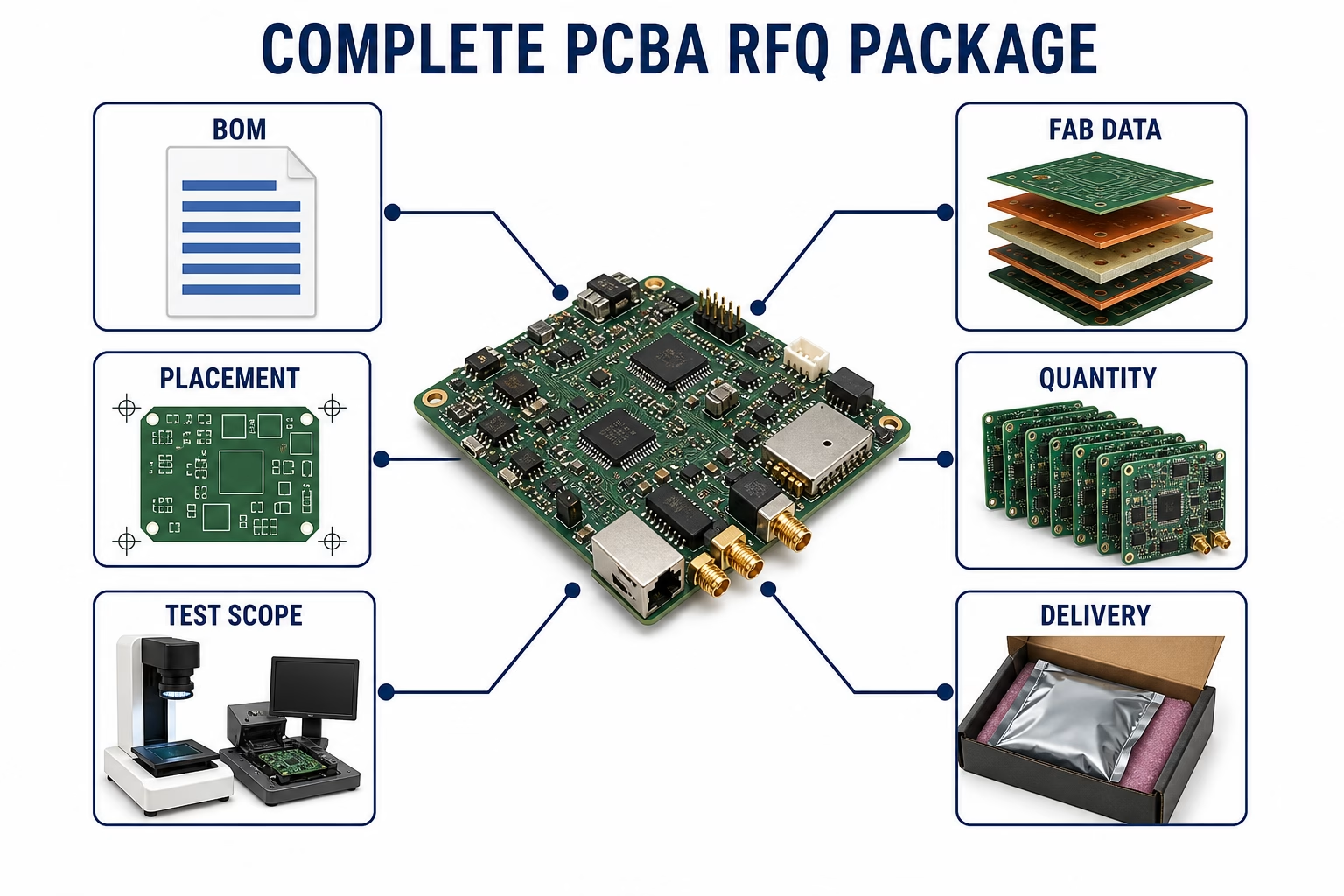
The shortest usable RFQ identifies what to build, how many to build, who buys the parts, how acceptance will be judged, and where the finished assemblies must go.
| RFQ item | Minimum for a useful quote | What it changes | Common failure |
| BOM | Manufacturer part number, quantity per assembly, reference designators | Component cost, availability, and sourcing labor | Generic descriptions without orderable part numbers |
| Gerber or intelligent product data | Current copper, mask, paste, silkscreen, outline, and relevant mechanical data | Bare-board price, stencil work, and manufacturability review | Mixed revisions or missing outline |
| Drill data | Plated and non-plated drill information | Fabrication scope and tooling | Drill file from an older revision |
| Pick-and-place file | Reference, X/Y position, side, and rotation | Programming and setup effort | Coordinate origin or rotation convention not stated |
| Assembly drawing | Polarity, orientation, do-not-populate status, and special notes | Manual review, inspection, and rework risk | Drawing conflicts with BOM or placement data |
| Quantity and build schedule | Quantity per lot, number of lots, target ship date | Setup amortization, procurement, and capacity planning | One annual volume with no release quantities |
| Sourcing model | Turnkey, consigned, or mixed | Material cost, handling, and liability | No rule for customer-supplied shortages or attrition |
| Workmanship requirement | Required standard, class, revision, and customer exceptions | Process controls, inspection, documentation, and cost | “IPC Class 3” with no contract revision or deviations |
| Test requirement | AOI, X-ray, ICT, flying probe, functional test, programming, or none | Fixture, programming, labor, and coverage | “100% tested” without a test method or pass criteria |
| Special processes | Cleaning, conformal coating, underfill, press-fit, selective solder, staking, or depanelization | Equipment, materials, masking, cure time, and handling | Notes buried in an email instead of the controlled drawing |
| Commercial terms | Incoterm, ship-to location, currency, quote validity, and required price breaks | Landed cost and comparability | Comparing EXW with delivered pricing |
The Global Electronics Association’s 2023 checklist for producing printed board assemblies maps the production chain from BOM and Gerber creation through component purchasing, pick-and-place data, assembly, soldering, testing, and final assembly. It supports the core file set above, but it is not a substitute for your drawing notes or purchase terms.
Key takeaways
- Completeness: A quote needs the BOM, design data, placement data, drawings, quantities, sourcing model, workmanship requirements, test scope, and delivery terms.
- Consistency: One revision and matching reference designators matter more than a large folder of conflicting files.
- Comparability: Itemized costs, assumptions, and exclusions reveal whether two suppliers priced the same scope.
- Testing: Workmanship class, inspection, and functional test are separate requirements; define each one.
- Release control: Treat quote-ready and production-ready as different gates.
Lock the RFQ identity before attaching files
Start the package with a one-page RFQ cover sheet. It should state:
- Internal project or assembly number
- PCB or PCBA part number
- Revision for every controlled deliverable
- Quote type: budgetary, prototype, pilot, or production
- Requested quantities and price breaks
- Expected recurring release size, if relevant
- Requested ship date and ship-to country or postal code
- Currency and Incoterm
- Contact for engineering questions
- Date by which the quotation is required
Use one revision string across the file names and cover sheet. If the BOM says Rev C while the assembly drawing says Rev B, the supplier must stop and ask which one controls. If they do not stop, you have a larger supplier-control problem.
For recurring production, distinguish the annual usage from the lot size. An annual forecast helps with sourcing. The release quantity determines setup amortization, line planning, moisture-sensitive component handling, and packaging. “10,000 per year” is not enough if releases could be 250, 1,000, or 5,000 units.
Prepare a BOM that can be priced without guessing
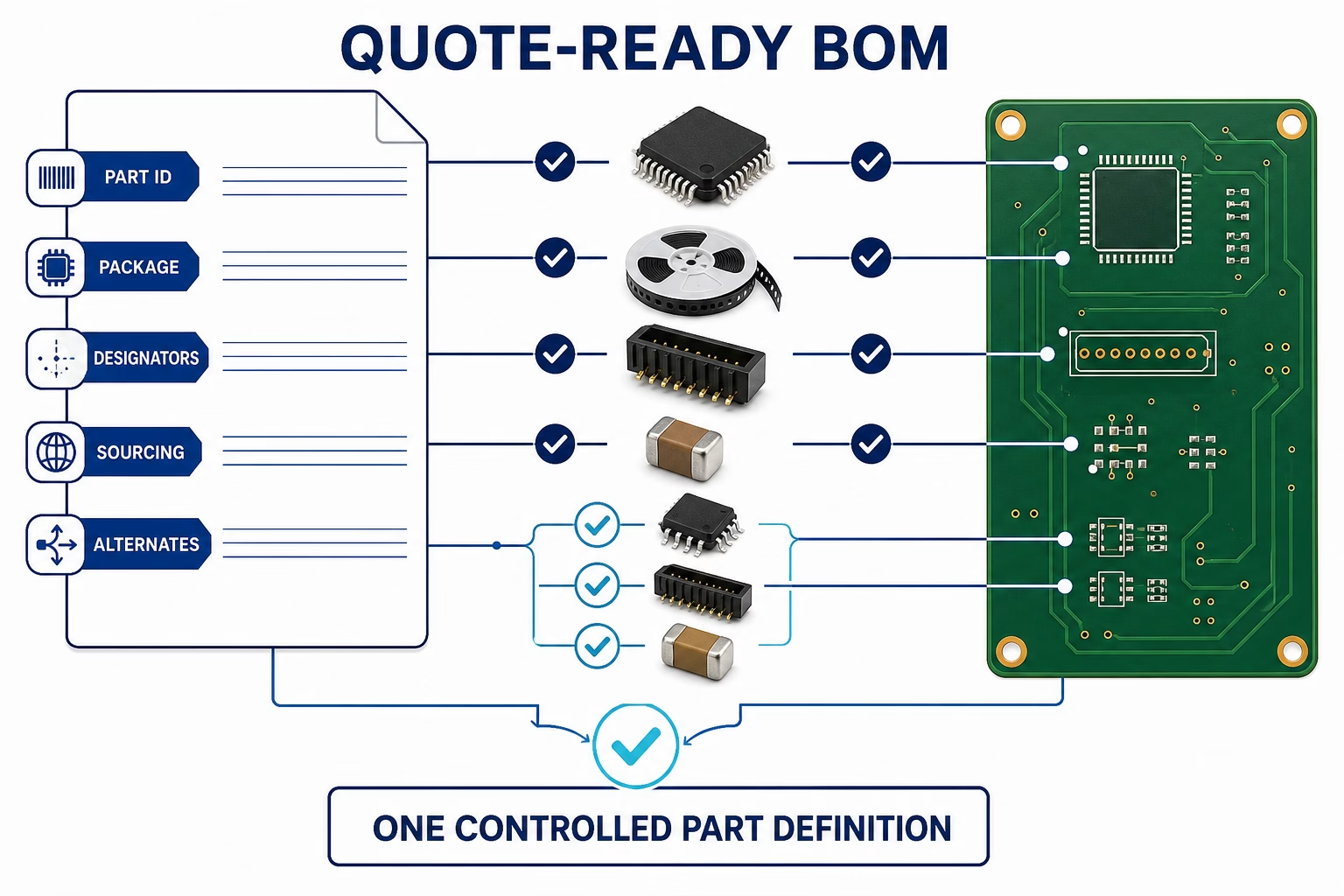
A useful BOM identifies orderable parts and the policy for alternates; a component description alone is not procurement data.
Include these columns where applicable:
| BOM field | Why the estimator needs it | Quote consequence if missing |
| Item or line number | Stable reference during questions and revisions | Slow clarification and change control |
| Quantity per assembly | Extended quantity for each price break | Incorrect material total |
| Reference designators | Cross-check against placement and drawings | Population errors or unresolved DNP parts |
| Manufacturer | Identifies the approved source | Supplier may assume an unintended brand |
| Manufacturer part number | Defines the orderable component | Quote becomes provisional or cannot be sourced |
| Description and value | Human cross-check for obvious mismatches | Errors are harder to detect |
| Package or footprint | Cross-check against land pattern and placement | More engineering review or a hold |
| DNP status | Prevents unapproved placement | Unwanted parts may be included |
| Approved alternates | Enables controlled sourcing choices | Supplier must quote exact parts or request approval |
| Customer-supplied status | Separates consigned from purchased material | Duplicate or omitted material cost |
| Compliance requirement | Supports RoHS, REACH, or other project-specific review | Quote may exclude required documentation or material controls |
Do not put “or equivalent” in the part-number column unless you also define who approves the equivalent and what evidence they must review. A resistor substitution may be simple. An alternate oscillator, connector, safety-rated capacitor, radio module, or programmed device can change fit, performance, certification, or firmware behavior.
The Association Connecting Electronics Industries documentation for IPC-2578 describes BOM, approved manufacturer list, approved supplier list, change history, and engineering change order data as supply-chain exchange content. The current IPC document revision table marks IPC-2578 as no longer maintained, so do not cite it as a current production requirement. Its data categories remain a useful way to see why “manufacturer part number only” is not always enough.
State the component sourcing model
Choose one of three models:
- Turnkey: The assembler purchases the specified parts.
- Consigned: You supply the parts, and the assembler prices receiving, inspection, storage, handling, and assembly.
- Mixed: Some parts are purchased by the assembler, while controlled or pre-programmed items are consigned.
For consigned material, ask the assembler to state attrition rules before you ship. Tiny passives, cut tape, fragile components, and parts used during setup may need extra quantity. The correct allowance depends on packaging, equipment, quantity, and process. A single universal percentage would be misleading.
For turnkey or mixed sourcing, define the approved sourcing channel and traceability deliverables. A line saying “authorized distribution required” is clearer than assuming every bidder applies the same rule. If date codes, certificates of conformance, lot traceability, or manufacturer packaging matter, name them in the RFQ.
If you want one partner to manage fabrication and component procurement, see the scope of full turnkey PCB assembly. Keep the same sourcing rules in the RFQ regardless of which supplier receives it.
Send fabrication and placement data from the same release
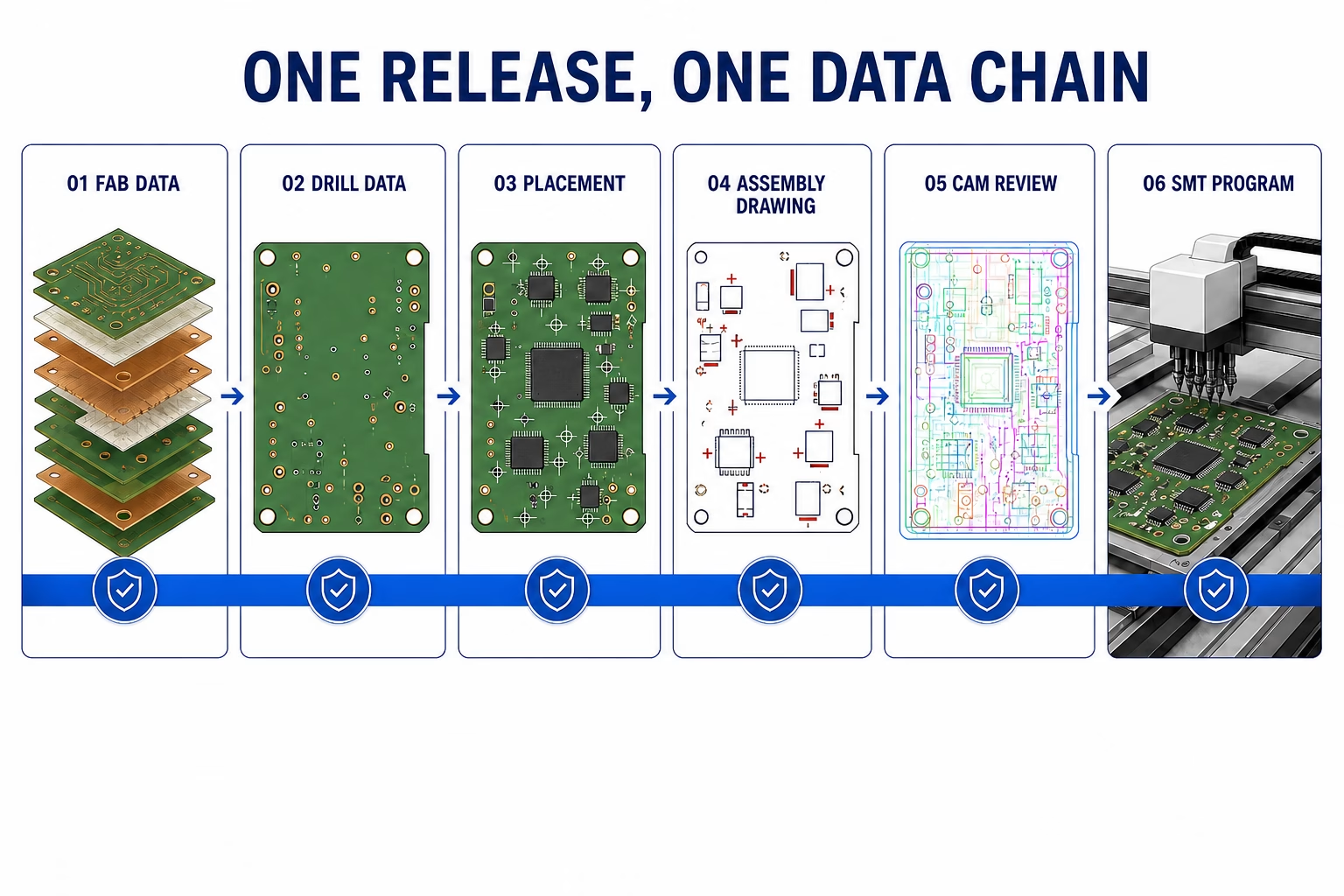
The conventional package includes Gerber fabrication layers, drill files, a board outline, and pick-and-place data. Some design systems can export an intelligent product model instead. IPC describes IPC-2581C as a digital exchange format for PCB design-through-manufacturing data, including bidirectional DFX information.
Whichever format you use, do not assume the file format resolves conflicting intent. Include a readable fabrication drawing and assembly drawing so the supplier can verify:
- Finished board dimensions and outline
- Layer stackup or stackup requirements
- Material and thickness requirements
- Copper weight
- Solder mask and legend requirements
- Surface finish
- Controlled impedance requirements, when applicable
- Panelization ownership and breakaway constraints
- Component polarity and orientation
- Top- and bottom-side population
- DNP locations
- Mechanical hardware and press-fit parts
- Special soldering, cleaning, coating, staking, or underfill notes
For designs with controlled impedance, do not place a target impedance in an email and leave it out of the controlled data. Provide the net or layer requirement, target, tolerance, stackup constraints, and the party authorized to adjust geometry. An impedance calculator can support early stackup work, but the fabrication drawing and approved stackup must control the order.
Define the pick-and-place coordinate convention
A centroid or pick-and-place file should identify each placed reference, X/Y coordinate, board side, and rotation. Also state:
- Units: millimeters or inches
- Coordinate origin
- Rotation direction and zero-angle convention
- Whether bottom-side coordinates are mirrored
- Whether DNP references are included or removed
Do not “fix” a suspect rotation table just to make the upload pass. Ask the assembler to cross-check polarized parts and orientation markers against the drawing. The quote should say whether data cleanup or library work is included.
Define workmanship, inspection, and test separately
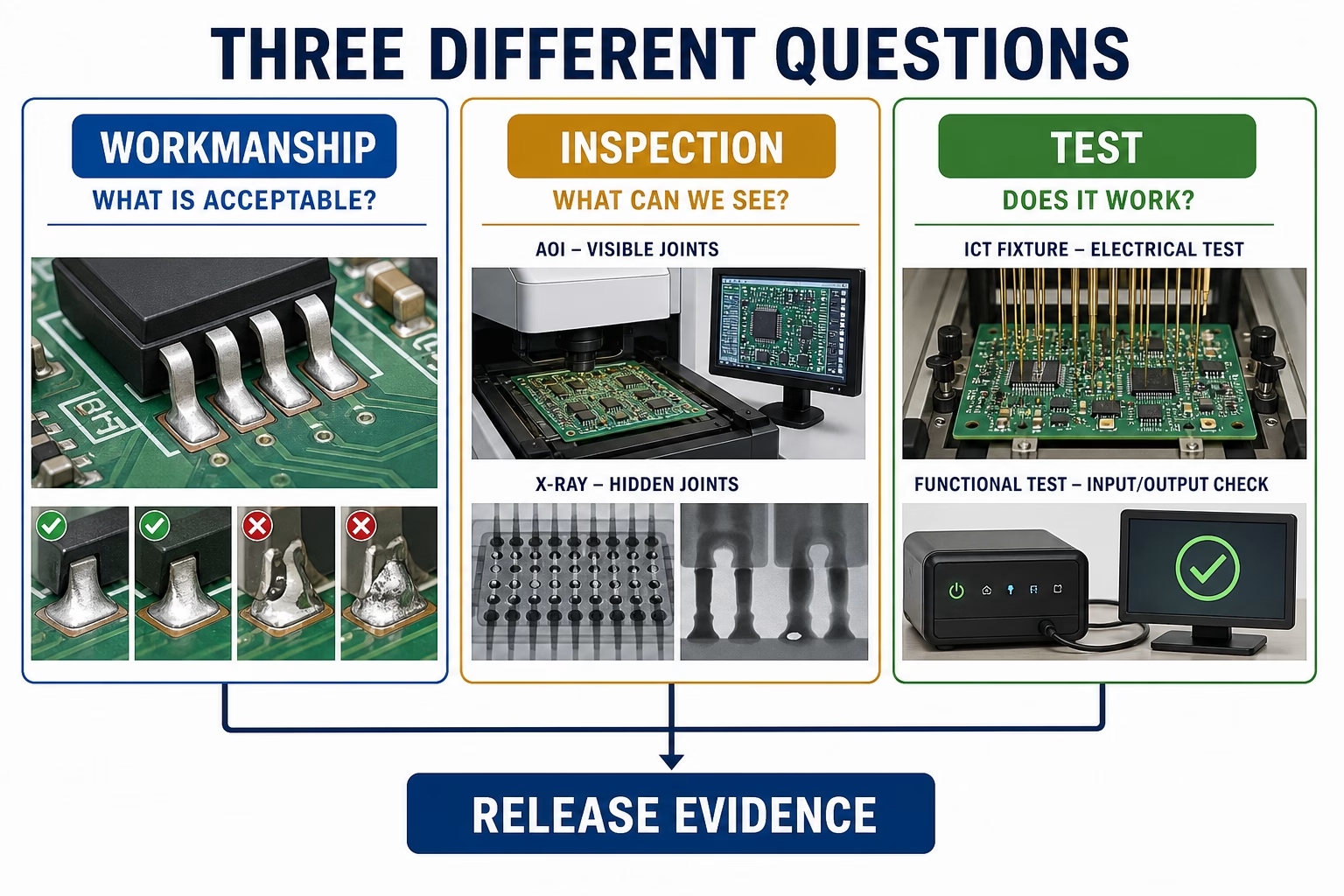
Workmanship class, inspection method, and electrical function answer different questions. Specifying one does not automatically define the others.
- A workmanship requirement defines acceptance criteria.
- Automated Optical Inspection (AOI) checks visible assembly features that the programmed inspection can see.
- X-ray inspection can evaluate hidden solder joints and internal features, subject to equipment, image quality, and acceptance rules.
- In-Circuit Test (ICT) checks selected electrical nodes and components through a fixture and test program.
- Functional test verifies behavior against a customer-defined procedure, limits, fixtures, software, and pass criteria.
State the required standard and contract revision. The Global Electronics Association explains that IPC J-STD-001 addresses materials, processes, and requirements for soldered assemblies, while IPC-A-610 addresses assembly acceptability. A purchasing line that says only “build to IPC” leaves the applicable document, class, revision, and customer exceptions unresolved.
For each requested test, provide or request:
| Test input | What to define |
| Coverage | Boards, components, nets, joints, functions, or sampled features covered |
| Method | AOI, X-ray, ICT, flying probe, functional test, programming, or another method |
| Equipment ownership | Customer fixture, supplier fixture, or new tooling |
| Program ownership | Who writes, validates, maintains, and owns test code |
| Limits | Expected values, tolerances, firmware version, and pass/fail logic |
| Failure handling | Retest, diagnosis, repair authorization, scrap, and reporting |
| Deliverables | Summary, serial-level record, images, certificates, or raw data |
“100% functional test” is incomplete if no functional test procedure exists. Likewise, “X-ray all BGAs” does not define views, sampling, acceptance criteria, or report format. Review the available PCB assembly testing methods before asking bidders to price a test plan.
List every process that can create a separate charge
Quotes become difficult to compare when one supplier includes a process and another treats it as an option. Mark each item as required, optional, supplier-recommended, or not applicable:
- SMT stencil and replacement policy
- Panelization and depanelization
- Through-hole insertion and hand soldering
- Selective or wave soldering
- Press-fit insertion
- Cleaning and ionic cleanliness requirement
- Conformal coating, masking, thickness, and cure
- Underfill, staking, or adhesive
- Thermal interface materials
- IC programming and serialization
- Label content and location
- Traceability records
- X-ray, AOI, ICT, flying probe, or functional test
- Rework limits and repair documentation
- Final mechanical assembly or box build
- Packaging, moisture barrier bag, desiccant, or custom trays
- Export packaging and shipment insurance
If a process has an engineering drawing, specification, work instruction, or approved material list, attach it and name its revision. Do not rely on a previous order or a message thread as the specification.
Ask for an itemized PCB assembly quotation
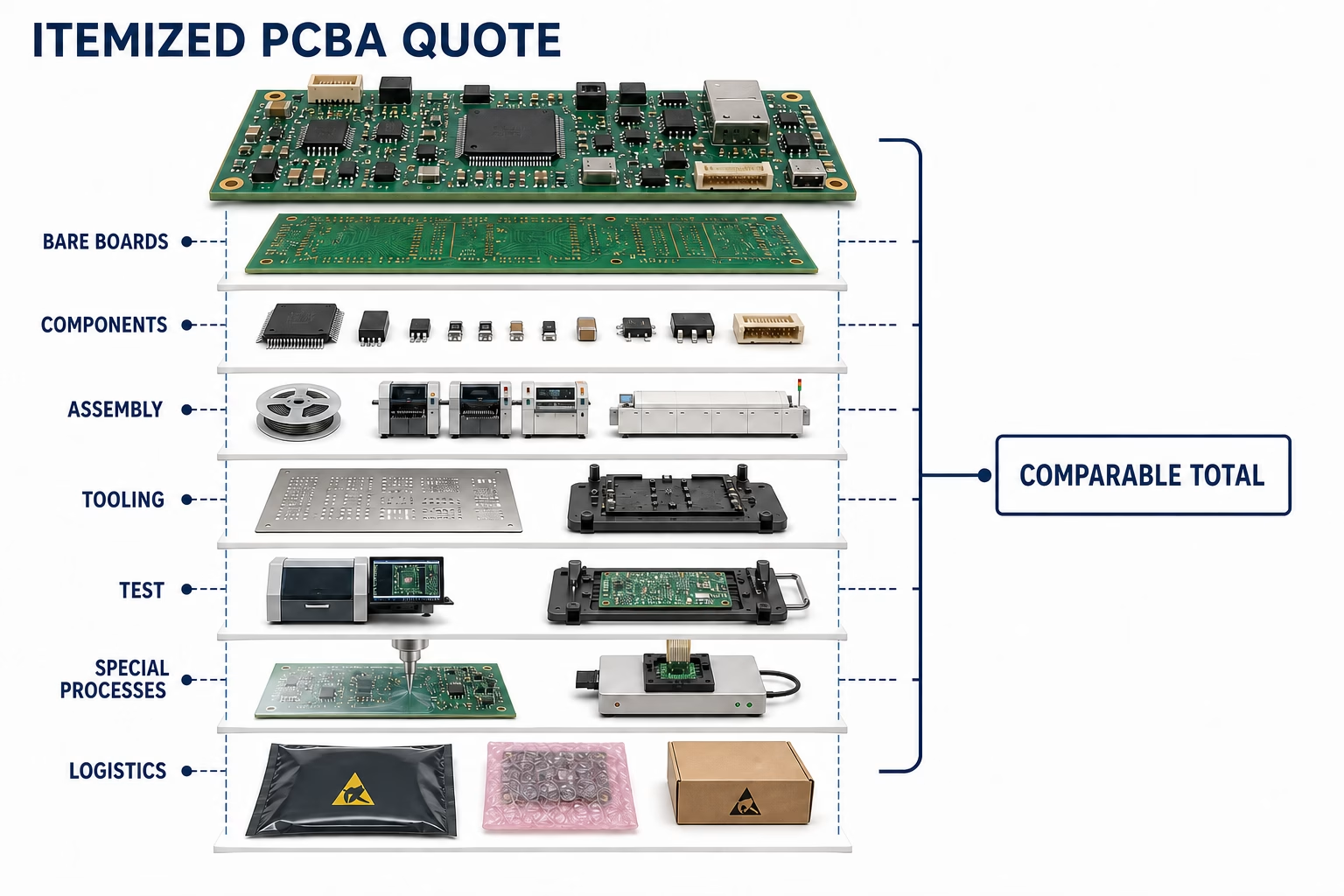
Compare scope before comparing totals. Ask each bidder to break out the same cost categories:
| Quote line | Questions to ask |
| Bare PCBs | Included or separate? What stackup, finish, test, panel, and quantity were assumed? |
| Components | Which BOM revision, approved sources, alternates, lead times, and minimum buys were used? |
| Assembly labor | Does it include SMT, THT, hand operations, inspection, and standard rework? |
| NRE and programming | What setup, data preparation, and machine programming are one-time charges? |
| Tooling | Are stencils, pallets, fixtures, or test hardware included, and who owns them? |
| Test | What method, coverage, fixture, program, and reporting are included? |
| Special processes | Are cleaning, coating, underfill, programming, and box build included? |
| Scrap and attrition | What assumptions apply to supplied and purchased material? |
| Packaging and freight | Which packaging, Incoterm, destination, duties, and insurance are included? |
| Schedule | Does lead time begin at PO, file approval, complete material, or another milestone? |
Request an assumption and exclusion section. This is often more valuable than another decimal place in the total. If the supplier priced a substitute, omitted an unavailable component, assumed no functional test, or excluded import charges, that should be visible before award.
For a combined fabrication and assembly RFQ, use PCB assembly and fabrication services as the commercial handoff. Upload the controlled package once, then ask the estimator to return questions and deviations in writing.
The 4-match RFQ gate
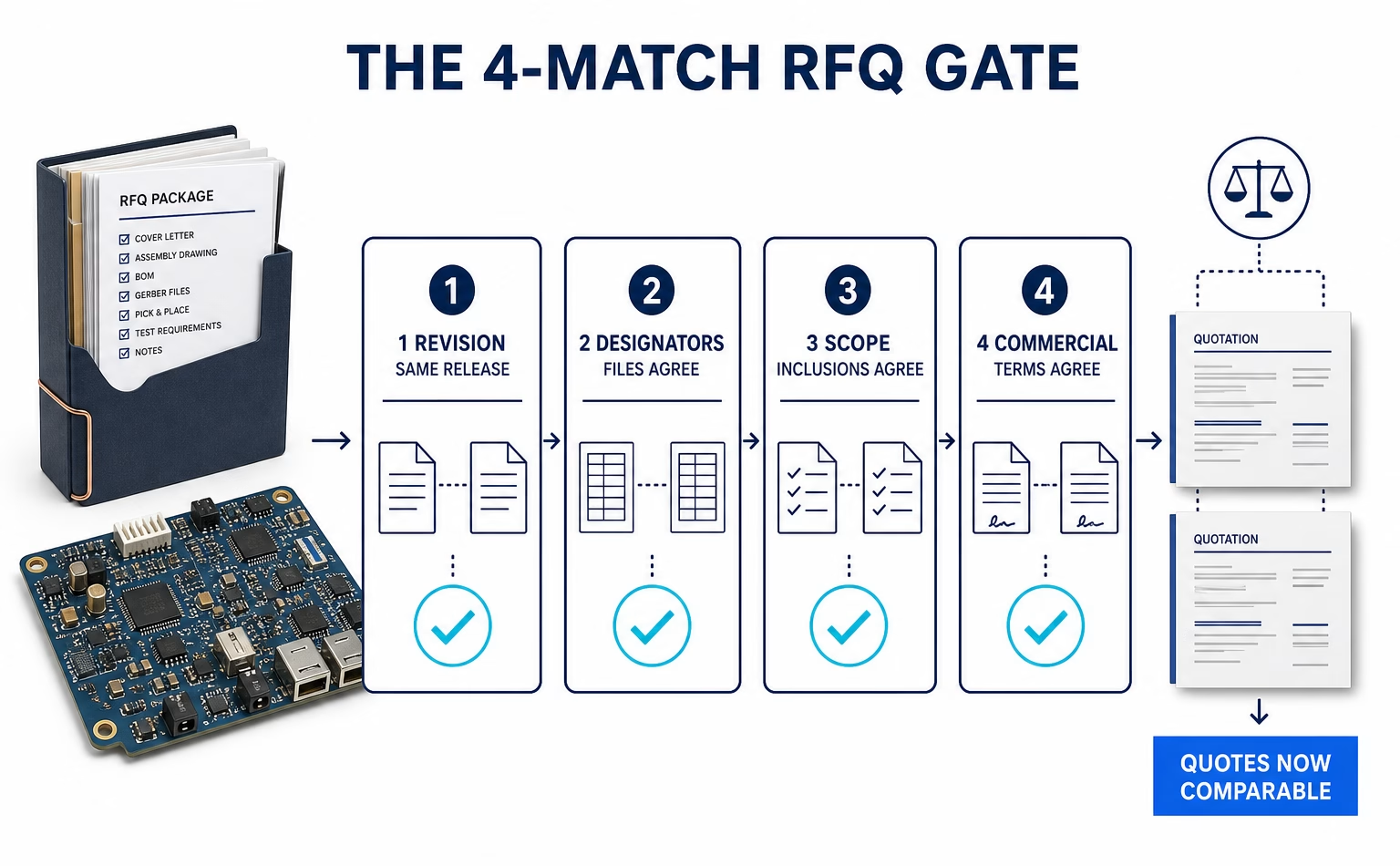
The 4-match RFQ gate is our own editorial framework, not an industry standard. It is a final cross-check before you send the package:
- Revision match: The cover sheet, BOM, drawings, Gerber or intelligent data, drill, and placement files identify the same release.
- Designator match: Populated and DNP references agree across the BOM, placement file, schematic, and assembly drawing.
- Scope match: Quantity, sourcing, process, test, documentation, packaging, and delivery assumptions appear in both the request and returned quote.
- Commercial match: Currency, Incoterm, ship-to point, validity period, payment terms, and price-break basis are comparable.
The gate does not prove manufacturability or supplier capability. It catches a narrower problem: comparing quotes that describe different builds.
Worked example: two totals that are not comparable
Suppose Bid A includes bare PCBs, turnkey components, AOI, an SMT stencil, and delivery. Bid B includes assembly labor and components but excludes bare PCBs, testing, tooling, and freight. Bid B may show a lower total, yet the difference says nothing useful about supplier efficiency.
Run the scope and commercial matches first. Normalize the exclusions or request revised quotations. Only then compare price, lead time, engineering response, quality controls, and risk.
When not to request a firm quote
Ask for a budgetary estimate, not a firm production quote, when:
- The BOM contains unselected or obsolete parts
- Board outline, stackup, or placement is still changing
- Test coverage and acceptance criteria are undecided
- Regulatory or workmanship requirements are unknown
- Annual volume is known, but release quantity is not
- Customer-supplied material has no quantity or packaging information
- The package contains mixed revisions
A budgetary estimate can still guide architecture or sourcing decisions. Label it correctly, list the assumptions, and avoid treating it as an award-ready comparison.
FAQ
What files are needed for a PCB assembly quote?
At minimum, provide a BOM, Gerber and drill files or an accepted intelligent product-data file, a pick-and-place file, assembly drawings, quantities, and sourcing instructions. Add fabrication drawings, test requirements, special-process instructions, and commercial terms when they affect the build. All files should identify the same revision.
Can I get a PCB assembly quote without Gerber files?
You may receive a rough budget estimate from a BOM, board dimensions, layer count, and placement summary. It will depend on stated assumptions and should not be treated as a firm production quote. Gerber or equivalent fabrication data is needed to evaluate the actual board and assembly scope.
Does a schematic need to be included in the RFQ?
A schematic is not always necessary to calculate basic placement cost, but it helps DFM, troubleshooting, functional-test development, and cross-checking polarized or critical circuits. If the file is confidential, discuss access controls or send it after a nondisclosure agreement. Do not assume a schematic replaces fabrication or placement data.
What should a BOM include for turnkey PCB assembly?
Include quantity per assembly, reference designators, manufacturer, orderable manufacturer part number, description, package, DNP status, approved alternates, and relevant compliance or traceability requirements. State who may approve substitutions and whether any parts will be consigned.
How should I compare PCB assembly quotes?
Normalize the scope first. Confirm that each quote includes the same bare-board specification, BOM revision, sourcing rules, quantity, tooling, inspection, test, special processes, packaging, freight basis, and delivery point. Then compare total cost, lead time, exceptions, engineering feedback, and supplier controls.
Should I request IPC Class 2 or Class 3?
Specify the class required by the product, customer contract, reliability plan, and applicable regulatory obligations. Do not select a higher class only because it sounds safer. State the applicable standard, revision, class, and customer-specific exceptions in the RFQ, then confirm that the supplier can meet and document them.
Ready to send a quote-ready package?
Send your BOM, Gerber or product-data export, pick-and-place file, assembly drawings, quantity breaks, test needs, and delivery location. OrinewPCB can return an itemized fabrication-and-assembly quote with engineering questions and DFM feedback.
Need PCB Manufacturing or Assembly?
Get a free quote within 24 hours. We specialize in prototype-to-production PCB/PCBA for hardware teams worldwide.
About this guide
This guide combines the Global Electronics Association’s published PCBA production checklist and IPC-2581 data-exchange documentation with OrinewPCB’s current service and file-input documentation. Company capabilities are supplier-provided information, not independent test results.
No private production dataset, customer case result, or unverified “we tested” claim was used. The 4-match RFQ gate is an editorial tool for package consistency, not an IPC requirement and not a guarantee of manufacturability, supplier performance, or quote accuracy.
References & sources
- IPC Checklist for Producing Printed Board Assemblies, 2023 Revision, Global Electronics Association (published under the IPC name)
- IPC-2581 Revision C release notice, December 2020, IPC, now Global Electronics Association
- IPC document revision table, Global Electronics Association
- IPC standards and manufacturing coverage, Global Electronics Association
Related articles
- Low-volume PCB assembly cost, See which cost drivers matter after the RFQ scope is consistent.
- PCB fabrication from prototype to production, Plan the bare-board handoff that precedes assembly.
- ICT vs FCT, Choose a test approach before asking suppliers to price coverage.
Get Quote Free