IPC Class 2 vs Class 3 PCB Assembly: Requirements, Cost, and How to Choose
IPC class 2 and class 3 PCBs are built with stringent quality and reliability standards. Class 3 boards are the preferred choice for military and medical applications, whereas class 2 boards are ideal for dedicated electronic products like televisions, computers, and air conditioners.
Get Your PCB Quote!
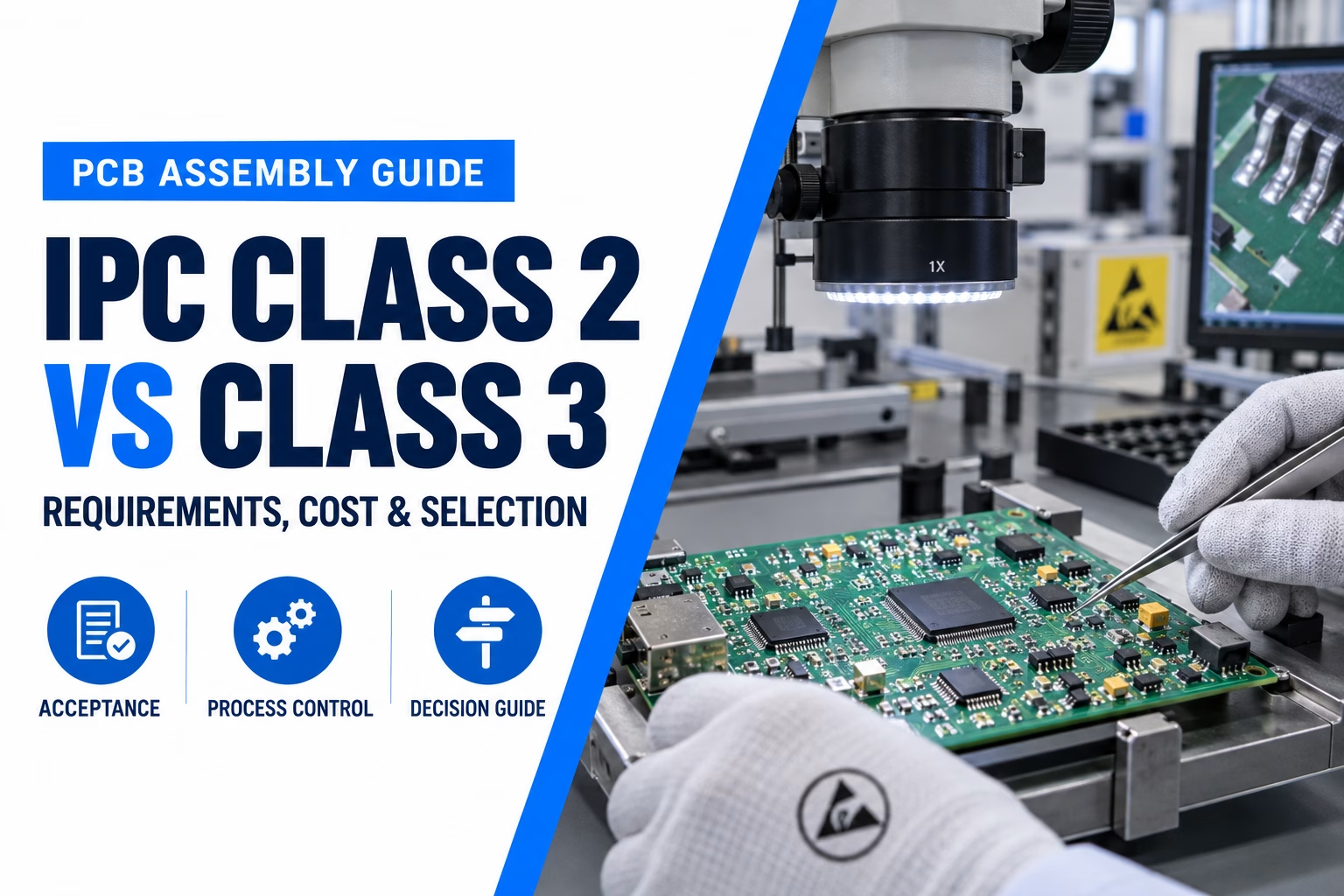
Table of Contents
Table of Contents
IPC Class 2 is the usual fit for dedicated-service electronics that need reliable, extended operation. Class 3 applies tighter acceptance criteria to products that must deliver high performance on demand, continue operating in demanding conditions, or meet a controlled Class 3 requirement.
The product label alone does not decide the class. A medical device, aircraft subsystem, vehicle controller, or industrial assembly may use Class 2 or Class 3 depending on its controlled requirements, failure consequences, and service conditions.
Quick answer: Choose Class 2 when reliable service is required and repair or replacement remains practical. Choose Class 3 when continued operation, performance on demand, or an approved product requirement justifies the tighter criteria. There is no standard Class 3 price premium; cost changes with the additional fabrication, process-control, inspection, test, and documentation work defined for the assembly.
IPC Class 2 vs Class 3 at a Glance
Both classes can produce reliable electronics. The difference is the acceptance level the product must meet and the manufacturing margin available to meet it.
| Comparison point | IPC Class 2 | IPC Class 3 | What defines the difference |
| Product intent | Dedicated-service products with continued performance and extended life | High-performance or harsh-environment products where continued operation or performance on demand is critical | The selected class should match the approved product requirements and failure consequence |
| Acceptance criteria | Uses the Class 2 conditions for each applicable feature | Uses the tighter Class 3 conditions for each applicable feature | A condition accepted for Class 2 may require rework, engineering review, or rejection for Class 3 |
| Manufacturing effect | The process must consistently meet the Class 2 criteria | The tighter criteria leave less tolerance for process variation | This is a consequence of the acceptance criteria, not a separate inspection package |
| Inspection and test | Methods and coverage follow the applicable documents and project plan | The same rule applies; Class 3 does not automatically mandate every inspection or test method | Package visibility, product risk, customer additions, and the inspection plan define the method and coverage |
| Records and traceability | Defined by the contract and quality plan | Often more extensive on high-reliability programs, but not automatic from the class label | Customer and program requirements define reports, traceability, and retention |
| Cost | Often the baseline scope for commercial and industrial assemblies | May add project-specific cost when the tighter criteria change the work | There is no standard multiplier; design maturity, process capability, evidence, and lot size determine the difference |
There is no universal solder percentage or placement tolerance that summarizes every Class 2 and Class 3 difference. A plated-through-hole termination, gull-wing lead, chip component, and bottom-terminated component have different acceptance criteria. Use the table for orientation; use the licensed standard named by the contract for production acceptance.
What Do IPC Class 2 and Class 3 Actually Control?
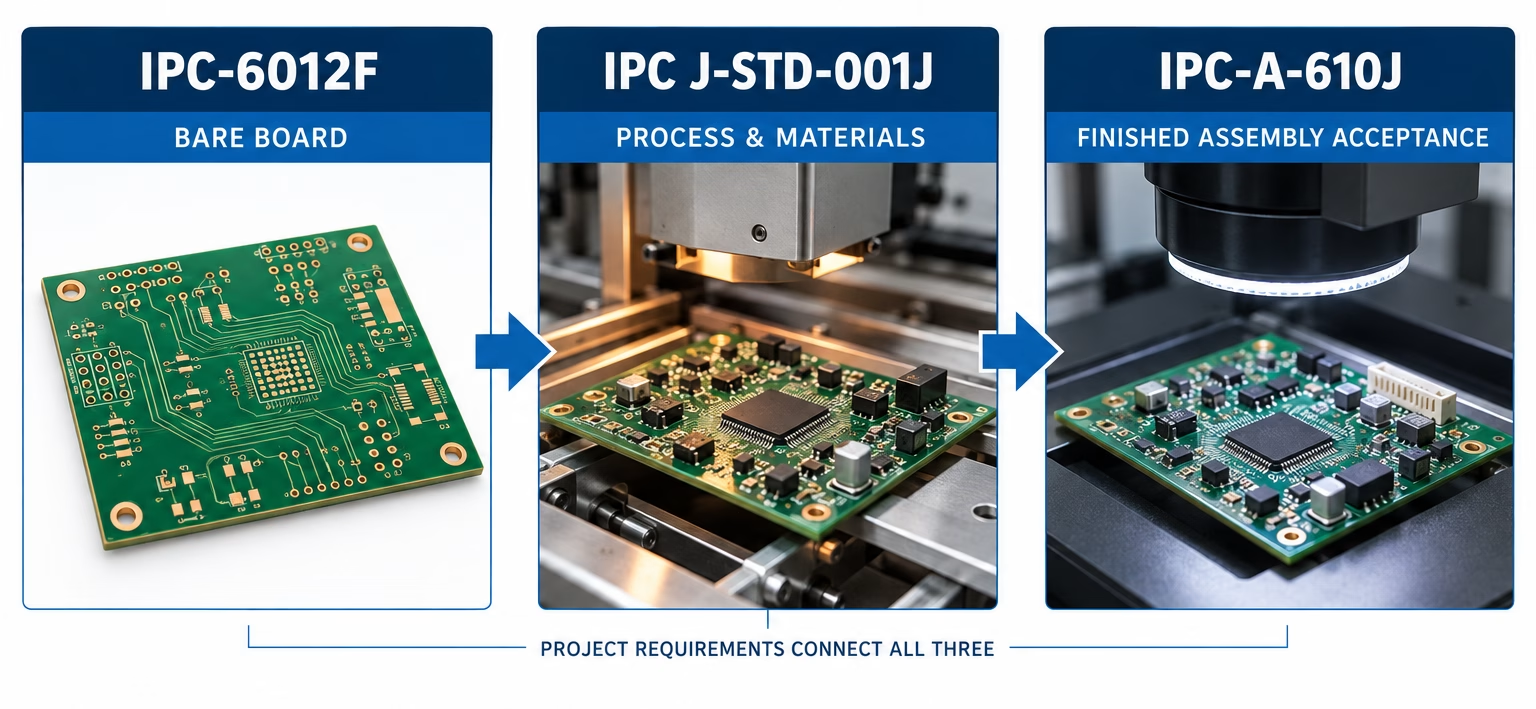
IPC product classes define acceptance requirements for the product. They are not factory ratings, supplier certifications, or a general score of manufacturing quality. A capable factory may build both classes, and a Class 2 assembly can be tightly controlled and reliable for its intended use.
Three documents commonly appear in a rigid PCB assembly requirement:
Rigid bare-board qualification and performance requirements
Materials, processes, and requirements for soldered assemblies
Post-assembly acceptability criteria
IPC-A-610J, published in March 2024, is used to evaluate completed electronic assemblies. IPC J-STD-001J, released in April 2024, covers soldering materials, processes, and assembly requirements. IPC develops the two documents in coordination, and projects often use them together.
For a rigid bare board, IPC-6012F covers qualification and performance requirements such as conductors, holes and vias, finishes, electrical requirements, and acceptance testing. Flexible, rigid-flex, HDI, automotive, space, and other constructions may need a different specification or addendum.
A purchase order that says only “IPC compliant” leaves the document, revision, class, and customer additions undefined. It also says nothing about which inspection reports or test data must accompany the lot.
Where Class 3 Changes a Real PCB Build
The class affects more than final visual inspection. The applicable requirements should be aligned across board design, fabrication, soldering, and final acceptance.
Bare-board design and fabrication
The bare board has to support the selected class before components reach the assembly line. Land geometry, drilled features, conductors, plating, materials, and the applicable fabrication specification are physical parts of the finished board.
Final inspection cannot restore annular-ring geometry, change hole plating, or add design allowance to a board that has already been fabricated. Moving an existing Class 2 product to Class 3 may therefore require a fabrication drawing review and, in some cases, a layout or tooling change.
Soldering and process control
J-STD-001J controls how soldered assemblies are produced, while IPC-A-610J provides criteria for evaluating the result. The PCB assembly process connects those requirements to paste printing, component placement, reflow, through-hole soldering, cleaning, inspection, and test.
Class 3 gives a capable process less room to drift. A design with fine-pitch parts, hidden joints, mixed SMT and through-hole technology, or large thermal mass may need closer control because variation in paste volume, placement, heat input, or cleaning can push more assemblies outside the acceptance window.
The exact difference remains feature-specific. A through-hole solder connection and a surface-mount lead are not judged by one shared number. Production inspectors need the correct revision and the criteria for the actual termination being evaluated.
Example: a plated-through-hole solder connection
A plated-through-hole connection shows why one percentage cannot describe the difference between Class 2 and Class 3. The applicable assembly standard evaluates separate characteristics, including vertical fill in the barrel and wetting at the lead and lands. Each characteristic is judged against the criteria for the selected class rather than being combined into one overall score.
Where the standard distinguishes between the classes, the Class 3 condition leaves a narrower acceptance range. A connection can therefore be acceptable to Class 2 but require rework, engineering review, or rejection for Class 3 even when solder is visible through the hole. On the production floor, that difference can affect hole-to-lead fit, thermal balance, soldering parameters, and the inspection instructions. The exact limits must come from the licensed revision named by the controlled documents, not from a generic comparison chart.
Inspection and test
Each inspection method finds a different type of problem. Visual inspection and AOI evaluate visible placement and solder conditions. Automated X-ray inspection examines hidden joints. ICT or flying probe can find electrical faults, while functional testing checks whether the assembly performs its intended operation.
Class 3 does not automatically turn those methods into one fixed inspection package. A BGA may need X-ray because its joints are hidden, but the class label alone does not define the packages, coverage, sampling, report format, or images to retain. Put those details in the inspection and test plan. The PCB inspection methods guide explains the defects each method can and cannot detect.
What Class 3 does not automatically include
Class 3 controls workmanship and acceptance within the cited documents. It does not, by itself, specify every reliability activity around the assembly.
- X-ray of every BGA: Joint visibility, package risk, customer requirements, and the approved inspection plan determine the coverage.
- A complete functional test: The customer still needs to define the test specification, limits, fixture responsibility, and expected data.
- Environmental qualification: Temperature cycling, vibration, humidity, and other qualification tests come from the product requirements or applicable program standards.
- Full serial-number traceability: Traceability depth and record retention come from the contract and quality plan.
- Reliable circuit design: Component selection, derating, thermal design, firmware, connectors, coating, and system-level verification remain separate engineering tasks.
Adding Class 3 without addressing these items can leave the main field-failure mechanism unchanged. Use the class for the workmanship risk it controls, then define other tests around the product’s actual environment and failure modes.
Why Does Class 3 PCB Assembly Cost More?
Class 3 can cost more because a smaller acceptance margin exposes weak design and process capability. The supplier may also need extra engineering, inspection, testing, records, or lot control. IPC does not publish a standard Class 3 price multiplier.
| Cost driver | What changes | When the effect is largest |
| Bare-board requirements | Fabrication class, testing, coupons, materials, or design allowances may change | Dense multilayer boards, specialized constructions, or a design released for a different class |
| Engineering review | Drawings, process instructions, inspection programs, and customer additions must agree | Existing products being upgraded or incomplete release packages |
| Process capability | Printing, placement, soldering, cleaning, and handling must stay inside a narrower window | Fine-pitch, bottom-terminated, mixed-technology, or thermally difficult assemblies |
| Inspection | Additional characteristics, coverage, retained images, or reports add equipment and labor time | Hidden joints, dense layouts, low-visibility terminations, or customer-mandated evidence |
| Testing | Electrical, functional, or environmental tests require fixtures, programs, execution, and review | Safety-related functions or programs with defined test-data deliverables |
| First article and records | Certificates, first-article packages, traceability, and retained lot data require preparation | Prototypes, regulated programs, and contract-controlled work |
| Yield and disposition | More units may need rework, engineering review, or scrap when the process is marginal | New products, unstable processes, and designs with little manufacturing margin |
| Production volume | Fixed review, programming, and fixture costs are spread across the lot | Prototypes and small batches carry more cost per assembly |
The premium may be modest when the line already holds the required process window and the customer needs no unusual deliverables. It can become substantial when the board needs redesign, a new fabrication requirement, a dedicated test fixture, expanded inspection programming, or a detailed first-article package.
Compare quotations at the same delivery condition. One quote may include lot-linked X-ray reports, functional-test data, and traceability; another may include visual acceptance only. The lower number does not represent the same scope.
You can control cost without weakening the selected class:
- Freeze the requirement early. Name the standards, revisions, class, and applicable addenda before design release and quotation.
- Separate IPC criteria from customer additions. Functional test, environmental screening, serial traceability, and long record retention may be valid requirements, but list them separately.
- Design for the class from the start. A late upgrade can trigger layout changes, new tooling, or unusable bare-board inventory.
- Request useful evidence. Define the feature, method, coverage, and report instead of asking for “full inspection.”
- Control the first article. SMT first article inspection can verify the released setup before volume production when the project requires it.
How to Choose Between Class 2 and Class 3
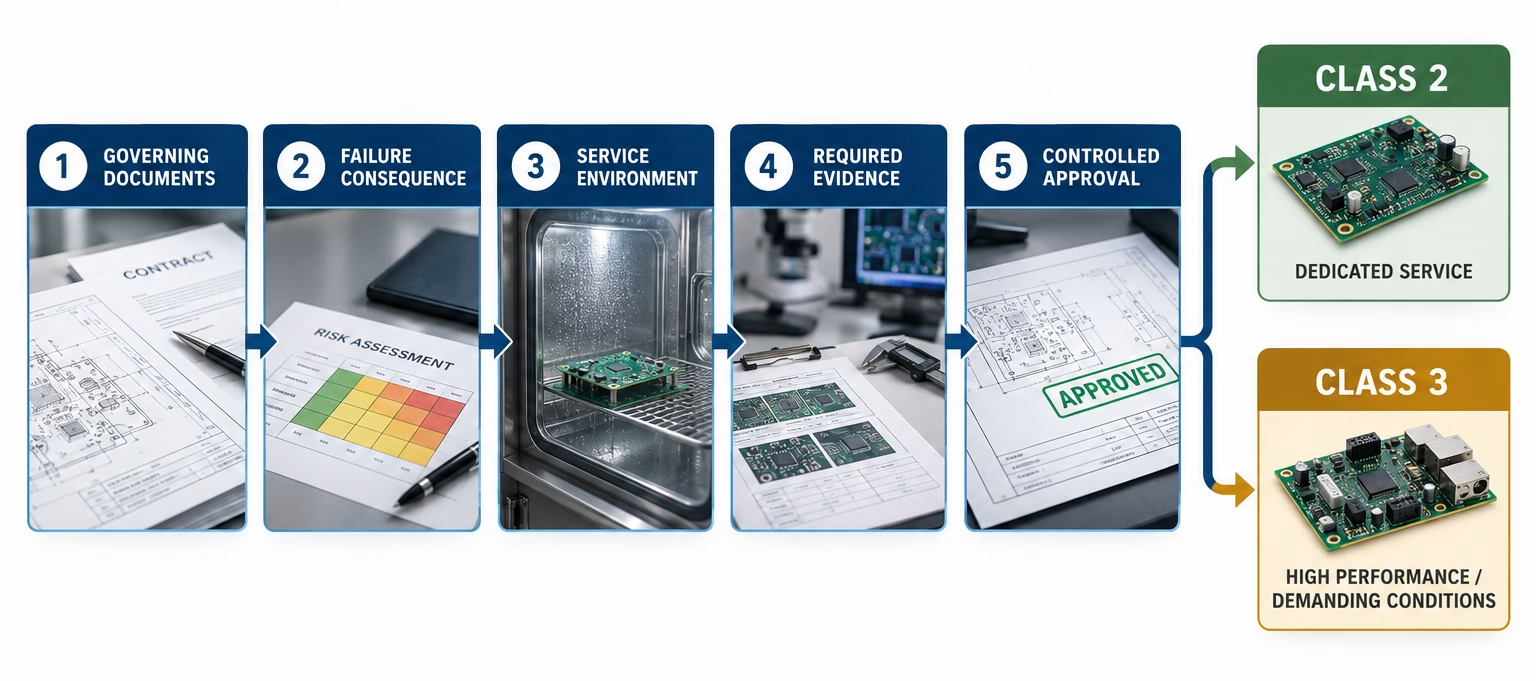
Start with the controlling documents. If the contract or approved drawing already specifies a class, treat it as a requirement until the responsible authority changes it. If no class is defined, consider failure consequence, service environment, maintenance access, and required evidence.
| Project situation | Likely direction | What to confirm |
| Replaceable commercial controller used in a normal environment | Class 2 is often suitable | No contract requires Class 3, downtime is manageable, and normal product testing covers the main risks |
| Remote or safety-related controller exposed to vibration, moisture, or difficult maintenance | Class 3 may be justified | Continued operation is critical, the stricter workmanship criteria address a relevant risk, and environmental tests are defined separately |
| Medical, aerospace, defense, automotive, or transportation program with controlled requirements | Follow the approved program documents | The applicable IPC documents, class, revision, addenda, inspection evidence, and quality-system obligations all agree |
These examples guide the review; they do not classify every product in an industry. A non-safety industrial board may use Class 2, while a critical controller in the same market may need Class 3. A medical or aerospace quality-system certification also serves a different purpose from an IPC product class.
When Class 2 is usually suitable
Class 2 is common in commercial, consumer, and general industrial electronics that need reliable service and a useful operating life. It fits products that can tolerate manageable downtime, repair, or replacement and have no controlling Class 3 requirement.
Business equipment, network peripherals, test instruments, and non-safety industrial controls often fall into this group. The final choice still belongs in the approved product documentation.
When Class 3 is justified
Class 3 fits products that need continued operation or performance on demand, operate in demanding conditions, or have a contract that explicitly selects the class. It is also appropriate when the consequences of a workmanship defect justify the narrower acceptance margin.
Selecting Class 3 as a general precaution can add cost while leaving other risks untreated. A Class 3 assembly can still fail because of an unsuitable component, poor thermal design, connector wear, moisture, firmware, or an incomplete system test. Match each important failure mode with the design control or qualification method that addresses it.
How to Specify the Selected Class
State the document, revision, class, customer additions, and verification requirements in controlled product documentation. The fabrication drawing, assembly drawing, purchase order, work instructions, and inspection plan should agree.
For a rigid bare board, the fabrication drawing may separately name IPC-6012F and its required class. Flexible, rigid-flex, automotive, space, and other products may need a different specification or addendum. Adapt the note to the approved program requirements rather than copying it unchanged.
The controlled product documentation should also identify the requirements that apply to the build:
- Customer additions and exceptions: Conditions that supplement or differ from the cited standard, including who may authorize them.
- Verification scope: The characteristics to inspect or test, the method, and any required coverage or sampling.
- Required evidence: Certificates, first-article records, inspection reports, traceability, or retained data when the program requires them.
- Disposition authority: Who reviews a deviation and who can approve continued production or product acceptance.
This keeps production, inspection, and receiving teams from interpreting the same Class 2 or Class 3 note differently. It also provides a measurable basis for accepting the lot.
Conclusion
Use Class 2 for dedicated-service electronics unless the governing requirements or failure consequences justify Class 3. Use Class 3 when its tighter acceptance criteria address a documented need for continued performance, harsh service, or controlled high-reliability workmanship.
Align the bare-board requirements, soldering process, finished-assembly acceptance criteria, and required evidence in the controlled documentation. Name the applicable standards and revisions before release, and keep customer-added tests separate from the IPC class itself.
For a project-level review, send the controlled drawings and assembly requirements to our custom PCB assembly team so the class, inspection scope, and build assumptions can be reviewed together.
FAQ
Is IPC Class 3 mandatory for every medical, aerospace, defense, or automotive PCB assembly?
No. These sectors often use Class 3, but the contract, drawings, approved product requirements, risk controls, and applicable addenda determine the class. An industry name or quality-system certification does not automatically select it.
Does IPC Class 3 require X-ray inspection of every BGA?
Do not assume a universal rule. Joint visibility, package risk, the applicable standards, customer requirements, and the approved inspection plan determine whether X-ray is required and what coverage or records must be provided.
Can a Class 2 PCB assembly be upgraded to Class 3 by final inspection?
Inspection alone cannot upgrade the assembly. The design, bare board, soldering process, and finished product must meet the applicable Class 3 requirements. Inspection can identify conformity; it cannot change an existing physical feature or recover missing process control.
How much more does IPC Class 3 PCB assembly cost?
There is no reliable percentage for every assembly. The difference depends on the bare-board specification, design maturity, process capability, inspection and test scope, documentation, traceability, expected yield, rework rules, and production volume.
Does Class 3 guarantee that a product will be reliable in the field?
No. Class 3 applies tighter workmanship and acceptance criteria within the cited IPC documents. Field reliability also depends on circuit design, component selection, thermal management, mechanical loads, environment, firmware, and product-level qualification.
Get Quote Free